

Baku : The Supernatural Nightmare Eater of Japan
Listen
At a glance
| Description | |
|---|---|
| Origin | Japanese Mythology |
| Classification | Hybrids |
| Family Members | N/A |
| Region | Japan |
| Associated With | Dreams, Nightmares |
Baku
Introduction
The Baku is one of Japan’s most distinctive mythological beings, celebrated for its unique ability to consume nightmares and protect sleepers from spiritual harm. Originating from Chinese folklore as the mo before firmly rooting itself in Japanese belief, the Baku evolved into a supernatural creature deeply connected to dreams, fear, and mental well-being. First recorded in Japan during the Muromachi period, it quickly became a comforting presence in households where nightmares were believed to open pathways to malevolent forces. In a culture that treats dreams as gateways to unseen realms, the Baku emerged as a powerful intermediary capable of shielding people from troubling visions. Over time, the creature came to represent emotional security, spiritual purity, and relief from subconscious anxieties, solidifying its place as one of Japan’s most beloved guardian spirits.
Physical Traits
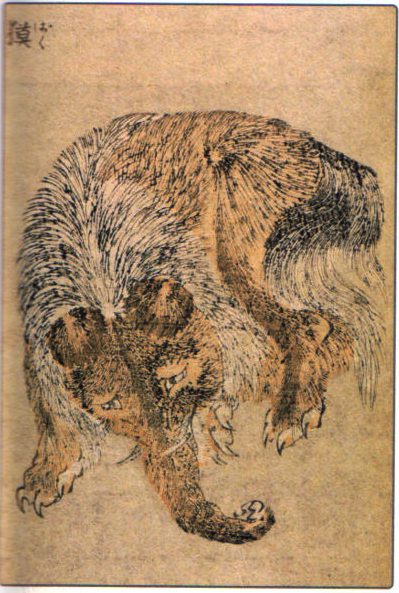
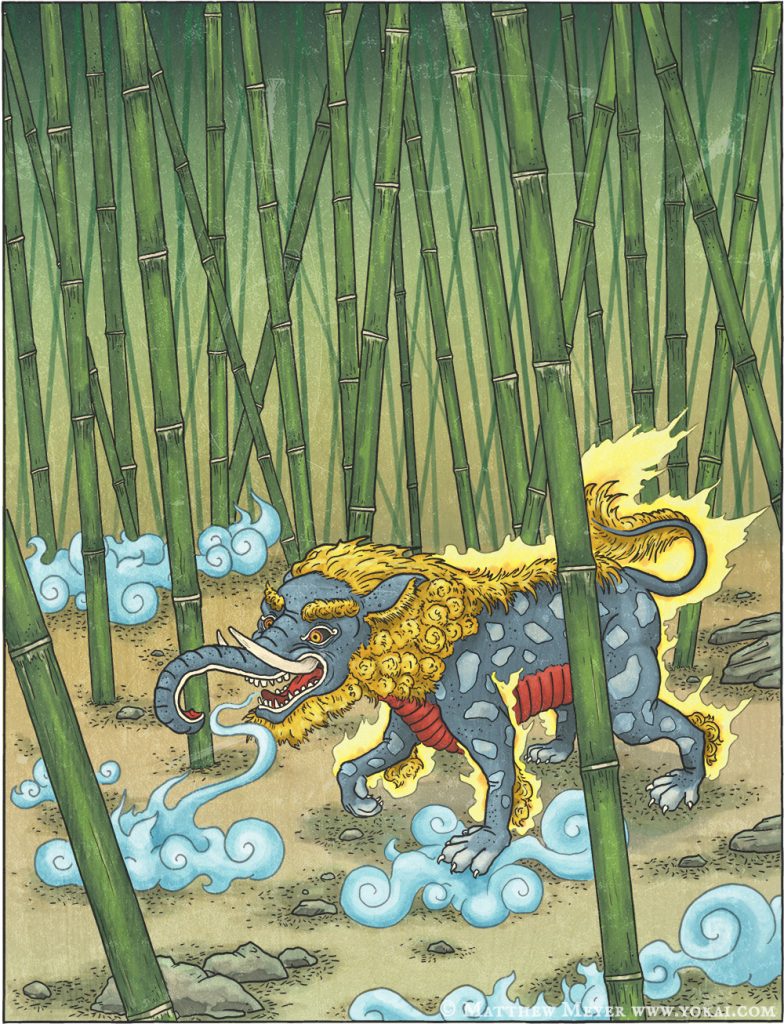
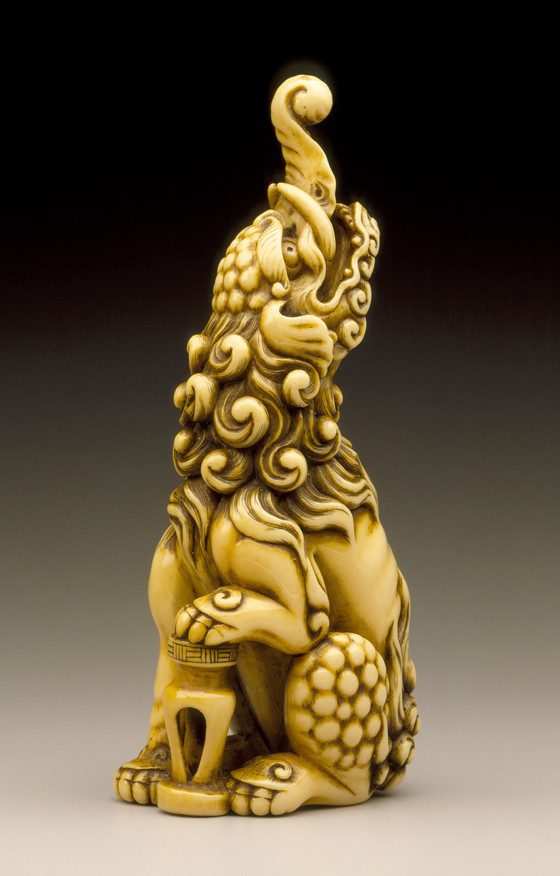
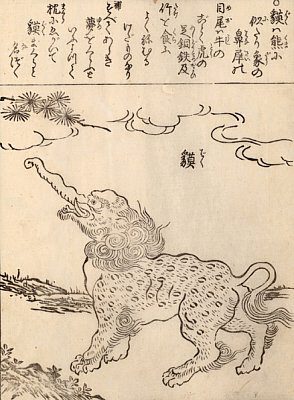
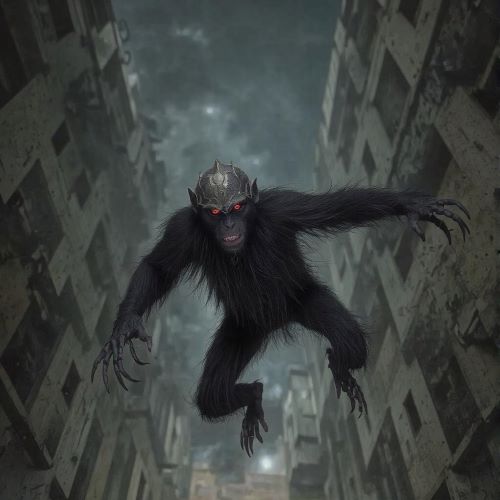
Descriptions of the Baku reveal a fantastical creature assembled from the strongest traits of various animals, giving it an instantly recognisable chimeric form. Early illustrations depict it with an elephant-like trunk capable of drawing in nightmares, a bear’s torso suggesting strength, the sharp eyes of a rhinoceros, the tail of an ox, and tiger-like limbs built for swift movement through spiritual realms. This composite anatomy symbolises divine craftsmanship—according to legend, the gods formed the Baku from leftover parts after creating all other animals. Its appearance also explains its connection to the tapir, as the Japanese word baku came to refer to the Malayan tapir in modern zoology, resulting in visual overlaps in later art. Nonetheless, the mythological Baku retains its fantastical, assembled form that marks it as a creature of supernatural origin rather than earthly evolution.
Family
Unlike many beings in Japanese mythology that belong to extensive genealogies or divine lineages, the Baku exists as a solitary spirit with no known family or species. Its creation story emphasises intentional uniqueness—a guardian formed not to populate the world but to carry out a singular protective function. This independence strengthens its symbolic connection to individual protection, as the Baku intervenes directly in a person’s inner world rather than operating as part of a mythological hierarchy. Though inspired by the Chinese mo, the Japanese Baku stands apart as a lone entity whose presence is invoked only in times of need, reinforcing its image as a specialised spiritual guardian rather than a member of a collective race of creatures.
Other names
The creature is widely known in Japan simply as Baku, written with characters such as 獏 or 貘. Its earliest roots lie in the Chinese mo, a mythical beast sometimes linked to creatures like the giant panda or tapir in ancient texts. As Japanese cultural traditions absorbed and transformed this figure, “Baku” came to describe the dream-eating entity rather than its Chinese counterpart. Its role also earned it descriptive epithets such as “dream eater” or “nightmare eater,” highlighting its purpose rather than its form. In modern contexts, linguistic overlap with the tapir has led to visual reinterpretations in popular culture, though traditional mythology continues to maintain its chimera-like identity.
Powers and Abilities
The Baku’s primary power is its ability to consume nightmares, preventing them from returning or influencing the waking world. According to tradition, one can summon the creature by reciting “Baku, come eat my dream” shortly after waking from a troubling vision. When invoked with sincerity, the Baku is believed to devour the nightmare entirely, offering emotional relief and spiritual protection. However, folklore also warns of excess: if a Baku is called upon too frequently, it may become overly hungry and consume not only nightmares but also the dreamer’s positive aspirations, leaving them depleted or uninspired. This duality serves as a moral reminder of balance, a recurring theme in Japanese mythology. Beyond dream consumption, the Baku is said to repel evil spirits, ward off illness, and bring good fortune, explaining why its image historically appeared on talismans, pillows, and protective household objects.
Modern Day Influence
The Baku remains deeply embedded in Japanese culture, appearing in traditional woodblock prints, spiritual practices, and contemporary media. Artists of the Edo period, including Hokusai, portrayed the creature as an emblem of protection, while modern storytellers have reimagined it through anime, manga, video games, and children’s literature. Characters inspired by the Baku appear in franchises such as Pokémon, Digimon, and various fantasy series, where the dream-eating trait becomes a symbolic or literal power. Merchandising—from charm bracelets to plush toys—presents the Baku as a comforting companion for children experiencing nightmares, preserving its guardian role in modern households. Even psychological discussions reference the Baku as a metaphor for coping mechanisms that dispel unwanted thoughts. Its evolution across centuries demonstrates the adaptability of myth and the continued human desire for peace of mind and spiritual safety.
Related Images

Source
Foster, M. D. (2015). The Book of Yokai: Mysterious Creatures of Japanese Folklore. University of California Press.
Foster, M. D. (2009). Pandemonium and Parade: Japanese Monsters and the Culture of Yōkai. University of California Press.
Komatsu, K., & Morgan, D. (2020). Yokai Attack!: The Japanese Monster Survival Guide. Tuttle Publishing.
Kamiya, M. (2013). Japanese Mythology: A to Z. Tuttle Publishing.
Yokai.com. (2024). Baku. Retrieved December 2025, from https://yokai.com/baku/
Wikipedia contributors. (2025). Baku (mythology). In Wikipedia, The Free Encyclopedia. Retrieved December 2025, from https://en.wikipedia.org/wiki/Baku_(mythology)
OnMark Productions. (2005). Baku = Mythological Creature Who Eats Nightmares. Retrieved December 2025, from https://www.onmarkproductions.com/html/baku.html
Hyakumonogatari. (2012). Baku – The Dream Eater. Retrieved December 2025, from https://hyakumonogatari.com/2012/10/20/baku-the-dream-eater/
Frequently Asked Questions
What is the Baku in Japanese mythology?
The Baku is a supernatural creature believed to devour nightmares and protect people from harmful dreams and evil spirits.
How do you summon a Baku to eat a nightmare?
Traditionally, a person calls it by saying “Baku, come eat my dream” after waking from a disturbing vision.
Is the Baku based on a real animal?
While mythological in origin, the Baku later became visually associated with the Malayan tapir due to linguistic overlap in Japan.
What powers does the Baku have besides eating nightmares?
It is also believed to ward off evil, protect against illness, and bring good luck through its spiritual presence.
Does the Baku still appear in modern Japanese culture?
Yes, the Baku is widely featured in anime, manga, video games, art, talismans, and children’s products, continuing its role as a protector figure.