

Aipaloovik : The Deadly Sea Spirit of Inuit Tradition
At a glance
| Description | |
|---|---|
| Origin | Inuit Mythology |
| Classification | Gods |
| Family Members | N/A |
| Region | Greenland, Canada, Alaska |
| Associated With | Sea, Death, Drowning, Chaos, Misfortune |
The Mythlok Perspective
In Mythlok’s Perspective, Aipaloovik is less a character and more a manifestation of environmental truth. He reflects the Arctic sea as it is experienced by those who depend on it, vast, necessary, and unforgiving. His presence is not about evil in a moral sense but about imbalance and risk. Similar figures appear across cultures. The Greek Poseidon can shift from protector to destroyer, while the Japanese Ryujin commands oceans with equal unpredictability. Aipaloovik, however, is more focused and intimate, tied directly to survival rather than grandeur. He represents a local truth, where the sea is not a kingdom but a constant test of human limits.
Aipaloovik
Introduction
Aipaloovik stands as one of the darker presences in Inuit tradition, a sea spirit tied to danger, loss, and the unforgiving nature of Arctic waters. In communities where survival depended on the ocean, stories of Aipaloovik were not just myths but warnings shaped by lived experience. He represents the unseen threats beneath the ice, where a single misstep could mean death. Rather than a distant god of worship, Aipaloovik exists as a force to be feared and respected, reminding hunters and travelers that the sea is never fully predictable. His role in Inuit storytelling reflects a worldview where nature is powerful, indifferent, and deserving of humility.
Physical Traits
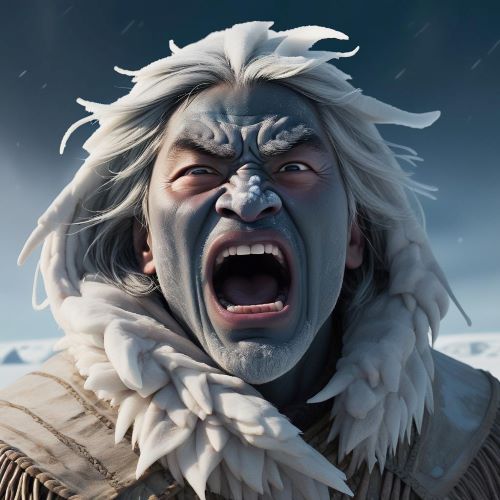
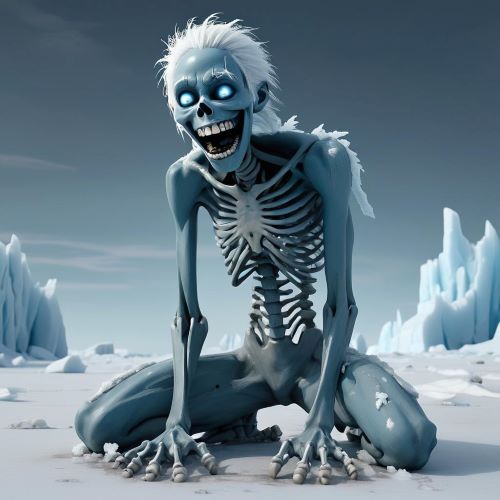
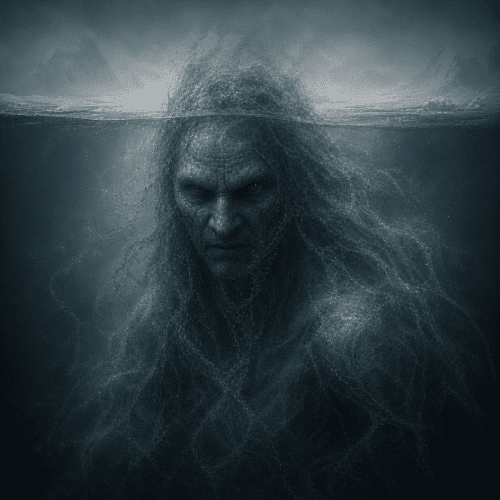
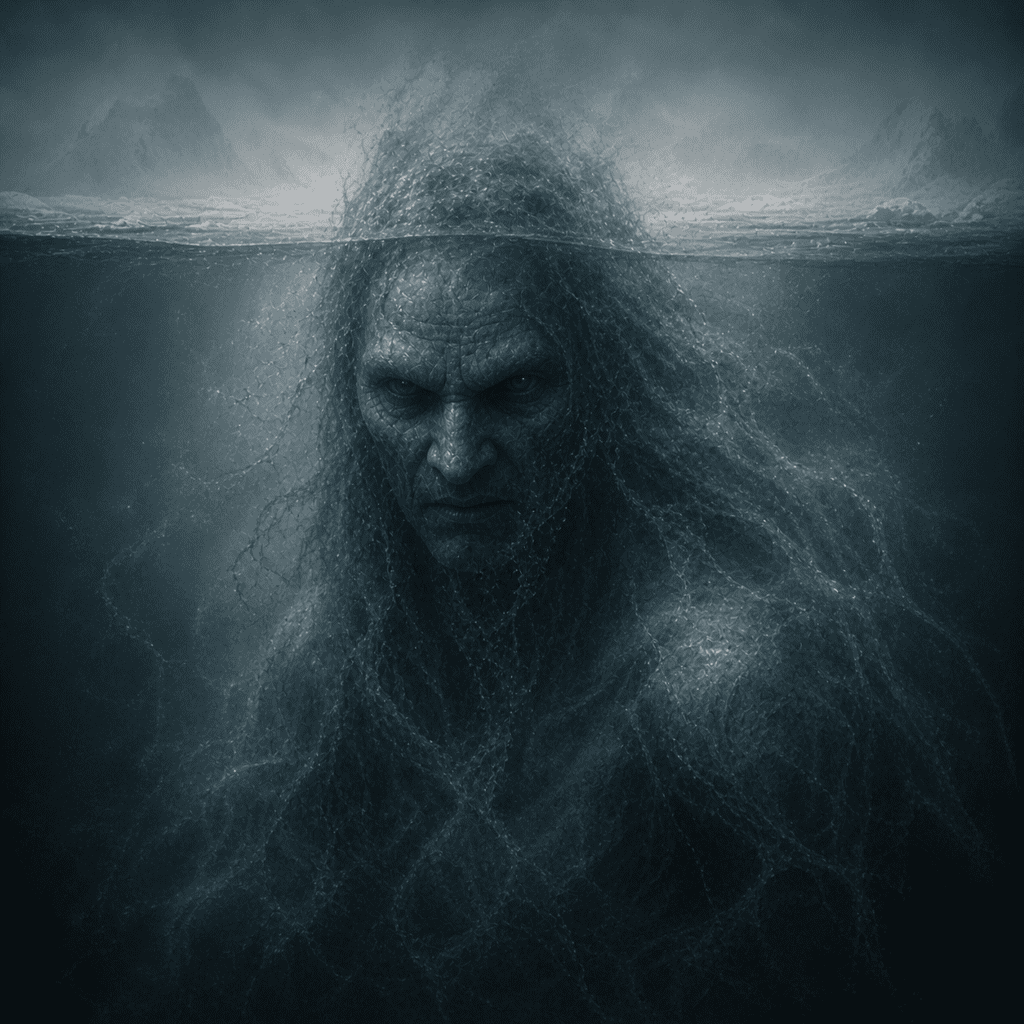
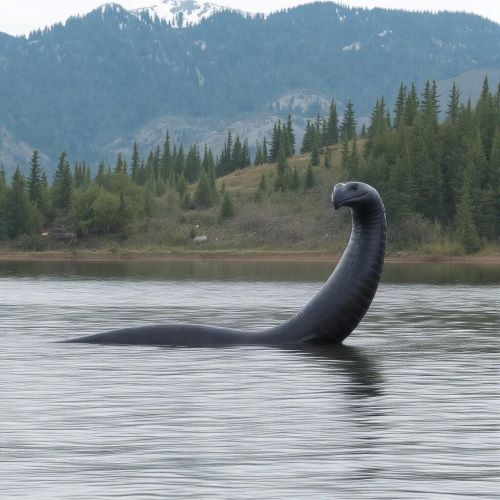
Descriptions of Aipaloovik are limited, which is consistent with many Inuit spirits that are defined more by presence than appearance. Some accounts describe him with a distorted, almost human face resembling a fish such as a cod, combining familiarity with something unsettling. Others suggest a large-headed being lurking beneath the surface, waiting to strike at those above.
What matters more than a fixed form is how he is experienced. Aipaloovik is rarely seen clearly. Instead, he is sensed through sudden disturbances in the water, the cracking of ice, or the violent overturning of a kayak. This lack of a consistent physical shape reinforces his role as a lurking threat rather than a visible creature. Like many Arctic spirits, he exists at the edge of perception, where fear fills in the details.
Family
Aipaloovik is most often understood through contrast rather than lineage. He is positioned as the opposite of Anguta, a figure associated with protection and guidance in the waters. While Anguta represents safety and balance, Aipaloovik embodies chaos and destruction.
There is no clear mention of parents, partners, or offspring in traditional accounts. His isolation is fitting for his nature. He does not belong to a family structure but instead functions as a singular force of hostility within the marine world. This contrast between protective and destructive spirits reflects a broader Inuit understanding of balance, where opposing forces shape reality.
Other names
The name Aipaloovik appears consistently across recorded sources, with only minor variations in spelling depending on transcription. Unlike many mythological figures who carry multiple titles, Aipaloovik remains largely unchanged in identity.
This consistency suggests that his role is clearly defined within Inuit tradition. He is not a complex deity with shifting aspects but a focused embodiment of danger at sea. The absence of alternative names reinforces his singular purpose as a warning figure tied to death and misfortune.
Powers and Abilities
Aipaloovik’s power lies in his connection to the sea itself. He is believed to influence the waters in ways that bring destruction, from sudden storms to unseen currents that can overturn boats. For those traveling by kayak, he represents the moment when control is lost and survival hangs by a thread.
He is also associated with drowning and the fate of those who perish in the ocean. Some traditions describe him as feeding on drowned souls or dragging victims beneath the ice. Whether taken literally or symbolically, this connection to death highlights his role as a harbinger of the sea’s most dangerous outcomes.
Unlike spirits that can be appeased or negotiated with, Aipaloovik is often portrayed as unpredictable and hostile. His presence is not something to be controlled but something to be respected. In this way, he reflects the reality of Arctic life, where nature does not always offer second chances.
Modern Day Influence
Although rooted in oral tradition, Aipaloovik continues to appear in modern interpretations of Inuit culture. His stories are still shared as reminders of the ocean’s risks, especially in regions where traditional knowledge remains vital.
Beyond cultural storytelling, Aipaloovik has entered global media in subtle ways. He appears in adaptations such as the video game Final Fantasy XI, where he is reimagined as a powerful sea creature. While these portrayals take creative liberties, they preserve his core identity as a dangerous force tied to water.
In academic and digital spaces, Aipaloovik is increasingly discussed as part of Arctic belief systems, offering insight into how indigenous communities understood and navigated extreme environments. His continued presence shows how traditional figures can evolve while still carrying their original meaning.
Related Images

Source
Bilby, J. W. (1923). Among unknown Eskimo: An account of twelve years intimate relations with the primitive Eskimo of ice-bound Baffin Land. J.B. Lippincott.
FamilyEducation. (2023). 101 Inuit boy names with meanings. https://www.familyeducation.com/pregnancy/baby-names/101-inuit-boy-names-with-meanings
Ffxiclopedia. (n.d.). Aipaloovik. https://ffxiclopedia.fandom.com/wiki/Aipaloovik
Kids Kiddle. (n.d.). Who is Aipaloovik? https://kids.kiddle.co/Aipaloovik
LLC Books. (2010). American deities: Inuit goddesses, Inuit gods. General Books LLC.
Wikipedia. (n.d.). Aipaloovik. https://en.wikipedia.org/wiki/Aipaloovik
Abel, E. L. (2009). Death Gods: An Encyclopedia of the Rulers, Evil Spirits, and Geographies of the Dead. ABC-CLIO.
Coulter, C. R., & Turner, P. (2013). Encyclopedia of Ancient Deities. Routledge.
Smith, E. L., & Brown, N. R. (2008). The Complete Idiot’s Guide to World Mythology. Penguin.
Zakhary, Y. (2025). Aipaloovik: The Malevolent Sea Deity of Inuit Mythology. The Essential History and Mythology.
Frequently Asked Questions
Who is Aipaloovik in Inuit tradition?
Aipaloovik is a feared sea spirit in Inuit tradition, associated with death, drowning, and the unpredictable dangers of Arctic waters faced by hunters and travelers.
What does Aipaloovik represent?
Aipaloovik represents the harsh and unforgiving nature of the sea, symbolizing risk, chaos, and the constant threat that comes with survival in Arctic environments.
Is Aipaloovik a god or a spirit?
Aipaloovik is generally considered a malevolent sea spirit rather than a worshipped god, embodying destructive forces rather than protection or guidance.
Does Aipaloovik have a physical form?
Descriptions vary, but Aipaloovik is often unseen or partially formed, with some accounts describing a distorted human-fish-like face emerging from the water.
How is Aipaloovik relevant today?
Aipaloovik remains culturally significant through storytelling, academic study, and modern media, continuing to represent respect for nature’s power and danger.