

Nei Tituaabine : The Sacred Tree Maiden of Kiribati
At a glance
| Description | |
|---|---|
| Origin | Kiribati Mythology |
| Classification | Spirits |
| Family Members | Auriaria (Partner) |
| Region | Kiribati |
| Associated With | Fertility, Sacred trees, Nourishment |
The Mythlok Perspective
In Mythlok’s Perspective, Nei Tituaabine represents one of the most emotionally grounded forms of divinity in Pacific mythology. Unlike gods who dominate through war or cosmic authority, her power comes through sacrifice and transformation into life itself. Her story reflects how island cultures viewed nature not as property, but as ancestral continuation. The idea that food-bearing trees emerge from her body transforms survival into a sacred inheritance. Across cultures, her myth resembles figures like Daphne from Greek mythology or Osanyin from Yoruba tradition, where nature becomes inseparable from spiritual identity. Yet Nei Tituaabine feels uniquely human, nurturing, and deeply ecological in a way that remains strikingly relevant today.
Nei Tituaabine
Introduction
Nei Tituaabine
is one of the most fascinating figures in Kiribati mythology and wider Micronesian folklore. Her legend is deeply connected to nature, fertility, and the origins of some of the most important trees in island life. In the oral traditions of Kiribati, she is remembered as a beautiful red-haired woman whose death transformed the landscape itself, giving rise to trees that sustained future generations.
The story of Nei Tituaabine is more than a simple tale of transformation. It reflects the close relationship between Pacific island communities and the natural world around them. In many parts of Oceania, myths explain how islands, plants, and sacred places came into existence. Nei Tituaabine’s legend stands out because it directly links the human body to nourishment, shelter, and survival.
Her myth survives through folklore collections, anthropological records, and oral storytelling traditions of the Gilbert Islands, now known as Kiribati. Even today, she remains a symbolic figure representing renewal, ancestry, and humanity’s dependence on nature.
Physical Traits
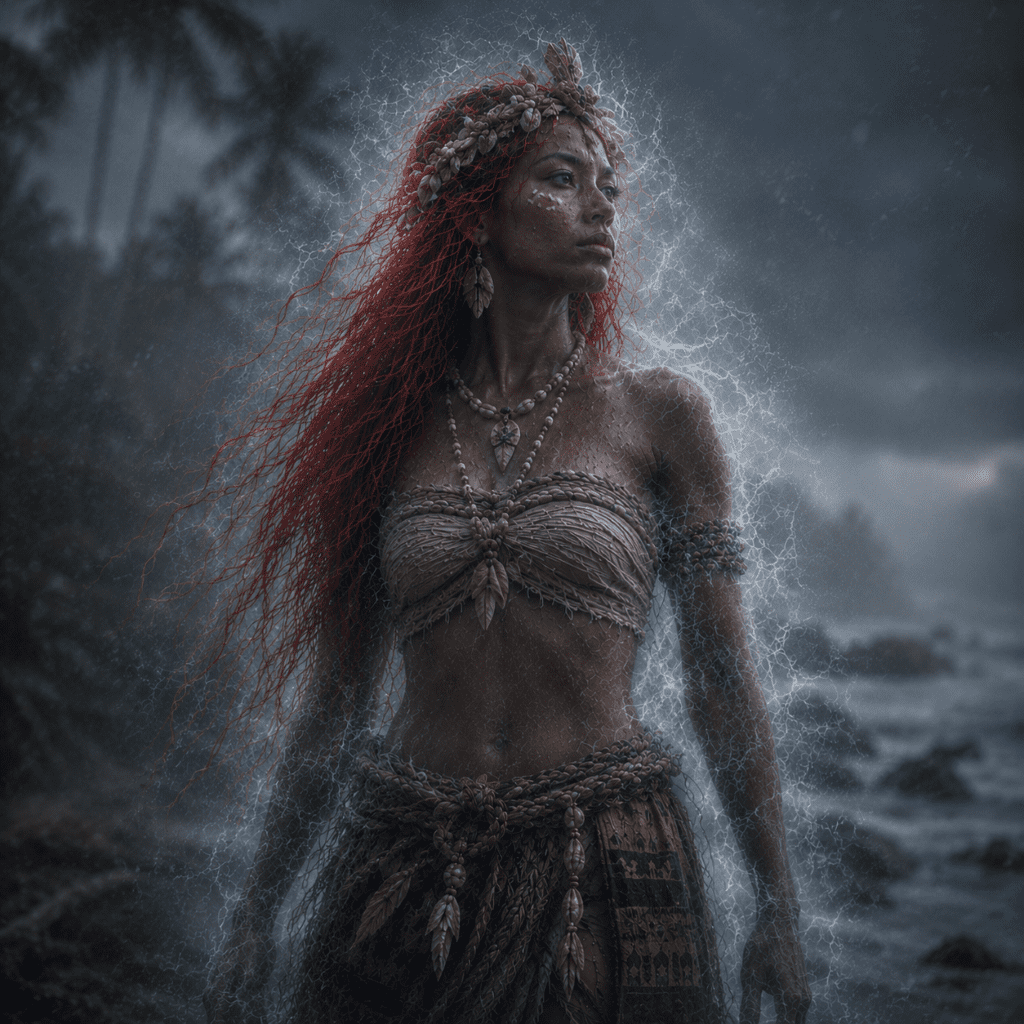
Traditional descriptions portray Nei Tituaabine as an exceptionally beautiful maiden with vivid red hair and radiant eyes. Her appearance is often described in supernatural terms, with her eyes compared to flashes of lightning crossing the sky. In some versions of the legend, lightning itself announces her presence, giving her an almost divine aura.
Her red hair is one of the most recognizable elements of her identity. In Kiribati mythology, unusual physical traits often signify spiritual importance or ancestral power. The brightness of her hair and eyes separates her from ordinary mortals and emphasizes her connection to celestial forces and the natural world.
Many oral accounts also describe her as calm, graceful, and nurturing. Her beauty is not presented as destructive or dangerous, but instead as life-giving and harmonious. This gentle characterization becomes especially important later in the myth, when her body transforms into trees that provide food, materials, and protection for the people of the islands.
Unlike warrior gods or storm spirits found in other mythologies, Nei Tituaabine’s power is closely tied to creation and sustenance. Her physical appearance reflects this softer but equally powerful connection to life and fertility.
Family
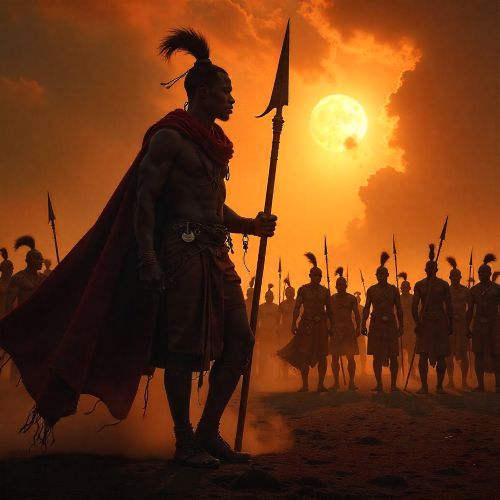
Nei Tituaabine is most commonly associated with Auriaria, a legendary red-haired giant and cultural hero in Kiribati mythology. Auriaria is often described as a powerful chieftain or demigod whose stories appear throughout Gilbert Islands traditions. According to the legends, he fell deeply in love with Nei Tituaabine because of her extraordinary beauty and spiritual presence.
Some traditions describe them as lovers, while others place them within broader ancestral or clan-based mythic genealogies. Despite their close relationship, the stories consistently state that they had no children. Instead, Nei Tituaabine becomes a symbolic mother through her transformation into life-giving trees that nourish entire communities.
Certain regional traditions also connect her story to other ancestral figures within Kiribati cosmology. These connections place her within a larger mythological network tied to clan origins, maneaba traditions, and sacred genealogies. In Kiribati culture, the maneaba serves as an important communal meeting house and spiritual center, making mythological ancestry an important part of social identity.
Some lesser-known versions of the myth also mention the giant chief Uekera, who mourned her death and remained near her grave. These variations highlight how oral traditions evolve differently across islands and communities while preserving the central symbolism of transformation and rebirth.
Other names
The name Nei Tituaabine is the most widely recorded version found in English-language sources and folklore studies. The word “Nei” is an honorific used in Gilbertese culture for women, showing respect and status. Because of this, her name carries both personal and cultural significance.
Different spellings occasionally appear in anthropological texts and oral recordings, including Titua’abine and Tituabine. These variations are mostly the result of transliteration differences and regional pronunciation across the islands of Kiribati.
She is sometimes referred to symbolically as the “Tree Maiden” or “Tree Goddess of Kiribati” because of her transformation into sacred vegetation. These titles are modern descriptive labels rather than traditional names, but they help explain her role in the mythology to contemporary audiences.
Unlike many mythological figures with long lists of titles, Nei Tituaabine remains associated primarily with a single identity. This simplicity reflects the focused nature of her legend and the strong symbolic meaning attached to her transformation.
Powers and Abilities
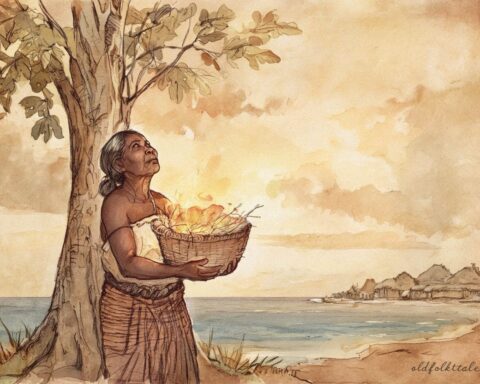
Nei Tituaabine’s greatest power is her transformation into sacred trees after death. According to the myth, different trees emerged from parts of her body after she was buried. A coconut tree grew from her head, a pandanus tree from her body or heels depending on the version, and an almond tree from her navel or feet.
These trees were not random creations. Each one held immense practical and spiritual importance for the people of Kiribati. Coconut palms provided water, food, oil, and building materials. Pandanus trees supplied fruit, weaving fibers, mats, and roofing materials. Almond trees offered shade and edible nuts. Through this transformation, Nei Tituaabine became permanently connected to nourishment and survival.
Her story functions as an origin myth explaining the sacred nature of these plants within island culture. Rather than viewing nature as separate from humanity, the myth presents trees as extensions of ancestral life itself. This idea is common throughout Pacific mythology, where the environment is often treated as spiritually alive and deeply connected to human existence.
Some traditions also associate Nei Tituaabine with lightning because of the glowing appearance of her eyes and the flashes said to accompany her presence. However, she is not portrayed as a destructive storm deity. Instead, lightning serves as a symbol of divine beauty and spiritual power.
Her abilities are ultimately tied to renewal, fertility, and continuity. Even in death, she continues to sustain life through the trees that emerge from her body, making her one of the most nurturing figures in Kiribati mythology.
Modern Day Influence
Although Nei Tituaabine is not as globally recognized as figures from Greek or Norse mythology, her legend remains culturally important in Kiribati and within studies of Pacific folklore. Anthropologists, historians, and scholars of Oceanic traditions frequently reference her story when discussing transformation myths and sacred ecological symbolism.
Her legend has also gained relevance in conversations about environmental awareness. The connection between human life and sacred trees resonates strongly in modern discussions about sustainability and ecological protection across Pacific island nations. In Kiribati, where climate change and rising sea levels threaten traditional ways of life, myths connected to land and nature carry even greater emotional significance.
Educational programs and cultural preservation efforts sometimes use stories like Nei Tituaabine’s to teach younger generations about traditional values and ancestral heritage. Her myth reinforces the idea that nature should not simply be exploited but respected as part of a living spiritual continuum.
Outside Kiribati, her story occasionally appears in comparative mythology studies examining how different cultures explain the origins of plants and landscapes. Similar themes can be found in Polynesian, Melanesian, and Southeast Asian folklore, where humans or divine beings transform into natural elements after death.
Despite limited appearances in mainstream popular culture, Nei Tituaabine continues to survive through oral tradition, academic research, and cultural storytelling. Her legacy remains rooted in the land itself, symbolized by the trees that continue to sustain island communities.
Related Images


Source
Nei Tituaabine. (n.d.). In Wikipedia. Retrieved from https://en.wikipedia.org/wiki/Nei_Tituaabine.
Auriaria. (n.d.). In Wikipedia. Retrieved from https://en.wikipedia.org/wiki/Auriaria.
Teaiwa, T. (2002). Built Form and Culture (discussion of maneaba and clan associations). EPFL LASUR. Retrieved from https://www.epfl.ch/labs/lasur/wp-content/uploads/2018/05/HOCKINGS.pdf.
“The Ear‑Flyers and Related Motifs in the Gilbert Islands and Its …” (n.d.). Journal article summary. JSTOR. Retrieved from https://www.jstor.org/stable/539155.
Nei Tituaabine. (n.d.). In Academic Dictionaries and Encyclopedias. Retrieved from https://en-academic.com/dic.nsf/enwiki/58165.
Lapita Pottery (discussion including Nei lineage names). (2014). Academia.edu. Retrieved from https://www.academia.edu/5535758/LAPITA_POTTERY.
Multicultural Oceania (Kiribati myth summaries). (n.d.). Multiculturality‑Oceania. Retrieved from http://multiculturality-oceania.blogspot.com/p/fiji.html.
Kiribati myth summaries and online folklore collections. (n.d.). Various online compendia. Retrieved from https://en.wikipedia.org/wiki/Nei_Tituaabine.
Frequently Asked Questions
Who is Nei Tituaabine in Kiribati mythology?
Nei Tituaabine is a legendary red-haired maiden in Kiribati mythology associated with sacred trees, fertility, and transformation.
What happened to Nei Tituaabine after her death?
According to the myth, coconut, pandanus, and almond trees grew from different parts of her body after burial.
What does Nei Tituaabine symbolize?
She symbolizes nourishment, renewal, environmental harmony, and the sacred connection between humans and nature.
Who was Auriaria in Nei Tituaabine’s story?
Auriaria was a legendary giant chieftain or demigod closely associated with Nei Tituaabine in Kiribati folklore.
Why is Nei Tituaabine important in Kiribati culture?
Her legend explains the sacred origins of essential island trees and reinforces respect for nature and ancestral traditions.
