Mariang Sinukuan : The Powerful Guardian of Mount Arayat
At a glance
| Description | |
|---|---|
| Origin | Philippine Mythology |
| Classification | Spirits |
| Family Members | Nature, Mountains, Abundance |
| Region | Philippines |
| Associated With | Nature, Mountains, Abundance, |
The Mythlok Perspective
In Mythlok’s Perspective, Mariang Sinukuan represents the balance between generosity and consequence, a theme that appears across cultures. She mirrors figures like India’s forest guardians and Japan’s mountain kami, where nature is both nurturing and unforgiving. Unlike purely benevolent spirits, her duality reflects a deeper truth: abundance exists only where respect is maintained. This places her closer to elemental forces than humanized deities, making her a symbol of ecological equilibrium rather than simple folklore.
Mariang Sinukuan
Introduction
Mariang Sinukuan is one of the most revered diwatas in Philippine folklore, deeply connected to Mount Arayat in Pampanga. Known as a guardian spirit of nature, she embodies both generosity and justice. Stories describe her quietly providing food and resources to struggling families, leaving fruits and game at their doorsteps without seeking recognition. Yet her kindness was not without limits. When greed replaced gratitude, she punished offenders and withdrew her blessings, transforming abundance into scarcity.
Her origins trace back to pre-colonial Kapampangan belief systems, where the mountain was associated with a powerful male deity known as Aring or Apung Sinukuan. This figure was linked to the sun, war, and death, representing a commanding cosmic presence. During Spanish colonization, this identity gradually shifted into a feminized form, becoming Maria Sinukuan. Despite this transformation, traces of the original deity remain embedded in oral traditions, preserving her deeper mythological roots. Today, Mariang Sinukuan stands as a layered figure shaped by both indigenous spirituality and colonial reinterpretation.
Physical Traits
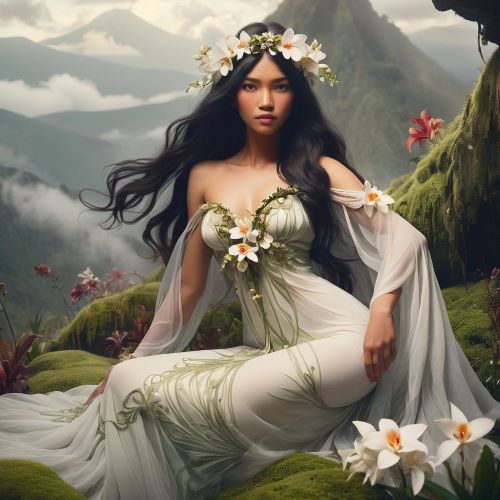
Mariang Sinukuan is consistently described as possessing a striking and almost otherworldly beauty. Her long, curly black hair flows down to her ankles, framing a face marked by soft yet defined features. Her brown skin is often described as radiant, complemented by arched eyebrows, long eyelashes, and delicately shaped lips.
She is typically depicted wearing a flowing white garment, a detail that reflects both colonial influence and her association with purity and nature. While her appearance aligns with familiar ideals of beauty, there is always an underlying sense of awe in these descriptions. Encounters with her are rarely ordinary. Witnesses often describe a luminous presence, as if her form carries the essence of the mountain itself, blending human grace with divine power.
Family
The familial connections of Mariang Sinukuan vary across different versions of the myth, reflecting the fluid nature of oral traditions. In some accounts, she is linked directly to Apung Sinukuan, either as a transformed version of the original deity or as part of his lineage. Other narratives expand this connection into a broader mythological family.
Certain Kapampangan stories describe Apung Sinukuan as a father figure with children representing different times of day, such as dawn, noon, and afternoon. These symbolic offspring reinforce the deity’s association with cosmic cycles. There are also traditions that connect Mariang Sinukuan to other mountain spirits, including Maria Makiling, suggesting either kinship or shared origins within a wider network of diwatas.
In some legends, she is said to have sought help from a divine sibling in conflicts with darker forces, reinforcing the idea that she is part of a larger spiritual hierarchy rather than an isolated figure.
Other names
Mariang Sinukuan is known by several names that reflect both linguistic roots and historical shifts. The name “Sinukuan” itself is derived from words meaning surrender or submission, suggesting a being of immense authority. Earlier forms such as Aring Sinukuan or Apung Sinukuan highlight her origins as a powerful male deity revered as an elder or lord.
With the arrival of Spanish colonizers, the name evolved into Maria Sinukuan, aligning her with other “Maria” figures in Philippine folklore. This transformation was part of a broader effort to reshape indigenous deities into forms that were more acceptable within colonial religious frameworks.
Despite these changes, the essence of the name remains intact. Whether addressed as Apung or Maria, Sinukuan continues to signify a force that commands respect and embodies both power and protection.
Powers and Abilities
Mariang Sinukuan’s abilities reflect her role as both a nurturer and a protector of nature. She governs the abundance of Mount Arayat, ensuring that fruit trees bear generously and animals thrive within her domain. For those who respect the mountain, she is a provider, quietly sustaining life without demanding recognition.
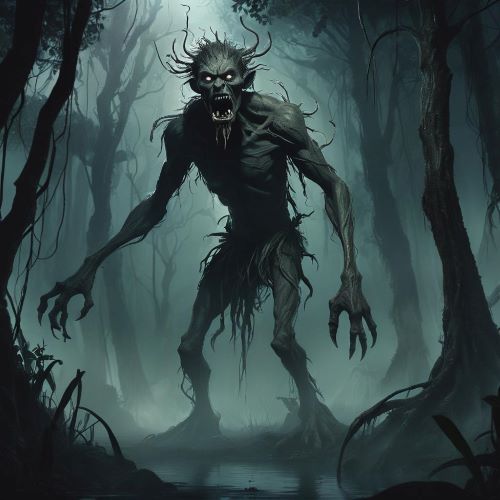
However, her power also carries a strong sense of justice. Those who exploit or disrespect her land face severe consequences. Legends frequently mention her transforming wrongdoers into animals or stone, symbolizing the irreversible cost of greed.
Her abilities extend far beyond simple control over nature. Stories attribute to her immense strength, the power to reshape landscapes, and the ability to summon storms and command the elements. She is also known for shape-shifting and using illusions, allowing her to observe human behavior without being detected. In one tale, she takes the form of a small creature to uncover wrongdoing, demonstrating both her cunning and vigilance.
Some narratives even describe her moving mountains or altering geography, emphasizing her status as a being whose influence extends beyond the visible world. These powers place her firmly within the realm of divine guardians rather than mere nature spirits.
Modern Day Influence
Mariang Sinukuan continues to hold cultural significance in the Philippines, particularly in Pampanga. Her story has evolved beyond oral tradition into modern forms of expression, including literature, theater, television, and digital art. Festivals such as the Sinukwan Festival celebrate her legacy, blending mythology with regional identity and pride.
She also appears in contemporary storytelling, where her narrative is often reinterpreted to address modern concerns such as environmental conservation and cultural preservation. Productions like dance theater performances and children’s books ensure that her story remains accessible to younger generations.
In addition, her presence can be seen in symbolic objects and local beliefs, including the use of Sinukuan wood as a talisman believed to grant influence and respect. Through these evolving interpretations, Mariang Sinukuan remains a living figure, continuously adapting while retaining her core identity as a guardian of balance between humans and nature.
Related Images

Source
Evasco, E. Y. (2006). Mariang Sinukuan, ang diwatang tagapag-ingat ng Bundok Arayat. LG & M Corporation.
Eugenio, D. L. (2002). Philippine folk literature: The legends. University of the Philippines Press.
Kapampangan Nation. (2012, October 12). Indung Kapampangan. https://kapampangannation.wordpress.com/2012/10/12/indung-kapampangan/
Pinoy Edition. (2008, December 31). Mariang Sinukuan. https://www.pinoyedition.com/mga-alamat/mariang-sinukuan/
Saint Louvent. (2025, October 9). Mariang Sinukuan: Ang Mahiwagang Tagapag-alaga Ng Bundok. https://saintlouvent.com/blog/mariang-sinukuan-ang-mahiwagang-tagapag
Scribd. (2026, February 13). Legend of Mariang Sinukuan [PDF]. https://www.scribd.com/document/704157451/Legend-of-Mariang-Sinukuan
Studocu. (n.d.). Quiz: The Legend of Mariang Sinukuan – ART AP01. https://www.studocu.com/ph/quiz/the-legend-of-mariang-sinukuan/6031281
The Aswang Project. (2022, June 2). Mariang Sinukuan, the Diwata of Mt. Arayat in Pampanga. https://www.aswangproject.com/mariang-sinukuan/
Frequently Asked Questions
Who is Mariang Sinukuan?
Mariang Sinukuan is a mountain diwata from Pampanga, known as the guardian spirit of Mount Arayat and a protector of nature.
What powers does Mariang Sinukuan have?
She controls nature, creates abundance, summons storms, and punishes greed by transforming wrongdoers.
Is Mariang Sinukuan based on a male deity?
Yes, she evolved from Apung Sinukuan, a pre-colonial male deity later feminized during Spanish colonization.
Where is Mariang Sinukuan believed to live?
She is said to dwell in Mount Arayat in Pampanga, Philippines, guarding its natural resources.
Why did Mariang Sinukuan stop helping people?
Legends say she withdrew her gifts after humans became greedy and abused her generosity.