Lions in Ancient Civilizations and Sacred Traditions
Lions have occupied a distinctive place in mythology as symbols of strength, sovereignty, protection, courage, and divine authority. Their imposing physical presence made them natural companions of gods and kings, while their association with wilderness allowed them to become guardians of sacred spaces and embodiments of dangerous natural power. Mythical lions appear both as supernatural animals and as hybrid beings combining leonine characteristics with human or divine forms.
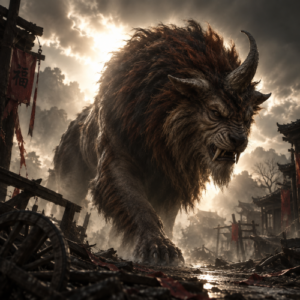
In Greek mythology, the Nemean Lion is one of the most famous legendary lions. Its hide was said to be impervious to ordinary weapons, making the creature an extraordinary challenge for Heracles during his first labour. Heracles ultimately defeats the beast through his physical strength rather than conventional weapons. The Nemean Lion therefore represents the transformation of a familiar predator into an almost invulnerable supernatural creature.
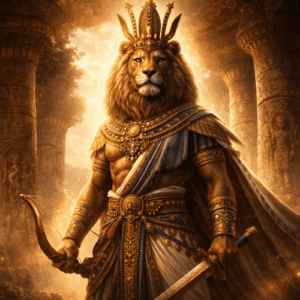
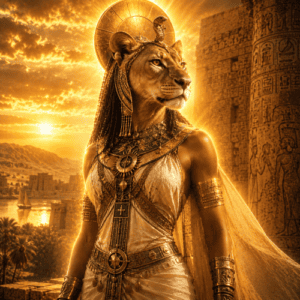
Ancient Egyptian traditions contain several powerful lion-associated deities. Sekhmet, depicted as a woman with the head of a lioness, embodies destructive and protective aspects of divine power. She is associated with warfare, disease, healing, and the protection of the divine order. Maahes, a lion-headed Egyptian god, is likewise connected with protection, warfare, and royal authority. These figures demonstrate how the lion could represent both the terrifying and protective dimensions of divine power.
South Asian mythology contains one of the most famous lion-human hybrids in Narasimha, the lion-headed incarnation of Vishnu. Appearing neither fully human nor fully animal, Narasimha represents divine intervention in a form capable of overcoming a supernatural threat that could not be defeated through ordinary means. The figure demonstrates how lion characteristics could be incorporated directly into divine identity rather than simply appearing as an accompanying animal.
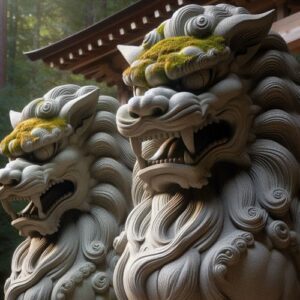
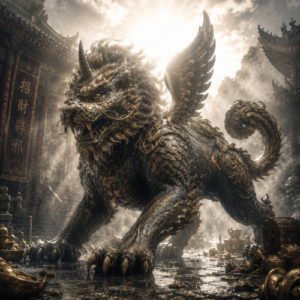
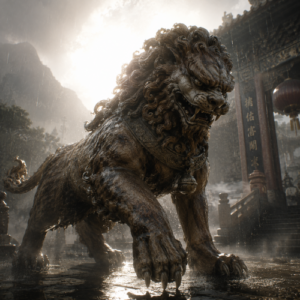
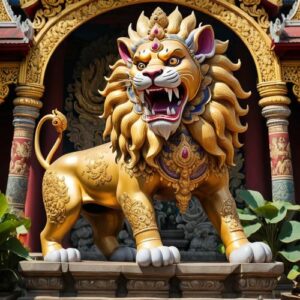
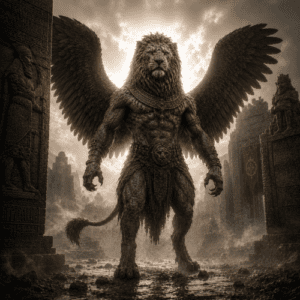
Lion guardians also became prominent across the ancient Near East and Asia. Lamassu, although usually represented with a human head, winged body, and the body of a bull or lion depending on tradition and artistic context, belong to a broader tradition of composite guardian beings protecting monumental entrances. Later Asian traditions similarly developed powerful guardian lions associated with temples, palaces, and sacred spaces.
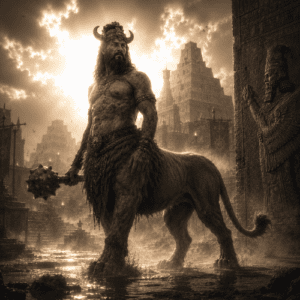
The lion also appears in hybrid creatures such as the Sphinx, whose leonine body and human head combine animal strength with human intelligence and authority. Although the Egyptian Sphinx tradition is distinct from later Greek versions of the creature, its enduring imagery demonstrates the extraordinary symbolic power of combining humanity with the lion.
Across these traditions, mythical lions can be monsters, protectors, divine manifestations, royal symbols, guardians, or supernatural hybrids. Some are dangerous beings that heroes must overcome, while others stand beside or embody the gods themselves.
The recurring appearance of the lion in mythology reflects its extraordinary symbolic versatility. It can represent the untamed wilderness and the authority of civilization at the same time. It can destroy, protect, rule, guard, or embody divine power.
From the Nemean Lion and Sekhmet to Narasimha and the Sphinx, mythical lions demonstrate how cultures transformed one of nature’s most formidable predators into enduring symbols of power, protection, sovereignty, courage, and sacred authority.