Pohnpeian Mythology
Pohnpeian mythology reflects the spiritual traditions of the people of Pohnpei, a volcanic island in the Federated States of Micronesia. Its stories connect the land, sea, ancestors, and supernatural beings, creating a worldview in which the natural landscape carries deep spiritual meaning. Oral traditions have preserved myths about creation, divine power, sacred places, and the origins of social order.
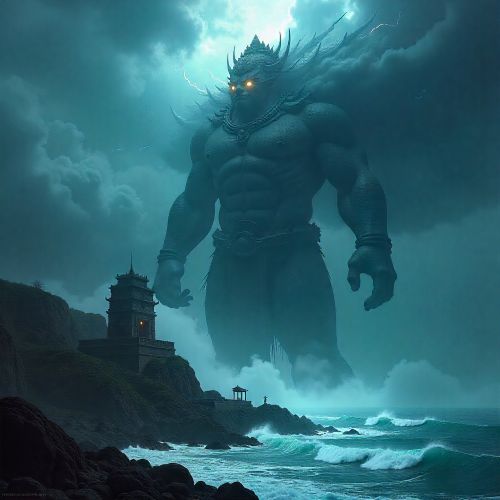
A central figure is Nahn Sapwe, a powerful deity associated with thunder, lightning, storms, and divine authority. In traditional accounts, supernatural beings helped establish the order of the world and passed important knowledge and customs to humanity. Thunder and storms could therefore be understood not simply as natural events, but as manifestations of spiritual power.
One of Pohnpei’s most important mythological landscapes is Nan Madol, the ancient city constructed on artificial islets along the island’s southeastern coast. Traditional stories attribute its construction to the twin brothers Olosohpa and Olosihpa, who were believed to possess supernatural abilities. Their stories connect the monumental site with powerful spiritual forces and the rulers who later governed from Nan Madol. The distinction between mythology, history, and sacred tradition is particularly strong at this site.
Pohnpeian traditions also recognize supernatural beings associated with the ocean, forests, agricultural lands, and other parts of the environment. The sea provides food and transportation, while fertile land supports crops such as taro and breadfruit. Respect for these resources is therefore closely connected with cultural and spiritual responsibility.
Ancestors are another important part of Pohnpeian spiritual life. The boundary between the living and the supernatural is not always presented as absolute. Ancestors can remain connected to families and communities, while sacred places and ritual practices help maintain relationships between generations. Stories, songs, ceremonies, and customary practices preserve this connection.
Pohnpeian mythology also reflects the importance of social hierarchy and leadership. Chiefs and other traditional authorities historically carried responsibilities that extended beyond political organization, including the preservation of customs and community order. Mythic traditions helped explain these relationships and reinforced obligations between individuals, families, and communities.
Today, Christianity and modern life have transformed many aspects of Pohnpeian religious practice, but traditional stories remain an important part of cultural identity. Nan Madol, oral traditions, ancestral knowledge, and the island’s distinctive landscape continue to connect contemporary Pohnpeians with their cultural past.
Pohnpeian mythology ultimately presents the island as more than a physical homeland. Its storms, waters, forests, monuments, and ancestral places form part of a sacred cultural landscape where history, nature, and spiritual tradition remain closely intertwined.