Buryat Mythology
Buryat mythology encompasses the traditional stories, spiritual beliefs, rituals, and sacred traditions of the Buryat people, a Mongolic-speaking population whose historic homeland includes the region around Lake Baikal in southern Siberia and parts of northern Mongolia. Buryat religious traditions developed through a long interaction between indigenous shamanic practices and Tibetan Buddhism. Rather than forming a single fixed mythology, they contain different local traditions concerning gods, spirits, ancestors, sacred landscapes, animals, and the relationship between the human and supernatural worlds.
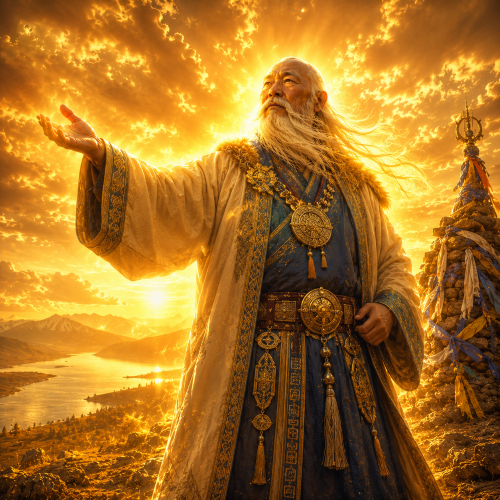
Buryat cosmology traditionally recognizes multiple levels of existence and a complex hierarchy of supernatural beings. Tengri, the heavenly powers, occupy an important place in traditional Buryat religious thought, while numerous local spirits are associated with mountains, rivers, forests, lakes, and particular territories. Esege Malan Tengri appears in Buryat mythological traditions as an important heavenly figure, particularly in creation narratives, but Buryat traditions contain multiple accounts and variations concerning the organization of the supernatural world. It is therefore more accurate to describe Buryat mythology as a network of related traditions than as a system governed by one universally defined supreme deity.
The natural landscape is central to Buryat spirituality. Lake Baikal, known to the Buryats as a sacred body of water, has long been surrounded by traditions concerning powerful spirits and sacred places. Mountains, springs, rivers, forests, and other landscape features can likewise possess spiritual significance. Ritual practices associated with sacred places have included offerings and ceremonies intended to maintain respectful relationships with local supernatural powers. This connection between territory and spirituality remains an important part of Buryat cultural identity.
Shamans historically played an important role in maintaining relationships between humans and the spirit world. Male ritual specialists are commonly known as böö, while Buryat traditions also recognize female practitioners. Their activities could include healing, divination, protection, rituals for ancestors, and ceremonies connected with local spirits. Shamanic traditions were transmitted through families and communities, with knowledge varying between different Buryat groups. The Soviet period brought severe restrictions on religious practice, contributing to the disruption of many traditional institutions. Shamanic traditions have nevertheless experienced significant revival since the end of the Soviet period, although contemporary practice can differ substantially from historical forms.
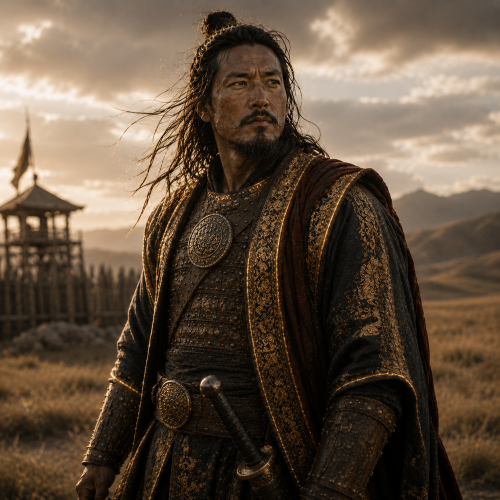
Buryat mythology also contains an extensive body of heroic and epic literature. Among the most important are the Geser traditions, which form part of the wider Central Asian and Mongolian epic world. Stories of heroes, supernatural beings, battles, ancestors, and extraordinary journeys explore themes of courage, loyalty, justice, protection, and the struggle between opposing supernatural forces. Oral performance was particularly important in preserving these narratives across generations.
Animals and natural forces frequently appear in Buryat traditions. Horses held particular importance within the pastoral culture of the region, while eagles, wolves, bears, and other animals could carry symbolic or spiritual significance. However, their meanings varied between different communities and should not be reduced to a single system of animal totems.
From the seventeenth century onward, Tibetan Buddhism became increasingly influential among many Buryat communities, particularly in areas that came under the influence of Mongolian Buddhist institutions. Buddhist teachings, monasteries, rituals, and figures became part of Buryat religious life alongside older traditions. This produced a complex religious landscape in which Buddhist and indigenous practices could coexist, interact, and sometimes overlap.
Today, Buryat mythology remains an important element of cultural revival. Oral literature, sacred landscapes, shamanic practices, Buddhist traditions, music, festivals, and contemporary art all contribute to the preservation and reinterpretation of Buryat heritage. Buryat mythology is therefore best understood as a living and evolving tradition shaped by the relationship between people, ancestors, sacred landscapes, supernatural beings, and centuries of cultural change.