Fuegian Mythology (Yamana, Selk’nam, and Kawésqar)
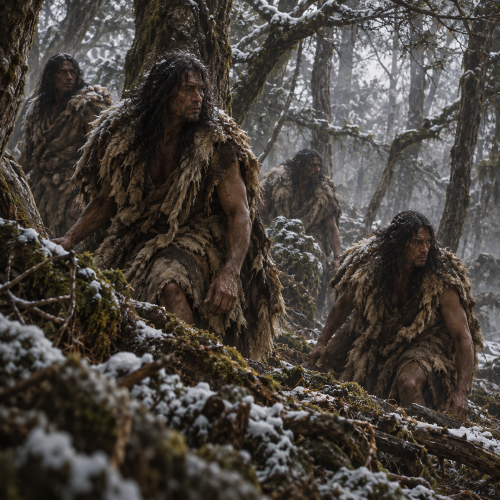
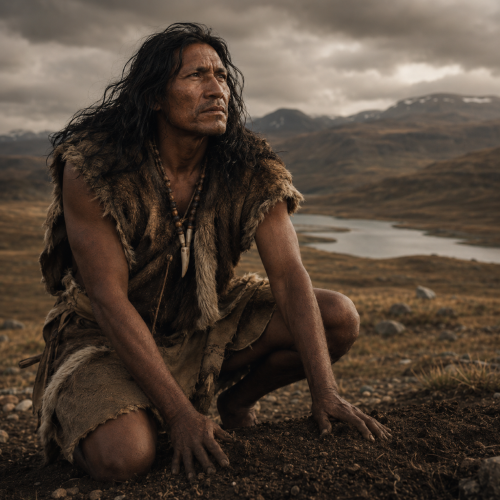
Fuegian mythology encompasses the distinct oral traditions of the Yámana (Yaghan), Selk’nam, and Kawésqar peoples of Tierra del Fuego and the surrounding southern regions of South America. Although these communities lived in neighboring parts of the archipelago, each developed its own languages, cultural practices, and mythic traditions. Their stories reflect close relationships with the sea, forests, winds, animals, fire, and the wider landscape, while also exploring creation, transformation, social responsibilities, and the relationship between humans and supernatural beings. Much of this knowledge was transmitted orally through storytelling, ceremonies, songs, and ritual practices.
The Selk’nam, who traditionally inhabited much of the main island of Tierra del Fuego, are particularly known for the Hain ceremony, an elaborate initiation and ceremonial institution. During Hain, men painted their bodies and wore masks and costumes to embody supernatural beings. The performances formed part of a larger system of teaching, initiation, social organization, and ritual knowledge. Selk’nam oral traditions also contain extensive accounts of ancestral beings, transformations, the origins of the world, and relationships between humans and the supernatural. The Hain therefore provides an important window into the symbolic and social dimensions of Selk’nam mythology.
The Yámana, or Yaghan, lived primarily around the southern channels and islands of Tierra del Fuego and developed a maritime culture closely connected to canoe travel, fishing, hunting, and gathering. Their oral traditions include stories of supernatural beings, culture heroes, transformations, and the origins of important elements of human life. Fire, animals, the sea, and the surrounding landscape appear repeatedly within Yámana cultural knowledge, reflecting the importance of the environment in everyday life and traditional storytelling.
The Kawésqar, another Indigenous people of the channels and fjords of southern Chile, also maintained a rich oral tradition shaped by their maritime environment. Their stories include supernatural beings, animals, landscapes, journeys, transformations, and relationships between the human and non-human worlds. Like the Yámana and Selk’nam, the Kawésqar transmitted much of their cultural knowledge through oral traditions rather than written texts, making recorded narratives and community knowledge important sources for understanding their mythology.
Colonization, disease, displacement, and cultural disruption severely affected the populations and traditions of the Indigenous peoples of Tierra del Fuego. Nevertheless, Yámana, Selk’nam, and Kawésqar cultural identities have not disappeared. Contemporary revitalization efforts include language preservation, oral-history projects, cultural education, artistic expression, archival work, and community-led initiatives. The mythology of these peoples offers an important record of Indigenous ways of understanding the natural and supernatural worlds of the far south, while continuing to hold cultural significance for their descendants today.