
Jack the Giant-Killer : The Clever Hero Who Defeated Giants
At a glance
| Description | |
|---|---|
| Origin | Cornish Mythology |
| Classification | Mortals |
| Family Members | N/A |
| Region | England |
| Associated With | Cleverness, Bravery, Trickery, Giant-slaying |
The Mythlok Perspective
In Mythlok’s Perspective, Jack the Giant-Killer represents a shift from divine heroism to human ingenuity. Unlike mythic warriors who inherit power, Jack earns his victories through intellect and adaptability, making him a distinctly grounded archetype. This places him alongside figures like Odysseus from Greek tradition and Anansi from West African folklore, both of whom rely on wit rather than strength. At the same time, his role as a giant-slayer mirrors heroes like Thor or Indra, who battle cosmic forces. Jack stands at the intersection of these traditions, embodying both the trickster and the warrior in a uniquely human form.
Jack the Giant-Killer
Introduction
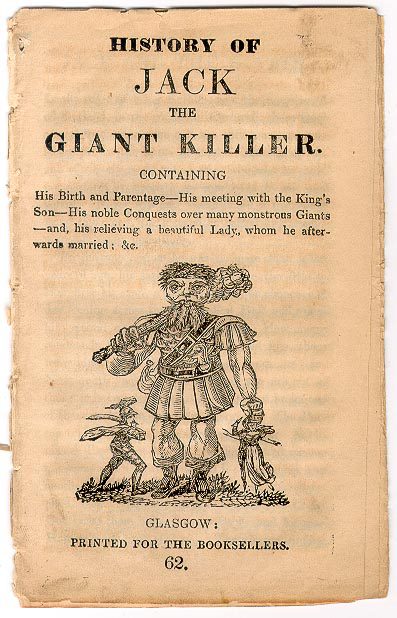
Jack the Giant-Killer is one of the most enduring heroes of British folklore, rooted specifically in the traditions of Cornwall, England. First appearing in print around 1711 in a chapbook titled The History of Jack and the Giants, the tale draws heavily from older oral traditions that circulated across Cornwall, Wales, and Brittany. These regions shared a deep mythic tradition in which giants represented chaos, ancient forces, and sometimes even the memory of earlier inhabitants of the land.
The story places Jack in the legendary era of King Arthur, a time when Britain was imagined as a landscape of magic, danger, and heroic opportunity. Unlike noble knights, Jack begins as a farmer’s son, an ordinary individual who rises to fame by confronting creatures far stronger than himself. His victories are not just acts of bravery but demonstrations of intelligence, strategy, and adaptability.
At a time when Arthurian legends were losing popularity, Jack the Giant-Killer emerged as a new kind of folk hero—one who did not rely on lineage or divine favor, but on wit and determination. This shift made the story widely accessible, allowing it to resonate across generations as a tale of the underdog triumphing over overwhelming odds.
Physical Traits
Jack is consistently portrayed as an ordinary young man with no extraordinary physical attributes. He is neither towering nor exceptionally muscular, and this contrast is central to the narrative. His strength lies not in his body, but in his mind.
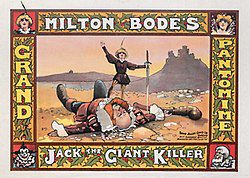
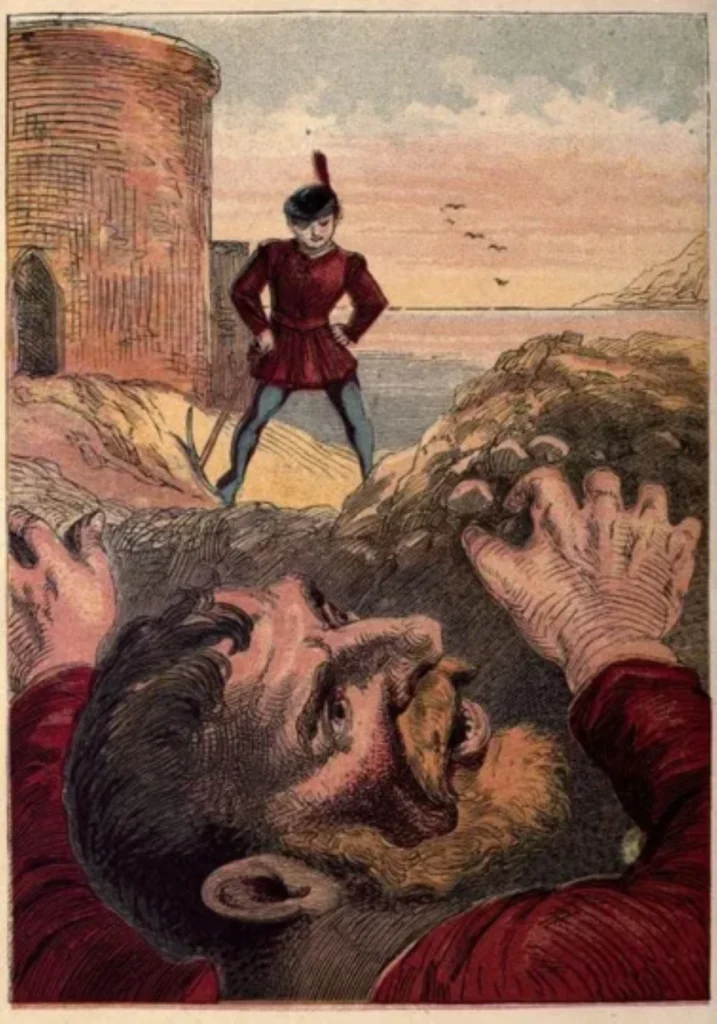
In sharp contrast, the giants he faces are grotesque and exaggerated in form. The first giant he defeats, Cormoran, is often described as standing anywhere between eighteen and twenty-seven feet tall. He is depicted as a monstrous being with immense strength and a terrifying presence, living on St. Michael’s Mount and terrorizing the local population.
Other giants such as Blunderbore and Thunderdel are even more exaggerated in some versions, sometimes possessing multiple heads or unnatural proportions. These descriptions reinforce the idea that giants are not merely large humans but chaotic, unnatural beings. Jack’s ordinary appearance, set against such overwhelming figures, enhances the dramatic tension of each encounter.
Family
Jack’s family background is intentionally minimal, reflecting the simplicity of many folk heroes. He is usually described as the son of a poor or hardworking Cornish farmer, with no elaborate lineage or noble ancestry.
This lack of detail is not an oversight but a narrative choice. By keeping his origins simple, the story emphasizes that heroism is not limited to kings or warriors. Jack represents the common person, someone who rises above his circumstances through courage and ingenuity.
In some versions of the tale, Jack’s story concludes with him marrying a noblewoman, often the daughter of a duke or a princess rewarded to him by King Arthur. This transformation—from farmer’s son to royal figure—symbolizes social mobility and the rewards of bravery, but his family itself plays no active role in his adventures.
Other names
Jack is most famously known as “Jack the Giant-Killer,” a title he earns after his first major victory over the giant Cormoran. This name becomes both his identity and his reputation, spreading across the land as he continues his exploits.
The name “Jack” itself carries significance in British folklore. It is a generic name often used to represent the “everyman,” appearing in numerous tales such as Jack and the Beanstalk and Jack the Frost. While these characters are distinct, they share common traits such as cleverness, boldness, and a tendency to challenge powerful forces.
In some variations, Jack is referred to with slight title changes such as “Giant Queller,” but these are rare. The giants themselves often have multiple name variations depending on the region, reflecting the story’s deep roots in Celtic and Breton traditions.
Powers and Abilities
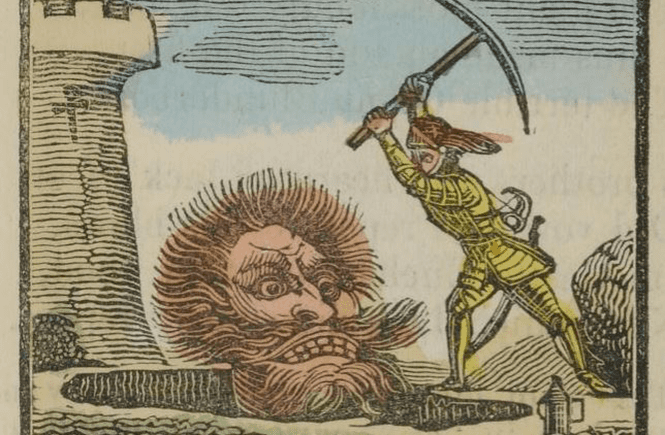
Jack possesses no innate supernatural powers, which makes his achievements even more remarkable. His greatest strength lies in his intelligence, creativity, and willingness to take risks. His first victory sets the tone for his approach. Instead of confronting Cormoran directly, Jack digs a deep pit and lures the giant into it, ultimately killing him with a pickaxe. This use of strategy over strength becomes a defining trait throughout the story.
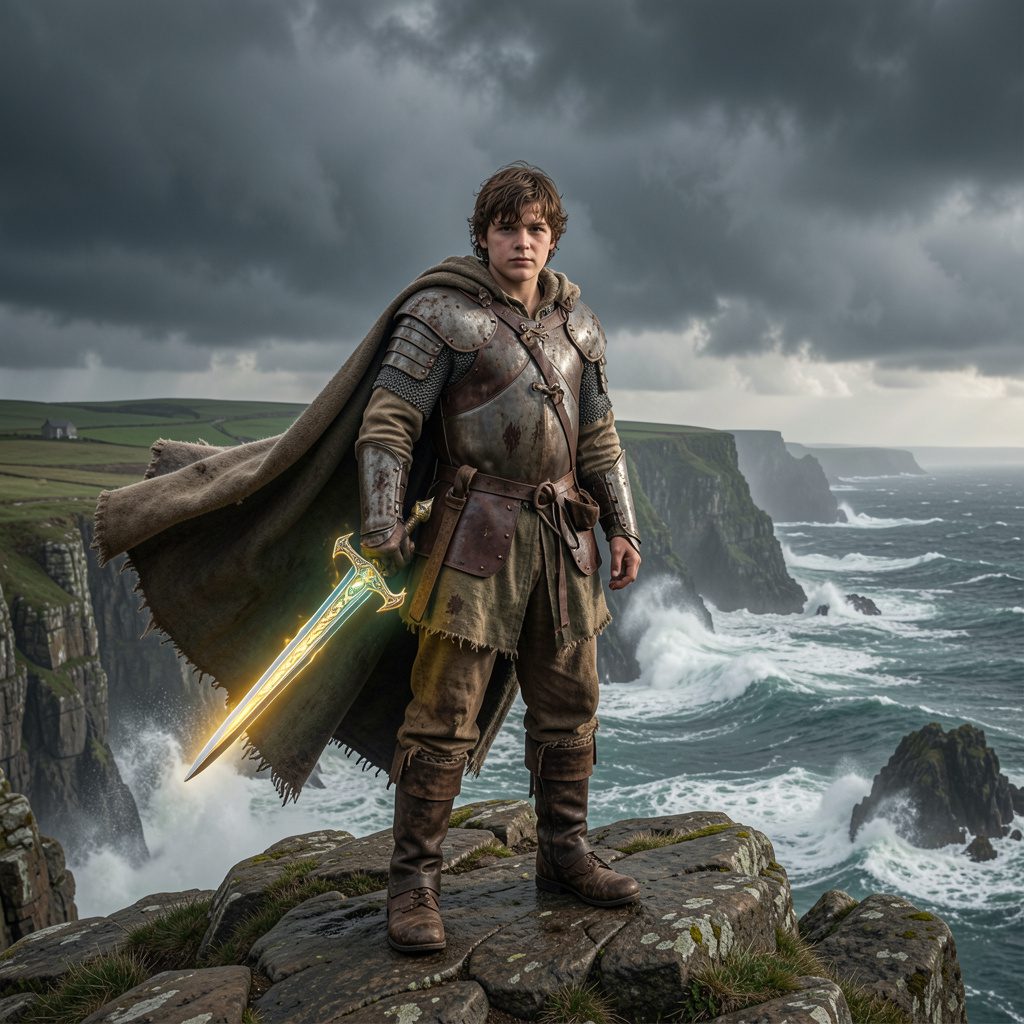
As his legend grows, Jack acquires several magical items that enhance his abilities. These include a cloak of invisibility that allows him to move unseen, a cap of knowledge that grants him insight, a sword of sharpness capable of cutting through anything, and shoes of swiftness that allow rapid movement. These items are often given to him by magical beings or obtained through clever interactions with other giants.
Jack also demonstrates psychological cunning. In one famous encounter, he tricks a two-headed giant into killing itself by pretending to cut open his own stomach and replacing his insides with a concealed object. This moment captures the essence of his character: he wins not by overpowering his enemies, but by outthinking them.
Modern Day Influence
Jack the Giant-Killer continues to influence modern storytelling, particularly in fantasy and children’s literature. The tale was widely circulated through chapbooks and later included in collections such as Andrew Lang’s The Blue Fairy Book, ensuring its survival into the modern era.
In cinema, the story inspired the 1962 film Jack the Giant Killer, which used practical and stop-motion effects to bring the giants to life. More recently, elements of the tale were incorporated into the 2013 film Jack the Giant Slayer, which blended it with Jack and the Beanstalk to create a larger fantasy narrative.
Beyond film, Jack’s influence can be seen in broader storytelling tropes. The clever underdog defeating a seemingly invincible enemy is a recurring theme in global narratives, from fairy tales to modern superhero films. In Cornwall, the legend remains tied to real locations such as St. Michael’s Mount, reinforcing its cultural and geographical significance. The story’s endurance lies in its simplicity and universality. It speaks to a fundamental human belief that intelligence and courage can overcome even the most overwhelming challenges.
Related Images

Mythical Events
Mythology Movies
Source
British Library. (n.d.). The history of Jack and the giants (1711 chapbook). Retrieved March 18, 2026, from https://www.bl.uk/collection-items/the-history-of-jack-and-the-giants
Carew, R. (1602). The survey of Cornwall. London: Printed by S. Stafford.
Cotton, J., & Eddowes, J. (c. 1760). Jack the Giant Killer. Shrewsbury: J. Eddowes.
Lang, A. (Ed.). (1889). The Blue Fairy Book. London: Longmans, Green & Co. Retrieved from
https://etc.usf.edu/lit2go/141/the-blue-fairy-book/3963/the-history-of-jack-the-giant-killer/
Malory, T. (1485). Le Morte d’Arthur. Westminster: William Caxton.
Monmouth, G. (1136). Historia Regum Britanniae. (Trans. 1929 ed.).
Opie, I., & Opie, P. (1974). The classic fairy tales. Oxford University Press.
Wikipedia contributors. (2026). Jack the Giant Killer. Wikipedia. Retrieved March 18, 2026, from https://en.wikipedia.org/wiki/Jack_the_Giant_Killer
Frequently Asked Questions
Who is Jack the Giant-Killer?
Jack the Giant-Killer is a folk hero from Cornwall, England, known for defeating giants using intelligence, traps, and magical items.
Is Jack the Giant-Killer the same as Jack and the Beanstalk?
No, they are separate stories, although both feature a character named Jack who confronts giants.
What powers did Jack the Giant-Killer have?
Jack had no natural powers but used magical items like a cloak of invisibility, sword of sharpness, and shoes of swiftness.
Who was the first giant Jack defeated?
The first giant he defeated was Cormoran, who lived on St. Michael’s Mount in Cornwall.
What is the origin of Jack the Giant-Killer?
The story originates from Cornish folklore and was first published in a chapbook around 1711.
