Matariki : The Māori Festival of Remembrance and Renewal
At a glance
| Description | |
|---|---|
| Location | Nationwide |
| Country | New Zealand |
| Dedicated To | Matariki and her star daughters |
| Duration | 1 day |
| Time of Year | June – July |
Mythlok Perspective
In Mythlok’s Perspective, Matariki is not merely a New Year festival but a reminder that time begins with remembrance. It reframes renewal as something earned through gratitude, not spectacle. The festival’s quiet dawn observances feel more powerful than midnight celebrations because they place ancestors, land, and season before individual ambition. Unlike the fireworks-driven Gregorian New Year, Matariki begins in stillness and reflection. It shares thematic parallels with Lunar New Year traditions in East Asia and with Samhain in Celtic practice, where the boundary between living and ancestral realms softens. Yet Matariki stands apart in how it binds environmental awareness to remembrance, making renewal inseparable from responsibility to the natural world.
Matariki
Introduction
Matariki is the Māori New Year festival celebrated across Aotearoa New Zealand. Marked by the mid-winter rising of the Matariki stars, the festival signals a sacred turning point in the year. It is a time for remembrance, gratitude, community gathering, and renewed intention. While the stars act as the celestial signal, Matariki itself is fundamentally about people, relationships, and cultural continuity.
Traditionally observed by iwi throughout the country, IT aligns with the Māori lunar calendar, known as the maramataka. The festival usually falls in late June or early July, with the exact date determined by lunar phases and regional observation. Since 2022, Matariki has been recognized as an official public holiday in New Zealand, making it the first national holiday rooted in Indigenous knowledge. Today, the festival unites communities across cultural backgrounds in shared reflection and celebration.
Connection with Mythology
The festival of Matariki is deeply grounded in Māori cosmology. Its mythic origins connect to the sacred narrative of the separation of Ranginui and Papatūānuku, whose children brought light into the world by parting their parents. One enduring tradition links Matariki to Tāwhirimātea, who, in grief and rage over the separation, cast his eyes into the heavens, forming the sacred cluster associated with the festival.
However, within the context of the festival, she is often understood as a whānau of stars. Each star carries symbolic meaning tied to aspects of the natural world and human experience. These associations shape the themes of the celebration itself. For example, Pōhutukawa is connected with remembrance of the deceased, while Hiwa-i-te-rangi represents aspirations for the coming year. Other stars are associated with freshwater, oceans, rain, wind, cultivated food, and forest resources.
Through these narratives, Matariki becomes more than myth. It becomes a framework for reflection. The stories reinforce whakapapa, the idea that humans, land, ancestors, and the cosmos are interconnected. The festival therefore expresses mythology in lived form, transforming ancient cosmology into contemporary practice.
Main Activities
The core of the festival revolves around three themes: remembering the past, celebrating the present, and preparing for the future.
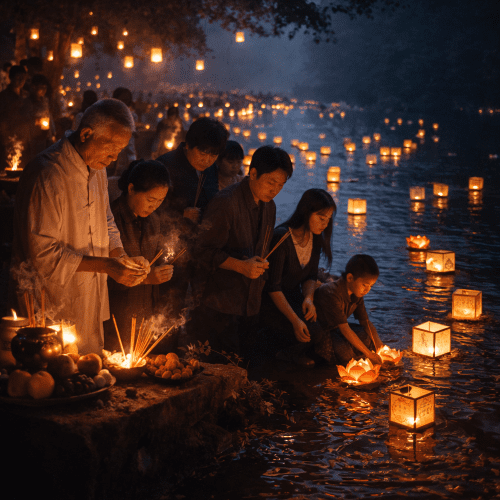
Remembrance is central. During dawn ceremonies, names of loved ones who passed away during the year are spoken aloud. Their spirits are symbolically acknowledged and farewelled. This act connects families to Pōhutukawa’s domain and ensures that grief is shared within community rather than carried alone.
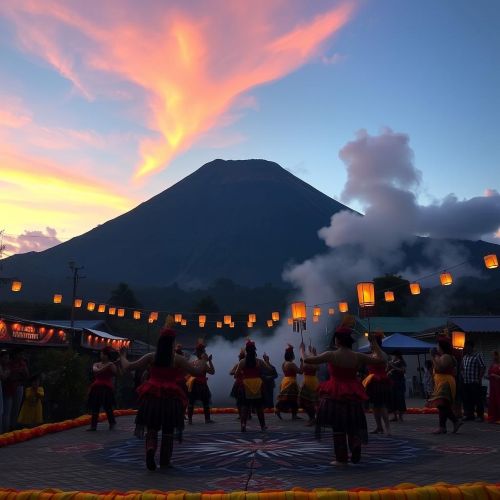
Celebration follows remembrance. Communities gather for shared meals, often including hāngī, seasonal produce, seafood, and traditional dishes. Food represents both gratitude for what the land has provided and hope for continued abundance. Music, kapa haka performances, storytelling, and art exhibitions animate public spaces across the country. Kite flying remains a symbolic activity, representing the spiritual link between earth and sky.
Preparation defines the third aspect of Matariki. Individuals and families set intentions for the coming year. Hiwa-i-te-rangi becomes the focus of hopes and aspirations. Some communities write wishes or goals and release them ceremonially. Schools incorporate lessons about heritage, environmental care, and seasonal awareness, ensuring knowledge passes to younger generations.
Modern celebrations now include large-scale festivals in Auckland, Wellington, Rotorua, and smaller regional towns. Light installations, markets, concerts, and cultural workshops reflect the festival’s growth. Despite contemporary adaptations, the heart of Matariki remains communal reflection and renewal.
Importance in Cultural History
Matariki has long served as the Māori New Year, structuring time in alignment with seasonal rhythms rather than fixed solar dates. In pre-colonial Aotearoa, this festival signaled the end of harvest and the beginning of winter planning. It guided food storage, agricultural preparation, and community organization.
Colonial disruption, land displacement, and legislative suppression of Indigenous knowledge led to a decline in widespread public observance during the twentieth century. Yet Matariki never disappeared entirely. Oral traditions and local practices preserved its meaning within whānau and iwi contexts.
The revival of Matariki in the late twentieth and early twenty-first centuries formed part of a broader Māori cultural renaissance. Language revitalization, renewed pride in mātauranga Māori, and community leadership restored the festival’s visibility. The declaration of Matariki as a national public holiday in 2022 marked a turning point. It acknowledged Māori knowledge as foundational to New Zealand’s identity rather than peripheral to it.
Today, Matariki stands as a symbol of cultural resilience and shared national reflection. It offers a uniquely Indigenous framework for beginning the year through remembrance, gratitude, and intention.
International Appeal
As New Zealand embraces Matariki nationally, international awareness of the festival has grown. Visitors increasingly plan winter travel to experience dawn ceremonies, cultural performances, and community gatherings. The festival offers a rare opportunity to witness living Indigenous tradition integrated into public life.
Globally, many cultures observe seasonal New Year festivals tied to celestial events. This shared human instinct to align celebration with cosmic cycles allows Matariki to resonate beyond Aotearoa. Yet what distinguishes Matariki is its integration of remembrance, environmental awareness, and community wellbeing within a single winter festival.
Through tourism, education, and cultural exchange, Matariki has become a model of how Indigenous festivals can shape national identity while remaining authentic to their roots.
Source
Museum of New Zealand Te Papa Tongarewa. (2026, January 10). What is Matariki?
https://www.tepapa.govt.nz/discover-collections/read-watch-play/matariki-maori-new-year/what-and-who-matariki/what-matariki
NZ History. (2022, December 7). Matariki. https://nzhistory.govt.nz/te-akomanga/contexts-activities/matariki
Te Ara Encyclopedia of New Zealand. (2009, March 1). Story: Matariki – Te Tau Hou Māori. https://teara.govt.nz/en/matariki-maori-new-year
Waitangi Treaty Grounds. (2023, June 6). Matariki: The Māori celebrates new life and remembers the past. https://www.waitangi.org.nz/waitangi-blog/matariki-the-maori-celebrates-new-life-and-remembers-the-past
Te Papa. (n.d.). The legend of Matariki and the six sisters. Retrieved from https://www.tepapa.govt.nz
Waitakere Ranges Stargazing. (n.d.). The connection between Matariki and Māori mythology. Retrieved from https://www.waitakererangesstargazing.co.nz
Watch
Frequently Asked Questions
What is the Matariki festival?
Matariki is the Māori New Year festival celebrated in New Zealand. It marks a time of remembrance, community gathering, and setting intentions for the year ahead.
When is Matariki celebrated?
Matariki is celebrated in late June or early July. The exact date changes each year based on the Māori lunar calendar.
Why is Matariki important in New Zealand?
Matariki is important because it recognizes Māori cultural heritage and knowledge systems. Since 2022, it has been an official public holiday, symbolizing national acknowledgment of Indigenous traditions.
How do people celebrate Matariki?
Celebrations include dawn ceremonies, remembrance of ancestors, shared meals, cultural performances, storytelling, and public festivals. Many people also set personal goals for the coming year.
Is Matariki only for Māori communities?
While rooted in Māori tradition, Matariki is now celebrated by people of all backgrounds across New Zealand. It serves as a unifying national festival grounded in Indigenous values.