

Curse of Ancestral Wrath : The Fall of a Sacred Malagasy Throne
Listen
At a glance
| Description | |
|---|---|
| Mythology | Malagasy Mythology |
| Cursed Individual(s) | Radama II, Merina Kingdom |
| Cursed By | Queen Ranavalona |
| Primary Consequence | Assassination, Unstable reign, Colonization |
| Symbolism | Burden of inherited power |
Mythlok Perspective
In Mythlok’s perspective, The Curse of Queen Ranavalona is less about supernatural vengeance and more about ancestral equilibrium. Malagasy cosmology insists that rulers exist within a living spiritual ecology. When balance fractures, consequences unfold across generations. This pattern echoes other cultures. The fall of royal houses in ancient Greece was framed as inherited curse, and medieval European chronicles often described tyrants as divinely punished. Like the House of Atreus in Greek tradition or the doomed dynasties of imperial China under the Mandate of Heaven, Ranavalona’s legend transforms political collapse into moral cosmology. Across cultures, power detached from sacred responsibility becomes its own undoing.
Curse of Queen Ranavalona
Introduction
The Curse of Queen Ranavalona is one of the most enduring legends in Malagasy historical memory. It surrounds the reign of Ranavalona I, who ruled the Merina Kingdom of Madagascar from 1828 until her death in 1861. To colonial writers she was a tyrant. To some later nationalists she was a defender of sovereignty. But in folklore, she became something more unsettling: a ruler whose actions provoked ancestral anger and cast a long spiritual shadow over the island.
Madagascar’s past does not separate politics from cosmology. When a monarch ruled, they did so not only with soldiers and ministers, but under the gaze of the razana, the ancestral dead. Over time, stories grew that Ranavalona’s brutal purges, revived ordeals, and relentless repression did more than damage her kingdom. They awakened a curse.
The Curse of Queen Ranavalona is therefore not simply about one woman. It is a mythic framework through which Malagasy culture grapples with trauma, justice, and the dangerous weight of absolute authority.
Mythological Background
Traditional Malagasy belief holds that the living remain in constant relationship with the razana. The ancestors protect, judge, and intervene. A ruler, especially within the Merina monarchy, was not merely political; they stood at the spiritual crossroads between people and the unseen world.
Sacred authority was reinforced through royal relics and spirit objects known as sampy. These objects were believed to hold power, advise rulers, and safeguard the kingdom. Breaking taboo, or fady, risked more than public anger. It risked cosmic imbalance.
Within this worldview, suffering on a national scale requires explanation. Famine, political instability, or foreign invasion are not random. They can signal that ancestral harmony has been disturbed. The Curse of Queen Ranavalona fits precisely into this cosmological logic. Her reign, already marked by extreme violence in historical records, became interpreted in myth as a rupture between ruler and ancestors. In this sense, the curse is less a spell cast in rage and more a spiritual recoil from misused sacred power.
Origin of the Curse
Historically, Ranavalona I seized power after the death of her husband, Radama I, eliminating rivals to secure the throne. Executions and forced exiles followed. She reversed many of Radama’s pro-European reforms and expelled missionaries. Malagasy Christians who refused to renounce their faith were persecuted, imprisoned, or executed.
One of the most infamous aspects of her rule was the widespread use of the tangena ordeal. In this trial by poison, the accused consumed a toxin derived from the Cerbera manghas nut. Survival indicated innocence. Failure meant death. Modern historians agree that the practice led to enormous loss of life, though population estimates vary widely.
Folklore transforms these events into the seed of the curse. In some oral variants, the ancestors recoiled when royal blood was spilled to secure the throne. In others, each unjust tangena death strengthened a spiritual backlash. There are even stories of wrongfully executed advisers who prophesied that the queen’s house would never know peace. The Curse of Queen Ranavalona, in myth, did not begin with one act. It accumulated. Each execution became a drop in a vessel of ancestral anger until it overflowed into the land itself.
Nature of the Curse
The curse in Malagasy storytelling is rarely a simple hex. Instead, it manifests as a pattern of misfortune. Failed harvests, population decline, political paranoia, and fear-filled governance become symptoms of a deeper imbalance.
Some versions claim that the poison used in tangena symbolically “flowed back” toward the palace, infecting the queen’s sleep with nightmares and illness. Others speak of a restless spirit unable to cross fully into the ancestral realm because reconciliation was never achieved.
The curse is also collective. It attaches to the kingdom, not just the monarch. Later instability, including growing European pressure and eventual colonization in 1896, is sometimes framed in myth as a delayed consequence of unresolved ancestral anger. In this sense, The Curse of Queen Ranavalona becomes a moral equation: sacred authority misused leads to sacred authority withdrawn.
Victims and Key Figures
The historical victims of Ranavalona’s reign included political rivals, nobles, common villagers subjected to forced labor known as fanampoana, and Christian converts who resisted renunciation. In folklore, these victims often return as moral witnesses.
Christian martyrs, in some retellings, are portrayed as spiritually protected even in death. Their endurance becomes a counterforce to the queen’s brutality. Honest ministers who attempted counsel sometimes appear in legend as ghosts lingering near palace grounds.
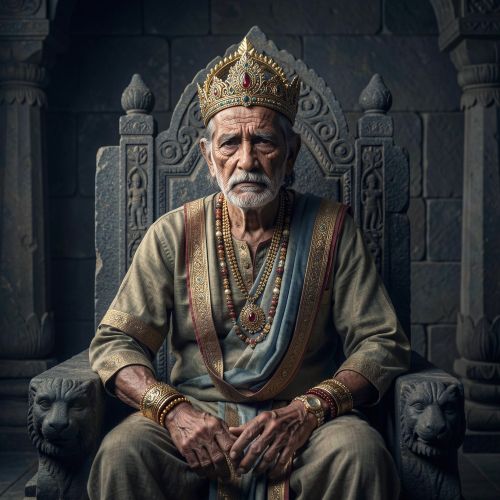
Her successor, Radama II, inherited a fragile kingdom and ruled briefly before assassination. Later queens such as Ranavalona II and Ranavalona III presided over diminishing sovereignty and eventual French conquest. In mythic interpretation, this decline is sometimes woven into the curse narrative as unpaid ancestral debt. The curse thus expands beyond one reign. It becomes a lineage burden.
Consequences and Resolution
Historically, Madagascar after Ranavalona’s death entered a period of reform, Christian conversion at the royal level, and renewed foreign engagement. Yet the kingdom never fully regained stable independence. By 1896, France formally annexed Madagascar. Folklore interprets this arc as the curse reaching fulfillment. The kingdom that once claimed sacred invulnerability fell under foreign control.
Ritual attempts at reconciliation are part of oral memory. Ceremonies at sacred sites like Ambohimanga are sometimes described as efforts to restore peace between living and dead. Offerings of rice, rum, and sacrificial animals feature in stories of cooling ancestral anger. Resolution in myth is rarely absolute. The curse does not vanish in a flash of redemption. Instead, it softens, lingering as a warning etched into collective memory.
Symbolism and Moral Lessons
The Curse of Queen Ranavalona functions symbolically as a meditation on power. In Malagasy cosmology, kingship is sacred stewardship. When stewardship becomes terror, sacred legitimacy collapses. The tangena ordeal, originally a divine test, becomes in legend a corrupted ritual weaponized for fear. Justice without mercy poisons itself. Authority without balance invites cosmic correction.
The myth does not always portray Ranavalona I as a caricature villain. Some interpretations acknowledge her role in resisting European domination. Yet even within this defensive narrative, the lesson remains: protection of sovereignty cannot come at the cost of ancestral harmony. The curse encodes a simple truth. Fear sustains rule briefly. Ancestral memory sustains it forever.
Cultural Impact and Legacy
Today, Ranavalona I remains a polarizing figure. Academic historians debate demographic data and political motivations. Popular media often sensationalizes her as a “cruel queen.” Within Malagasy storytelling traditions, however, The Curse of Queen Ranavalona continues to function as moral allegory.
It shapes how power is discussed. It frames conversations about colonial trauma. It reinforces the belief that leaders answer not only to the living but to the dead.
The legend persists because it answers a deeper question: how does a society process immense suffering? By transforming trauma into narrative, the curse becomes a cultural mechanism of memory. In that memory, Ranavalona I is not forgotten. She is transformed into a symbol.

Source
Campbell, G. (2012). An economic history of Imperial Madagascar, 1750–1895: The rise and fall of an island empire. Cambridge University Press.
Grainger, J. D. (2013). Mid-Victorian imperialism: India, the Fertile Crescent and the Cape to 1870. Boydell & Brewer.
Madagasikara.fr. (n.d.). The intriguing legend of the disappearance of Queen Ranavalona I of Madagascar. Retrieved February 11, 2026, from
https://madagasikara.fr/en/the-mysterious-legend-surrounding-the-disappearance-of-queen-ranavalona-i-of-madagascar/
SearchinHistory (Blog). (2014, June). Ranavalona I: Bloody Queen. Searching in History. Retrieved February 11, 2026, from https://searchinginhistory.blogspot.com/2014/06/ranavalona-i-bloody-queen.html
Wikipedia. (2002, December 10). Ranavalona I. In The Free Encyclopedia. Retrieved February 11, 2026, from https://en.wikipedia.org/wiki/Ranavalona_I
AfricanBiographies. (2020, July 31). Queen Ranavalona. African Biographies. Retrieved February 11, 2026, from https://www.africanbiographies.com/ranavalona
Ellis, W. (1858). Madagascar Revisited: Describing the Events of a New Reign and the Revolution Which Ended in the Death of Radama II. London: John Murray.
Campbell, G. (2005). An Economic History of Imperial Madagascar, 1750–1895: The Rise and Fall of an Island Empire. Cambridge University Press.
Kent, R. K. (1970). Early Kingdoms in Madagascar, 1500–1700. Holt, Rinehart and Winston.
Frequently Asked Questions
What is The Curse of Queen Ranavalona?
The Curse of Queen Ranavalona is a Malagasy legend suggesting that the harsh reign of Ranavalona I provoked ancestral anger, resulting in long-term misfortune for Madagascar.
Was Ranavalona I historically cruel?
Historical records confirm severe persecution, widespread use of the tangena ordeal, and harsh suppression of dissent during her reign, though interpretations of her motives vary among historians.
What was the tangena ordeal?
The tangena ordeal was a trial by poison using Cerbera manghas. Survival meant innocence, but many accused individuals died, contributing to significant population loss.
Did the curse cause French colonization?
There is no historical evidence of a literal curse. However, folklore symbolically connects later instability and French annexation in 1896 to the moral consequences of her rule.
How is Ranavalona remembered in Madagascar today?
She remains a controversial figure, seen by some as a defender of independence and by others as a tyrant. Her legend continues to influence Malagasy cultural memory.