


Chibinda Ilunga : The Hunter Prince of The Lunda and Chokwe
At a glance
| Description | |
|---|---|
| Origin | Lunda and Chokwe Mythology |
| Classification | Mortals |
| Family Members | Ilunga Mbili (Father), Lueji (Wife) |
| Region | Democratic Republic of the Congo and Angola |
| Associated With | War, Hunting |
Mythlok Perspective
In Mythlok’s Perspective, Chibinda Ilunga is compelling because his mythology places hunting and leadership within the same tradition of authority. Like Odysseus in Greek mythology, he is defined not only by strength but by skill, knowledge, and his ability to navigate unfamiliar worlds. Yet while Odysseus is remembered primarily for his journey home, Chibinda Ilunga’s journey transforms him into a dynastic ancestor and model of rulership. That difference makes his legend particularly significant: the hunter does not simply survive the journey; he becomes part of the political foundation of a new society.
Chibinda Ilunga
Introduction
Chibinda Ilunga is one of the most important legendary figures associated with the Lunda and Chokwe peoples of Central Africa. Traditionally described as a hunter-prince from the Luba world, his story connects hunting, political authority, marriage, ancestry, and the formation of new ruling traditions. His arrival in Lunda territory and relationship with Lueji, a Lunda royal figure, form the centre of a tradition that explains the origins of the Mwant Yav dynasty.
The story of Chibinda Ilunga exists at the meeting point of history, oral tradition, and political memory. Different communities have preserved and interpreted his story in their own ways, meaning that there is no single version of his legend. Among the Lunda, he is closely connected with the origins of dynastic authority, while among the Chokwe he became an important model of the ideal hunter and ruler. His image was later preserved in sculpture and other forms of artistic expression, giving the legendary prince a lasting place in Central African cultural history.
Physical Traits
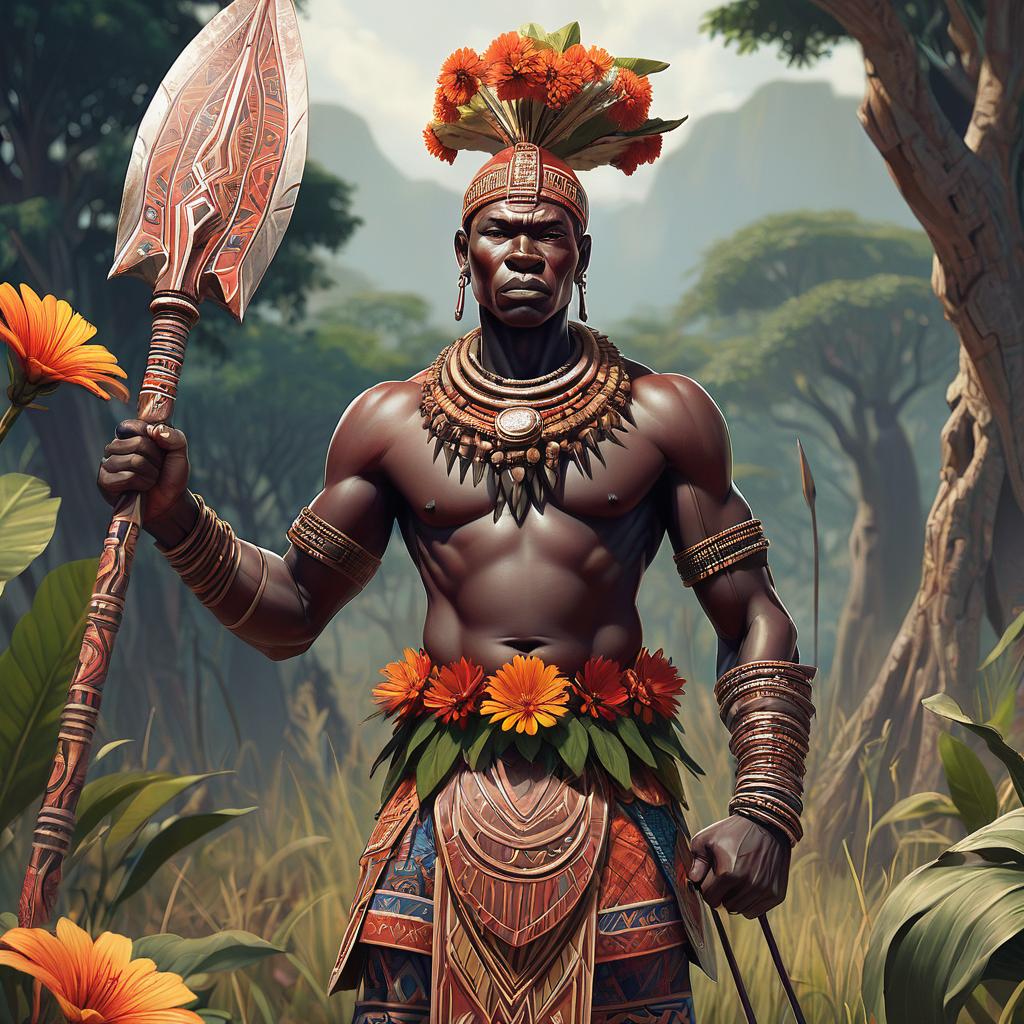
Much of what is known about Chibinda Ilunga’s appearance comes from Chokwe artistic traditions rather than detailed descriptions in oral narratives. He is commonly represented as an idealized hunter-prince, with a dignified and commanding presence that reflects his status as both a skilled hunter and a figure of authority.
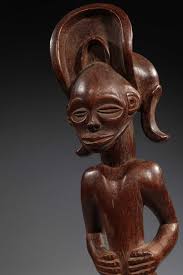
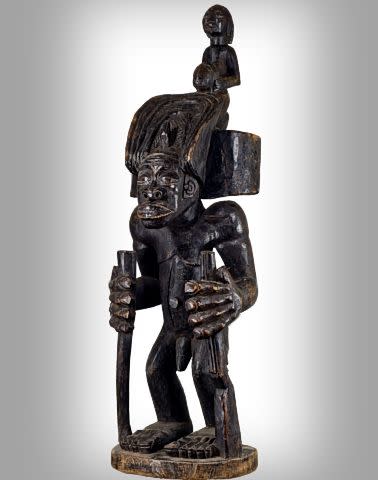
Chokwe sculptures of Chibinda Ilunga are particularly recognizable for their distinctive headgear, which is associated with political leadership and rulership. He may also be shown carrying hunting equipment, including a spear or staff, emphasizing the skill that defines his character. Some representations incorporate objects associated with specialized knowledge and ritual authority.
Rather than simply portraying physical strength, these artistic features communicate his wider identity. The hunter’s equipment represents his mastery of the natural world, while the royal elements connect him to political authority and the traditions of leadership that developed around his story.
Family
Family and ancestry are central to the story of Chibinda Ilunga. Luba traditions connect him with the royal lineage associated with Ilunga Mbidi and Kalala Ilunga, although genealogical traditions vary between different accounts. His Luba origins are important because his arrival in Lunda territory introduces a new source of political and cultural authority into the traditional story.
The most important relationship in his legend is his union with Lueji. Lueji is traditionally remembered as a Lunda royal woman who inherited authority from her predecessors. Her relationship with Chibinda Ilunga becomes a turning point in the story of Lunda political succession.
Their union is traditionally connected with the emergence of the Mwant Yav dynasty, the ruling dynasty of the Lunda state. Through this tradition, Chibinda Ilunga becomes more than a heroic hunter: he becomes an ancestor associated with the establishment of a major political lineage. The story also reflects the importance of marriage, ancestry, political alliances, and the transfer of authority within Central African societies.
Other Names
Chibinda Ilunga appears under different spellings and forms in historical, linguistic, and ethnographic sources. Tshibinda Ilunga and Chibind Yirung are among the variants associated with his name. These differences largely reflect variations in language, pronunciation, transcription, and regional traditions rather than separate characters. His name is particularly associated with the Lunda and Chokwe cultural worlds, where his story developed different emphases over time.
The variation in his name also reflects the broad geographical reach of his legend. His story travelled through interconnected communities of Central Africa and became part of wider traditions concerning hunting, kingship, ancestry, and political legitimacy.
Powers and Abilities
Chibinda Ilunga is best known for his exceptional abilities as a hunter. Hunting is not simply an occupation in his legend; it is one of the defining characteristics of his identity. His knowledge of weapons, animals, and the natural environment distinguishes him from those around him and contributes to his reputation as an extraordinary figure.
In Lunda traditions, his hunting knowledge becomes particularly significant after his arrival in Lunda territory. His skills and equipment are associated with knowledge that could be passed to others, linking him with the development of new practices and forms of expertise.
His abilities also extend into leadership. Chibinda Ilunga represents a form of authority rooted in personal skill, knowledge, courage, and the ability to navigate unfamiliar environments. His transformation from hunter-prince into an ancestral figure of rulership is one of the most important aspects of his legend.
Among the Chokwe, this connection between hunting and authority became especially powerful. Chibinda Ilunga came to represent the idealized hunter-ruler, combining mastery of the natural world with the qualities expected of a political leader. His legendary abilities therefore carry cultural meaning beyond the feats themselves, expressing ideas about knowledge, responsibility, and legitimate leadership.
Modern Day Influence
Chibinda Ilunga continues to occupy an important place in the cultural memory of Central Africa, particularly through Lunda and Chokwe traditions and artistic heritage. His story has survived not simply as an old tale, but through the visual language used to represent kingship, hunting, ancestry, and authority.
His most enduring legacy can be seen in Chokwe art. Sculptures representing Chibinda Ilunga became important expressions of political and cultural ideals, portraying the legendary hunter as a model of leadership. These works helped preserve his identity across generations while giving artists a way to express ideas about rulership and ancestral authority.
His story also remains important because it connects several strands of Central African history and tradition. The Lunda account emphasizes his relationship with Lueji and the origins of the Mwant Yav dynasty, while Chokwe traditions place greater emphasis on his identity as a hunter-prince and model of leadership. These different perspectives demonstrate how a legendary figure can acquire new meanings as stories move between communities.
Chibinda Ilunga therefore occupies a distinctive place between mythology, history, art, and political tradition. His legend preserves memories of cultural interaction between the Luba, Lunda, and Chokwe worlds while continuing to represent ideals of skill, courage, ancestry, and leadership.
Related Images



Sources
Bastin, M.-L. (1978). Statuettes tshokwe du héros civilisateur Tshibinda Ilunga. Arts d’Afrique Noire.
Bastin, M.-L. (1982). La sculpture Tshokwe. Alain et Françoise Chaffin. https://www.101lasttribes.com/tribes/Chokwe2.pdf
Bastin, M.-L., Birmingham Museum of Art, Baltimore Museum of Art, & Minneapolis Institute of Arts. (1998). Chokwe!: Art and initiation among the Chokwe and related peoples. Prestel.
Bortolot, A. I. (2003). Kingdoms of the Savanna: The Luba and Lunda empires. In Heilbrunn Timeline of Art History. The Metropolitan Museum of Art. https://www.metmuseum.org/de/essays/kingdoms-of-the-savanna-the-luba-and-lunda-empires
Gordon, D. M. (2023). The quotidian politics of a love story: Researching, assembling, and mobilizing the Lunda legend in the late nineteenth century. The Journal of African History, 64(2), 209–228.
https://doi.org/10.1017/S0021853723000300
Metropolitan Museum of Art. (2011). Heroic Africans: Legendary leaders, iconic sculptures. The Metropolitan Museum of Art. https://www.metmuseum.org/exhibitions/listings/2011/heroic-africans-legendary-leaders-iconic-sculptures
Rocha, M. C. (2006). Art of depiction: The Tshibinda Ilunga statues. Revista do Museu de Arqueologia e Etnologia, (15–16), 411–431. https://doi.org/10.11606/issn.2448-1750.revmae.2006.89746
Wastiau, B. (2006). Chokwe: Visions of Africa. 5 Continents Editions. https://www.fivecontinentseditions.com/en/p/chokwe-3/
Frequently Asked Questions
Who was Chibinda Ilunga?
Chibinda Ilunga was a legendary Luba hunter-prince associated with Lunda and Chokwe traditions. His story links hunting, leadership, ancestry, and the origins of Lunda royal authority.
What is Chibinda Ilunga known for?
Chibinda Ilunga is best known as an exceptional hunter and legendary ruler. His story is closely connected with Lueji and the origins of the Mwant Yav dynasty of the Lunda.
Who was the wife of Chibinda Ilunga?
Chibinda Ilunga is traditionally associated with Lueji, a Lunda royal figure. Their union plays a central role in traditions surrounding the origins of the Mwant Yav dynasty.
What culture is Chibinda Ilunga from?
Chibinda Ilunga originated in Luba traditions but became an important figure in Lunda and Chokwe cultural traditions, particularly as a hunter, ancestor, and model of leadership.
What does Chibinda Ilunga symbolize?
Chibinda Ilunga symbolizes hunting skill, leadership, knowledge, ancestry, and political authority. In Chokwe art, he became an important model of the ideal hunter-prince and ruler.


