

Elf : The Germanic Supernatural Being of Light and Shadow
| Description | |
|---|---|
| Origin | Germanic Mythology |
| Nature | Ambivalent |
| Notable Members | Freyr, Elf-Queens |
| Symbolism | Fertility, Ambivalence, Beauty, Seduction, Illness, Mystery |
| Epics | Poetic Edda, Prose Edda, Old English charms, Medieval ballads |
Mythlok Perspective
In Mythlok’s Perspective, the Elf is not a fragile fantasy archetype but a profound expression of how early Germanic societies understood the invisible forces shaping their world. The Elf represents nature’s intelligence rather than its decoration. It is beauty with consequence, fertility with risk, and light that can heal or wound. When compared to the Celtic sidhe or the Greek nymph, the Elf feels more morally balanced and cosmically integrated. It does not merely enchant; it participates in fate. Unlike later romanticized portrayals, the original Elf stands closer to the Vanir than to fairy tales. It embodies a worldview where the unseen world is not distant from humanity, but woven directly into daily survival, health, and harvest.
Elf
Introduction
The Elf is one of the most fascinating beings in Germanic tradition, far older and more complex than the delicate fantasy creatures of modern fiction. In Old Norse sources they are called álfar, and they appear throughout the mythic landscape of Scandinavia, Iceland, and Anglo-Saxon England. Elves were not tiny winged figures. They were powerful supernatural beings connected to fertility, illness, magic, beauty, and fate.
Early texts such as the Poetic Edda and the Prose Edda place elves alongside gods and dwarves in the cosmic order. In Old English charms, elves were blamed for mysterious pains and sudden sickness. In Norse belief, they were invoked in private rituals for prosperity and healing. The Elf existed in a liminal space, neither fully divine nor mortal, representing hidden forces within nature itself. Understanding the Elf means stepping into a worldview where beauty and danger often walked together.
Physical Description
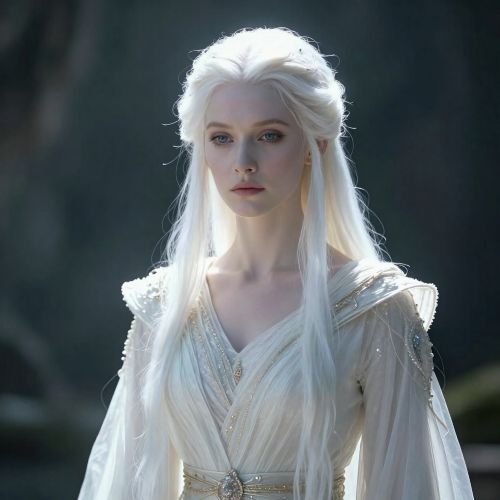
Descriptions of the Elf vary across sources, but certain patterns remain consistent. The Prose Edda, written by Snorri Sturluson, speaks of ljósálfar, or light elves, who are described as more radiant than the sun. They dwell in Álfheimr, a realm of brightness and subtle splendor. These elves were envisioned as tall, graceful, and luminous, with an almost unsettling perfection. Their beauty was not merely aesthetic but supernatural, capable of enchanting or overpowering human senses.
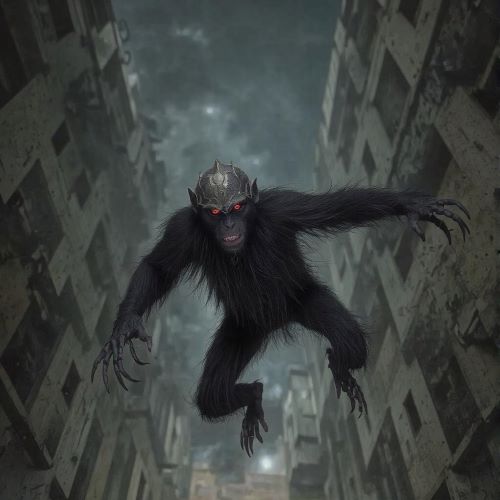
In contrast, darker counterparts are referred to as dökkálfar or svartálfar. Snorri describes them as dwelling underground. Scholars debate whether these dark elves were distinct from dwarves or simply another name for them. In many passages, svartálfar and dwarves appear nearly interchangeable, suggesting overlapping traditions rather than clearly separate races.
In Anglo-Saxon medical texts such as Bald’s Leechbook, the Elf is unseen yet physically impactful. Illness described as “elf-shot” referred to sudden stabbing pains believed to be caused by invisible projectiles. This portrayal reinforces the Elf not only as a luminous being of beauty, but also as an unseen agent of harm. The Elf, therefore, was never simply decorative. Its physicality ranged from radiant and noble to shadowed and subterranean, reflecting the dual nature of the supernatural world.
Mythological Context
Within Norse cosmology, the Elf occupies a significant but mysterious position. The Prose Edda distinguishes between the Aesir, the Vanir, and the elves, implying that elves formed a separate but respected class of beings. The god Freyr is said to rule Álfheimr, suggesting a close connection between elves and fertility cults.
Ritual evidence supports this link. The álfablót, a private sacrificial rite mentioned in saga literature, was performed to honor elves and secure prosperity. These ceremonies were domestic and secretive, indicating that the Elf was deeply embedded in household spirituality rather than grand temple worship.
Elves were also associated with magic. In the Poetic Edda, they are mentioned alongside gods in formulaic phrases, implying shared power. They could influence crops, inspire poetry, or afflict humans with disease. This dual capacity reflects a worldview where supernatural forces were neither wholly benevolent nor entirely malevolent. The Elf represented the unpredictable vitality of nature itself.
Origins
The word Elf derives from Proto-Germanic albiz, likely meaning “white” or “shining.” Linguistically, it connects to Indo-European roots associated with brightness. This etymology aligns with early descriptions of luminous beings. Before Christianization, elves appear to have been integrated into fertility and ancestor cults. Some scholars argue that the Elf began as a type of ancestral spirit or minor nature deity. Over time, as Christianity spread across northern Europe, elves were gradually reinterpreted. What was once sacred could be reframed as dangerous or demonic.
Old English texts such as Beowulf include elves among other supernatural beings descended from Cain, reflecting Christian reinterpretation. Yet even in this reframed context, the Elf retained power and mystique. The transformation was theological, not erasure. The survival of elf traditions in Scandinavian folklore well into the early modern period suggests that belief in elves was not merely literary. In Iceland especially, respect for hidden beings continued as part of cultural identity.
Notable Members
Unlike gods, elves were rarely individualized in early sources. They functioned more as a collective presence than as named personalities. However, certain figures are closely associated with elf traditions. The legendary smith Wayland the Smith, known in Old Norse as Völundr, is sometimes linked to elves. In the poem Völundarkviða, he is described as extraordinarily skilled and supernatural in nature. Though often categorized as a human or prince, later traditions blurred his identity with that of dark elves or dwarves due to his craftsmanship and otherworldly abilities.
Freyr’s connection to Álfheimr also places him in proximity to the Elf world. His dominion over fertility and abundance reinforces the idea that elves were not marginal beings but central to cosmic balance. Medieval ballads later introduced the concept of elf maidens who seduce mortal men. These narratives, though shaped by Christian moral frameworks, preserve older motifs of supernatural allure and danger.
Relationship with Other Beings
The Elf existed within a complex web of relationships. With the gods, elves shared ritual space and cosmological recognition. With humans, they were both benefactors and threats. Offerings could secure blessings, but disrespect might result in illness or misfortune.
The boundary between elves and dwarves remains debated. In some passages of the Prose Edda, svartálfar and dwarves appear synonymous. In others, they seem distinct. This ambiguity reflects layered traditions rather than inconsistency.
Elves were also contrasted with giants, who embodied chaotic primordial forces. Where giants often represented destruction, elves more commonly embodied subtle influence and cultivated fertility. This contrast further situates the Elf within the structured side of the mythic cosmos.
Similar Beings
Across Europe, comparable beings emerge. Celtic sidhe, Slavic nature spirits, and Greek nymphs share traits with the Elf: beauty, liminality, and control over natural vitality. These parallels suggest that the Elf reflects a broader Indo-European archetype of the luminous nature spirit. Yet the Germanic Elf remains distinct in its strong association with both healing and affliction. Few traditions combine such radiant beauty with medical superstition so directly.
Symbolism and Interpretations
Symbolically, the Elf represents liminality. It stands between light and shadow, blessing and curse, visibility and invisibility. In psychological interpretations, elves have been viewed as projections of nature’s unpredictability or as personifications of disease before medical understanding. From a cultural perspective, the Elf embodies reciprocity. Prosperity depends on respect for unseen forces. Illness may arise from imbalance. This interpretation aligns with the broader Germanic emphasis on fate and cosmic order.
Modern Influence
Modern fantasy transformed the Elf dramatically. In The Lord of the Rings, J. R. R. Tolkien reimagined elves as immortal, noble beings of profound wisdom. His portrayal drew heavily from Old Norse ljósálfar while refining them into a coherent race. Cinema adaptations such as The Lord of the Rings: The Fellowship of the Ring cemented this image globally. Role-playing games and fantasy literature followed suit. At the same time, Scandinavian folklore retains quieter traditions of hidden folk. The Elf continues to evolve, shifting from feared spirit to romantic symbol of grace and immortality.
Sources
Encyclopaedia Britannica. (n.d.). Elf. Encyclopaedia Britannica. https://www.britannica.com/topic/elf-mythology
Lindow, J. (n.d.). Elves (Álfar). World History Encyclopedia. https://www.worldhistory.org/elves/
National Museum of Denmark. (n.d.). Norse mythology and supernatural beings. https://en.natmus.dk/historical-knowledge/denmark/prehistoric-period-until-1050-ad/norse-mythology/
Orchard, A. (n.d.). Elf. Oxford Reference. https://www.oxfordreference.com/view/10.1093/oi/authority.20110803095742160
Grimm, J. (1883). Teutonic mythology (J. S. Stallybrass, Trans.). George Bell & Sons.
Lindow, J. (2001). Norse mythology: A guide to gods, heroes, rituals, and beliefs. Oxford University Press.
Motz, L. (1989). Giants in folklore and mythology: A new approach. Greenwood Press.
Hall, A. (2007). The meanings of elf, and elvish, in medieval England. Folklore, 118(2), 123–141. https://doi.org/10.1080/00155870701337223
Frequently Asked Questions
What is an Elf in Norse tradition?
An Elf in Norse tradition is a supernatural being known as an álfar, associated with fertility, magic, illness, and hidden natural forces.
Are elves gods in Norse belief?
Elves are not gods, but they are recognized as a distinct class of powerful beings who exist alongside gods like Freyr.
What is the difference between light elves and dark elves?
Light elves are described as radiant beings dwelling in Álfheimr, while dark elves are subterranean figures sometimes equated with dwarves.
Did people really believe in elves?
Yes, belief in elves persisted in Scandinavia and Anglo-Saxon England, influencing rituals, charms, and folklore traditions.
How did modern fantasy change the Elf?
Modern fantasy, especially through Tolkien’s work, reshaped the Elf into a noble and immortal race, emphasizing elegance over ambiguity.