Mythical Elephants in Ancient Civilizations and Sacred Traditions
Mythical elephants occupy a distinctive place in the world’s traditions, appearing not simply as sacred versions of real animals but as extraordinary beings that cross the boundary between animal, deity, spirit, and supernatural creature. Some possess impossible size or multiple heads, others have divine origins, while elephant-headed figures and elephant hybrids combine the physical strength of the elephant with distinctly supernatural identities.
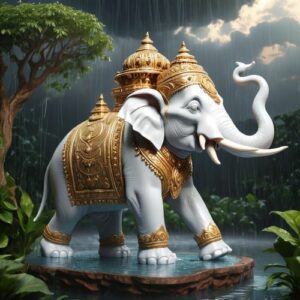
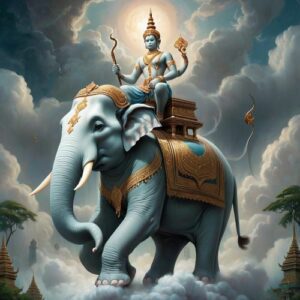
One of the most famous is Airavata, the celestial elephant associated with Indra in Indian mythology. Often described as a magnificent white elephant of extraordinary power, Airavata serves as the divine mount of the king of the gods. His supernatural nature places him firmly among mythological beasts rather than ordinary sacred animals, with traditions sometimes describing him with multiple trunks or other extraordinary characteristics.
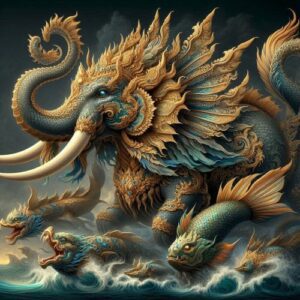
The Southeast Asian tradition of Erawan develops this celestial elephant into an even more spectacular form. Known particularly in Thai mythology and artistic tradition, Erawan is an enormous three-headed celestial elephant associated with Indra. His extraordinary scale and multiple heads distinguish him from natural elephants and establish him as a supernatural creature inhabiting the divine world.
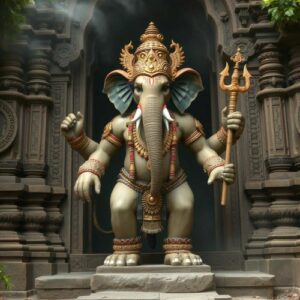
Elephant mythology also extends into hybrid beings. The most famous example is Ganesha, whose human body and elephant head create one of mythology’s most recognizable divine hybrids. His form demonstrates how the elephant can become part of a supernatural anatomy rather than simply appearing as an animal companion or mount.
Other traditions contain elephant-headed or elephant-associated supernatural figures as well. In South Asian mythology, elephant imagery can be incorporated into divine beings, celestial creatures, guardians, and composite forms. These figures frequently combine elephant characteristics with human or divine bodies, creating beings that embody strength, wisdom, authority, protection, or other supernatural qualities.
Mythical elephants can also become enormous cosmic creatures. The Diggajas, the elephants associated with the directions in Indian cosmology, represent a mythological expansion of the elephant into the structure of the universe itself. While not all traditions depict them as hybrid creatures, their supernatural scale and cosmic function distinguish them from ordinary elephants.
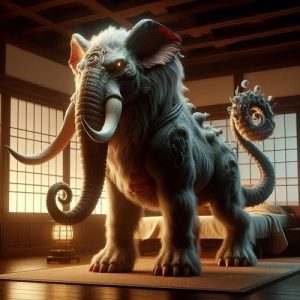
Beyond South Asia, elephant-like supernatural creatures and legendary hybrids appear in the broader mythological imagination wherever elephants were known or culturally significant. Their immense physical presence made them particularly suited to stories involving celestial realms, divine authority, primordial forces, and guardianship.
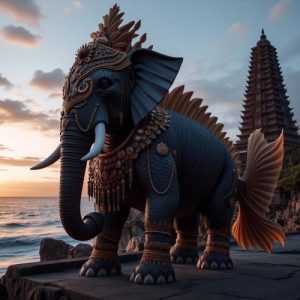
What unites these beings is their departure from the natural elephant. Multiple heads, divine origins, supernatural scale, hybrid anatomy, celestial roles, and extraordinary powers transform the familiar animal into something mythological. From Airavata and Erawan to elephant-headed deities and cosmic elephant guardians, mythical elephants demonstrate how cultures transformed one of the world’s most powerful animals into beings that could inhabit the heavens, guard sacred spaces, carry gods, or embody the supernatural itself.