
Agwu Nsi : The Igbo Spirit of Divination and Destiny
At a glance
| Description | |
|---|---|
| Origin | Igbo Mythology |
| Classification | Spirits |
| Family Members | N/A |
| Region | Nigeria |
| Associated With | Divination, Healing, Destiny, Duality |
The Mythlok Perspective
In Mythlok’s Perspective, Agwu Nsi represents a rare philosophical idea where divinity is not fixed but fluid. It mirrors systems like the Greek concept of Hermes, who bridges worlds, and the Norse idea of Odin, who seeks knowledge at great cost. Unlike them, Agwu is less personified and more elemental, closer to a living principle than a character. This places it alongside broader spiritual forces seen in African and Asian traditions, where divinity operates through balance rather than morality.
Agwu Nsi
Introduction
In Igbo spirituality, Agwu Nsi stands as one of the most complex and influential spiritual forces within the system of Odinani. Rather than being a simple deity with a fixed role, Agwu Nsi represents a living intelligence that connects the human world to unseen realities. It is deeply associated with divination, healing, creativity, and destiny, especially through the work of the dibia, the traditional healer-diviner.
Agwu Nsi is not viewed as purely benevolent or malevolent. Instead, it embodies balance and unpredictability, reflecting the Igbo understanding that life itself is shaped by opposing forces. When aligned properly, Agwu Nsi inspires knowledge, success, and clarity. When neglected or angered, it can manifest as confusion, illness, or misfortune.
In traditional communities, this spiritual force plays a central role in explaining life’s uncertainties, including health, fertility, prosperity, and personal calling. Rituals dedicated to Agwu Nsi were historically performed to maintain harmony between individuals and the spiritual realm. Even today, the concept remains foundational in understanding how the Igbo interpret destiny and spiritual purpose.
Physical Traits
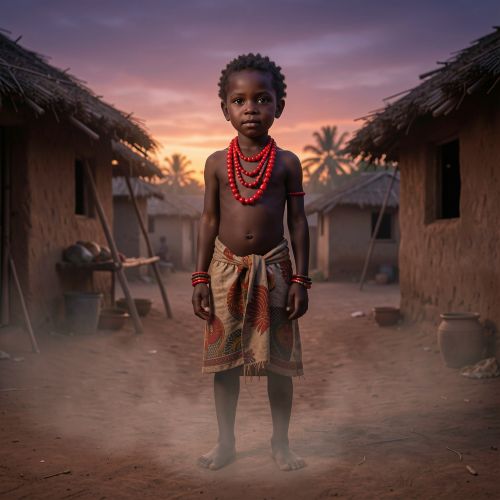
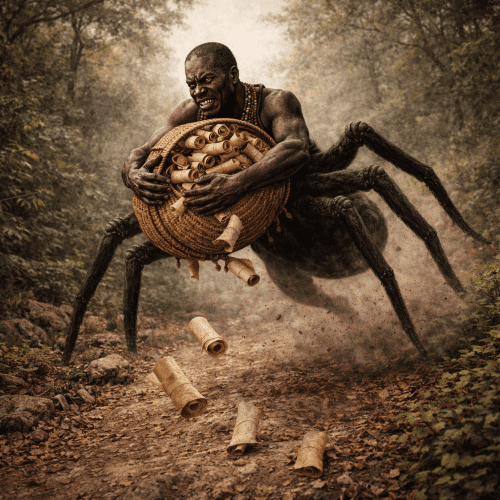
Agwu Nsi does not conform to a fixed physical appearance. In Igbo belief, it is primarily a non-corporeal presence, making it difficult to represent in human terms. However, oral traditions recount rare instances where it manifested in physical form, often appearing unusual or unsettling. One well-known narrative from the Nri cultural sphere describes a strange child associated with Agwu Nsi, marked by deformities and supernatural resilience. This story highlights its unpredictable and mysterious nature.
Rather than relying on a stable image, Agwu Nsi is symbolized through animals that reflect its qualities. The dog represents vigilance, protection, and spiritual awareness, while the tortoise symbolizes wisdom, patience, and cunning intelligence. These associations are not decorative but deeply symbolic, pointing to the dual nature of Agwu as both guide and trickster.
Shrines dedicated to Agwu Nsi are often located in sacred groves known as Ofia, emphasizing its connection to untamed, spiritual spaces. Its identity is fluid, sometimes described as beyond gender, reinforcing the idea that it exists outside conventional human categories.
Family
Agwu Nsi does not belong to a clearly defined divine family structure. Unlike other Igbo deities who may be linked through mythological relationships, Agwu functions more as a pervasive spiritual force than a genealogical figure.
However, its connection to human families is deeply significant. Agwu Nsi is often inherited across generations, appearing within paternal or maternal lineages. This inherited presence can shape an individual’s life path, especially for those destined to become dibia. In such cases, the calling is not optional but a spiritual obligation that must be acknowledged and fulfilled.
Igbo thought also distinguishes between different expressions of Agwu within the family. A harmonious form may bring prosperity, clarity, and protection, while a disturbed or neglected presence can lead to recurring misfortune or illness. In this way, Agwu Nsi becomes intertwined with ancestry, inheritance, and the continuity of spiritual responsibility within the lineage.
Other names
Agwu Nsi is known by several variations across regions and dialects, including Agwuisi, Agwunsi, and simply Agwu. These names reflect linguistic differences rather than entirely separate entities. The suffix “isi,” meaning head or origin, and “nsi,” often associated with potency or danger, highlight the layered nature of the spirit.
Beyond naming variations, Agwu is also understood through functional forms. It may be associated with the home, the wilderness, fertility, or divination, depending on its role in a particular context. These distinctions are not rigid classifications but expressions of how Agwu manifests in different aspects of life.
In the African diaspora, particularly in the Americas, traces of Agwu Nsi survive under adapted names and practices, showing how the concept has traveled and evolved while retaining its core identity as a spirit of insight and transformation.
Powers and Abilities
The influence of Agwu Nsi is both expansive and paradoxical. It is widely regarded as the source of knowledge for dibia, granting the ability to understand medicinal plants, interpret spiritual signs, and foresee events. This connection makes it central to traditional healing and divination practices.
At the same time, Agwu Nsi is believed to influence personal destiny. It can elevate individuals by granting creativity, intelligence, and success, often marking them as exceptional within their communities. Many Igbo traditions attribute artistic talent, professional excellence, and intuitive insight to its presence.
However, this same force can also bring challenges. Illness, mental disturbance, confusion, or repeated misfortune may be interpreted as signs that Agwu Nsi has been ignored or offended. These experiences are not always seen as punishment but sometimes as a call to recognize one’s spiritual path.
Agwu Nsi also carries a trickster-like quality. It does not operate within strict moral boundaries, instead reflecting the unpredictable nature of life itself. Rituals such as initiation rites and offerings are performed to restore balance and ensure that its influence remains constructive rather than disruptive.
Modern Day Influence
Despite the spread of Christianity and modernization across Igbo society, the presence of Agwu Nsi has not disappeared. Instead, it has adapted and continues to shape cultural identity in subtle yet meaningful ways.
Traditional healing practices remain active, with many dibia still invoking Agwu Nsi in their work. These practices often coexist with modern medicine, creating a blended approach to health and well-being. Festivals dedicated to Agwu, such as those observed in southeastern Nigeria, continue to celebrate its role in wisdom and healing through dance, ritual, and communal gatherings.
Agwu Nsi also influences contemporary creativity. Writers, artists, and performers often draw on its symbolism to explore themes of identity, destiny, and transformation. The works of Chinua Achebe and Chimamanda Ngozi Adichie, for example, reflect broader Igbo cosmological ideas where unseen forces shape human experience.
Even in diaspora communities, Agwu Nsi persists as a cultural memory, reinterpreted within new spiritual systems. While urbanization and changing belief systems have reduced the prominence of sacred groves and traditional shrines, the underlying concept of a guiding, unpredictable spiritual force continues to resonate.
Related Images




Source
Ejiofor, L. (1984). Agwu deity in Igbo religion. Fourth Dimension Publishers.
Nwadiora, E. (2005). The role of Agwu (divinity of divination) in human quest for resource control in Nigeria. Integhumanitatis. https://www.integhumanitatis.com/wp-content/uploads/2021/07/The-Role-of-Agwu.pdf
Ogbalu, F. C. (1981). Igbo world and its art. University Publishing Company.
Okonkwo, J. O. (1979). Igbo cultural values. Enugu Publishers.
Uchendu, D. N. (2023, August 21). Arobunagu: Agwunsi/Agwụ Ofia.
Wikipedia. (2024). Agwu Nsi. https://en.wikipedia.org/wiki/Agwu_Nsi
Ozikoro. (2025). Arobinagu Agwunsi: The Agwu Ofia Festival in Igbo Culture. https://ozikoro.com/arobinagu-agwunsi-the-agwu-ofia-festival-in-igbo-culture/
Voice of the Sun. (2024). Understanding Agwu in Igbo Cosmology. https://voiceofthesun.com/understanding-agwu-in-igbo-cosmology-what-is-agwu-in-odinani-na-omenani-igbo/
Frequently Asked Questions
Who is Agwu Nsi?
Agwu Nsi is an Igbo spiritual force linked to divination, healing, and destiny, guiding dibia and influencing human life paths.
Is Agwu Nsi good or evil?
Agwu Nsi is neither fully good nor evil; it reflects balance, bringing both blessings and challenges depending on alignment.
What does Agwu Nsi symbolize?
It symbolizes knowledge, creativity, unpredictability, and the connection between physical and spiritual realms.
How is Agwu Nsi worshipped?
Through rituals, offerings, and divination practices, often led by dibia in sacred spaces or shrines.
Does Agwu Nsi still exist in modern culture?
Yes, it remains influential in traditional healing, festivals, and cultural identity across Igbo communities and diaspora.