
Mahakal : The Indian God Beyond Time and Death
At a glance
| Description | |
|---|---|
| Origin | Indian Mythology |
| Classification | Gods |
| Family Members | Parvati/Mahakali (Wife), Ganesha, Kartikeya (Sons) |
| Region | India |
| Associated With | Time, Death, Cosmic Dissolution, Liberation, Protection, Destruction of Evil, |
The Mythlok Perspective
In Mythlok’s Perspective, Mahakal represents one of the deepest philosophical ideas in Indian tradition: that time itself is the ultimate force governing existence. Unlike many gods who control specific domains, Mahakal embodies the power that eventually consumes everything, from kingdoms to stars. Yet his destructive nature is not portrayed as evil. Instead, it serves as a necessary step toward renewal and liberation. Similar concepts appear in other cultures through figures such as Chronos in Greek tradition and the cyclical destruction found in Norse visions of Ragnarök. However, Mahakal differs by standing beyond time itself, making him not merely a destroyer of worlds but the eternal reality that remains when all cycles end.
Mahakal
Introduction
Mahakal, also known as Mahakala or Mahakaleshwar, is one of the most powerful and awe-inspiring manifestations of Lord Shiva in Indian tradition. The name combines the Sanskrit words Maha, meaning “great,” and Kala, meaning “time” or “death,” creating the meaning “Great Time” or “The One Beyond Time.” This title reflects a profound philosophical concept: while all beings exist within time, Mahakal exists beyond it.
In Indian cosmology, time is not viewed as a straight line but as a recurring cycle of creation, preservation, and destruction. Mahakal represents the force that ultimately brings every cycle to an end. He is therefore associated with transformation, dissolution, and the eternal nature of existence. Rather than symbolizing mere destruction, Mahakal signifies the transition that allows new creation to emerge.
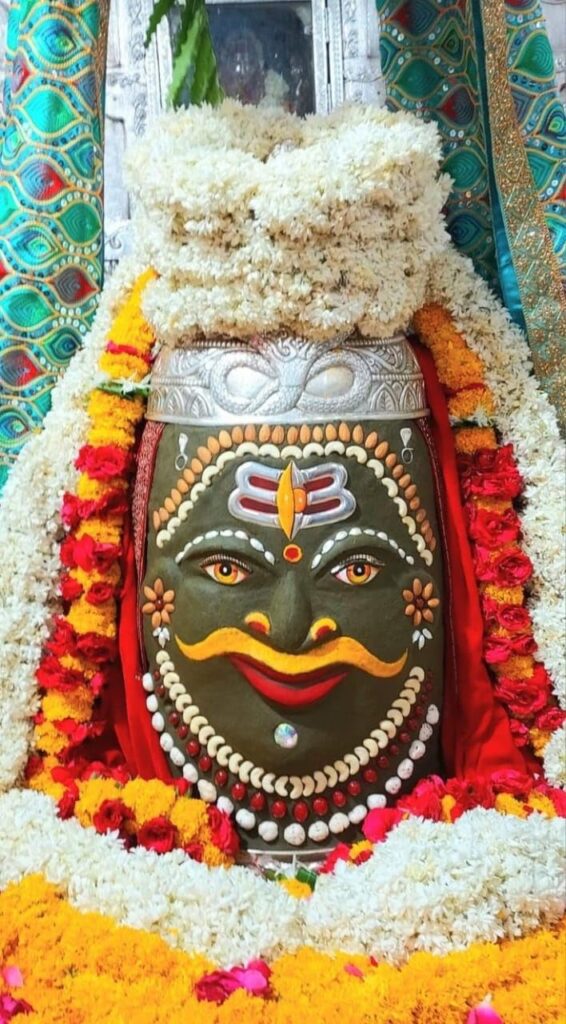
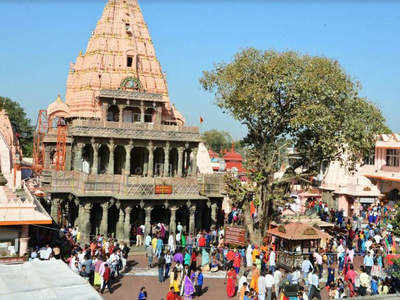
The worship of Mahakal is especially important in the ancient city of Ujjain in Madhya Pradesh, home to the famous Mahakaleshwar Jyotirlinga. According to tradition, Shiva manifested as Mahakal to protect the city and its devotees from destructive forces. Over centuries, this form of Shiva has become one of the most revered deities in India, attracting millions of pilgrims who seek protection, spiritual growth, and liberation from worldly attachments.
Physical Traits
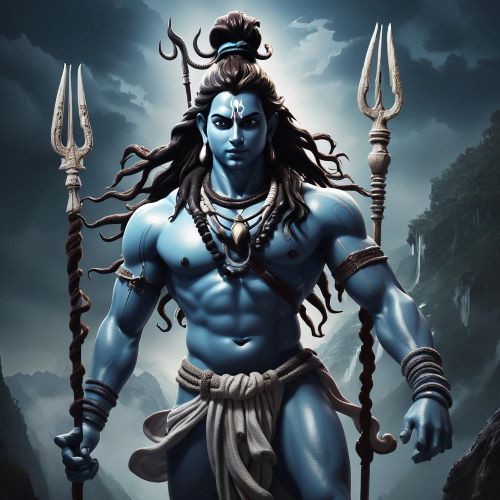
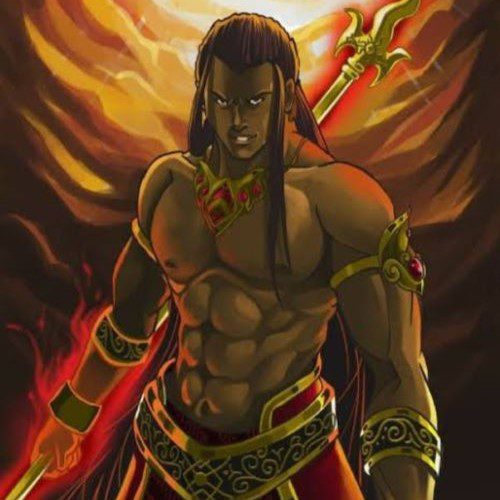
Mahakal’s appearance is designed to communicate his authority over life, death, and the passage of time. He is commonly depicted with a dark blue or black complexion, representing the infinite void from which all creation emerges and into which it ultimately returns.
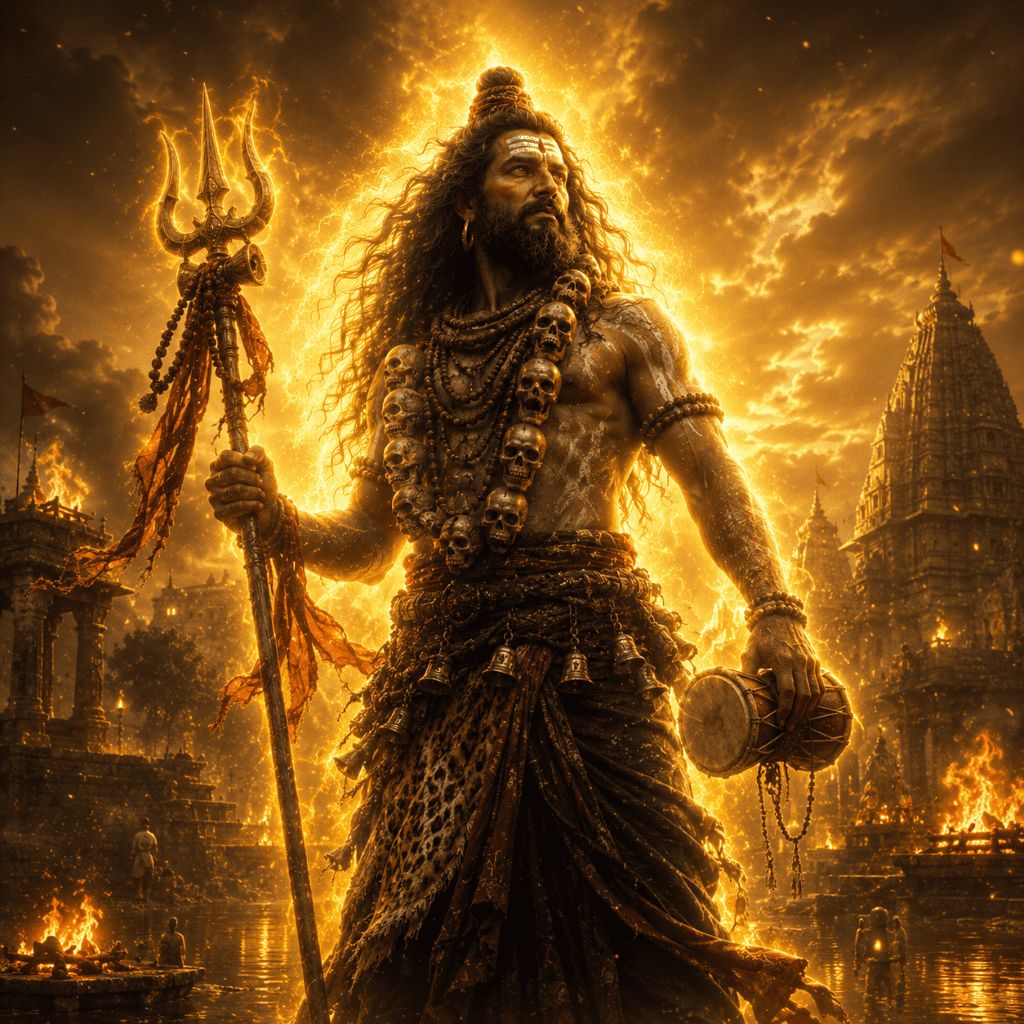
One of his most recognizable features is his third eye, symbolizing divine insight that transcends ordinary perception. His three eyes are often interpreted as representing the past, present, and future, reinforcing his connection to time itself. Mahakal is frequently portrayed with four arms, carrying sacred objects such as the trident, drum, sword, and other symbolic weapons. These items represent creation, destruction, protection, and spiritual authority.
His body is often covered in sacred ash taken from cremation grounds. This imagery serves as a reminder that all physical forms eventually return to dust. Serpents adorn his body, while garlands of skulls may appear in certain depictions, emphasizing his mastery over death and rebirth.
Mahakal is also strongly associated with cremation grounds, places where the temporary nature of earthly existence becomes most apparent. Rather than being symbols of fear, these settings highlight his role as the eternal force that exists beyond physical life.
Family
Since Mahakal is a form of Shiva rather than a separate deity, his family relationships remain the same as those traditionally associated with Shiva. His consort is Goddess Parvati, who in her fierce aspect is often identified with Mahakali. Together, Mahakal and Mahakali represent the inseparable powers of time and transformation. Their union symbolizes the balance between cosmic consciousness and divine energy that sustains the universe.
Mahakal is also associated with Shiva’s sons, Ganesha and Kartikeya. Ganesha is revered as the remover of obstacles and patron of wisdom, while Kartikeya is celebrated as the divine commander of celestial forces. Although family relationships are not usually the primary focus of Mahakal worship, they remain an important part of the broader Shaivite tradition. In theological discussions, Mahakal is viewed not as a distinct god but as one of the highest and most intense manifestations of Shiva’s divine nature.
Other names
Throughout India and beyond, Mahakal is known by several names that highlight different aspects of his power and significance. Mahakaleshwar is perhaps the most widely recognized title, especially in relation to the famous temple at Ujjain. The name means “Lord of Great Time” and emphasizes his role as the supreme ruler of temporal existence.
Another important title is Kalantaka, meaning “the ender of death.” This name reflects the belief that Mahakal possesses power even over mortality itself. Mahamrityunjaya, meaning “Great Conqueror of Death,” similarly emphasizes his ability to grant spiritual liberation.
In Buddhist traditions, particularly within Vajrayana Buddhism, Mahakala evolved into a powerful protector deity. He is known by names such as Nakpo Chenpo in Tibetan traditions and Daikokuten in Japan. These adaptations demonstrate how the figure of Mahakal transcended cultural boundaries while retaining his association with protection, power, and transcendence.
Powers and Abilities
Mahakal is regarded as one of the most formidable divine forces in Indian spirituality. His primary power lies in his complete mastery over time. While every living being is bound by time, Mahakal exists beyond its limitations and governs its movement across the universe.
One of his most significant roles is cosmic dissolution. At the end of a cosmic age, or kalpa, Mahakal absorbs creation back into the divine source, allowing a new cycle of existence to begin. This function makes him a central figure in the cyclical understanding of the universe found in Indian philosophy.
Mahakal is also revered as a destroyer of evil and ignorance. Countless devotees invoke him for protection against negative influences, fear, and spiritual obstacles. His fierce appearance represents his willingness to eliminate forces that threaten cosmic order.
Another important aspect of his power is liberation from the cycle of birth and death. Worshippers believe that devotion to Mahakal helps them transcend worldly attachments and move closer to moksha, the ultimate spiritual freedom. His association with sacred ash further symbolizes purification. By reminding devotees of life’s impermanence, Mahakal encourages spiritual awareness and detachment from material concerns.
Modern Day Influence
Mahakal continues to play a major role in contemporary Indian religious and cultural life. The Mahakaleshwar Temple in Ujjain remains one of the most important pilgrimage destinations in the country and is counted among the twelve sacred Jyotirlingas of Shiva.
One of the temple’s most famous rituals is the Bhasma Aarti, during which sacred ash is offered to the deity in a ceremony that attracts thousands of devotees. This ritual reflects Mahakal’s connection to mortality, purification, and spiritual awakening.
Recent developments such as the Mahakal Lok Corridor have expanded the temple complex and enhanced the pilgrimage experience. The project has transformed Ujjain into an even more significant center of religious tourism while preserving the city’s ancient spiritual heritage.
Mahakal’s influence also extends into literature, devotional music, cinema, and digital media. Images and invocations of Mahakal frequently appear in contemporary spiritual discourse, where he is celebrated as a symbol of strength, fearlessness, and transcendence.
Beyond India, Mahakal continues to be venerated in Buddhist communities across Tibet, Nepal, Mongolia, China, Japan, and other parts of Asia. This enduring presence demonstrates how the concept of the Great Lord of Time continues to resonate across cultures and generations, remaining one of the most influential spiritual symbols in the world.
Related Images

Source
Gangajal Uttarkashi. (2015, October 11). Why Is Lord Shiva Called Mahakal – The Legend of Mahakaleshwar. WordPress. https://gangajaluttarkashi.wordpress.com/2015/10/12/why-is-lord-shiva-called-mahakal-the-legend-of-mahakaleshwar/
Isha Foundation. (2026, January 17). 108 Names of Shiva with Meanings. Sadhguru. https://isha.sadhguru.org/mahashivratri/shiva/names-of-shiva-with-meaning/
Karmikh. (2026, February 20). Lord Shiva Names for Baby Boys: Modern, Unique & Meaningful. Karmikh Blog. https://karmikh.com/blogs/news/lord-shiva-names-for-baby-boys-modern-unique-meaningful/
Shiva Knowledge. (n.d.). Mahakal The Great Destroyer of Time | Shiva Avatars. Shiva Avatars. https://shivknowledge.com/media/shiva-avatars/mahakal-the-great-destroyer-of-time
TourHQ. (2019, January 25). Know all about the Mahakaal Bhairav: The God of Time and Death. TourHQ. https://www.tourhq.com/article/mahakaal-bhairav-the-god-of-time-and-death
WisdomLib. (2024, September 22). Mahakal: Significance and symbolism. WisdomLib. https://www.wisdomlib.org/concept/mahakal
Shaktisamgama Tantra. (n.d.). Tantric Scriptures.
Mahakaleshwar Temple Trust. (2025). Official Website of Mahakaleshwar Jyotirlinga.
Flood, G. (1996). An Introduction to Hinduism. Cambridge University Press.
Frequently Asked Questions
Who is Mahakal in Indian tradition?
Mahakal is a powerful form of Shiva who represents time, death, transformation, and the dissolution of the universe.
What does the name Mahakal mean?
Mahakal means “Great Time” or “The One Beyond Time,” emphasizing Shiva’s authority over existence and mortality.
Where is Mahakal worshipped most prominently?
Mahakal is primarily worshipped at the Mahakaleshwar Temple in Ujjain, one of the twelve sacred Jyotirlingas.
What powers does Mahakal possess?
Mahakal controls time, destroys evil, oversees cosmic dissolution, and guides devotees toward spiritual liberation.
Is Mahakal different from Shiva?
No. Mahakal is not a separate deity but one of the most powerful and fierce manifestations of Lord Shiva.