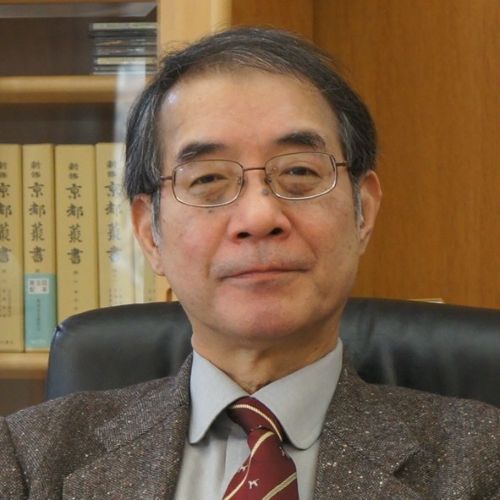


Dr. Yoshiko Okuyama : Scholar of Japanese Mythology and Cultural Studies
Mythlok Perspective
In Mythlok’s Perspective, Dr. Yoshiko Okuyama represents a new generation of mythology scholars who understand that myths never truly disappear. Instead, myths evolve alongside society and adapt into modern forms such as anime, manga, and cinema. Her research reveals that contemporary Japanese media still carries the spiritual DNA of ancient folklore and religious storytelling. What makes her scholarship particularly important is her focus on marginalized voices and representations of “otherness.” Across many mythological traditions, individuals who were physically or mentally different were often portrayed as cursed, divine, monstrous, or supernatural. Dr. Okuyama’s work examines how these ancient attitudes continue influencing modern narratives and public perception.
Dr. Yoshiko Okuyama
Introduction
Dr. Yoshiko Okuyama is regarded as one of the most influential contemporary scholars studying Japanese mythology, folklore, manga, and visual culture. As a professor of Japanese Studies at the University of Hawaiʻi at Hilo, she has built an international reputation for combining mythology, semiotics, disability studies, and media analysis into a highly distinctive body of research. Her work explores how ancient Japanese beliefs continue to survive within modern storytelling, especially through anime, manga, and cinema.
Originally from Tokyo, Dr. Okuyama began her academic journey in linguistics and second language acquisition before expanding into cultural and mythological studies. She earned her Ph.D. in Second Language Acquisition and Teaching from the University of Arizona, later developing a research approach that blended language, folklore, social identity, and visual narratives. Over the years, she has become particularly known for examining representations of “otherness” in Japanese culture, including disability, mental health, and marginalized identities.
What separates Dr. Okuyama from many traditional mythology scholars is her ability to connect classical myths with contemporary media. Rather than treating mythology as something frozen in ancient texts, she demonstrates how mythological ideas evolve and reappear in modern Japanese storytelling. Through detailed studies of film, anime, and manga, she reveals how spiritual symbolism and folkloric archetypes continue shaping Japanese cultural identity.
Her scholarship has also gained recognition outside academia. Through interviews, lectures, podcasts, and collaborations with major media organizations, Dr. Okuyama has helped wider audiences understand the cultural and mythological foundations behind Japanese popular culture. As anime and manga continue to influence global entertainment, her work remains increasingly relevant in understanding how mythology adapts within the modern world.
Area of Expertise
Dr. Yoshiko Okuyama’s expertise spans several interconnected academic fields, making her one of the most interdisciplinary scholars working in Japanese cultural studies today. Her primary research interests include Japanese mythology, folklore, religion, disability studies, manga, anime, and semiotics.
A major focus of her work involves examining mythology in modern Japanese cinema and animation. Dr. Okuyama studies how ancient ideas surrounding spirits, karma, death, rebirth, transformation, and the supernatural continue appearing in contemporary storytelling. She argues that even futuristic anime and science fiction films often carry themes deeply rooted in Shinto traditions and Buddhist philosophy.
Semiotics plays a central role in her methodology. By analyzing signs, symbols, and visual language, she decodes hidden mythological meanings embedded within Japanese media. This approach allows her to identify how filmmakers and manga artists adapt ancient cultural narratives into modern contexts without explicitly retelling traditional myths.
Dr. Okuyama is also a leading figure in Japanese disability studies. Much of her research investigates how manga portrays individuals with disabilities and mental health conditions. Instead of focusing solely on stereotypes, she examines how graphic storytelling can challenge prejudice and create social empathy. Her work has become highly influential in understanding the relationship between Japanese popular culture and public attitudes toward disability.
Another important area of her research involves tōjisha manga, autobiographical comics created by individuals sharing their own experiences with disability, neurological conditions, or mental health struggles. Dr. Okuyama argues that these self-representational narratives provide marginalized communities with a direct voice often absent in mainstream media.
Beyond mythology and disability studies, she has contributed to research involving second language acquisition and digital communication. Earlier in her career, she explored how deaf adolescents used texting and technology-mediated communication, helping bridge the fields of linguistics and social interaction studies.
Books & Publications
Dr. Yoshiko Okuyama has authored several influential books that have significantly shaped discussions surrounding Japanese mythology, manga, disability representation, and visual storytelling. Her publications are widely used in university courses related to Japanese studies, folklore, anime, and cultural theory because of their interdisciplinary approach and accessible analysis. Through her writing, Dr. Okuyama demonstrates how mythology and social identity continue evolving within modern Japanese media.
Her 2015 book, Japanese Mythology in Film: A Semiotic Approach to Reading Japanese Film and Anime, published by Lexington Books, established her as a major scholar in Japanese mythology studies. The book explores how Japanese cinema and anime preserve ancient mythological structures beneath modern narratives. Using semiotic analysis, Dr. Okuyama examines religious symbolism, supernatural imagery, and folkloric motifs in films ranging from historical fantasy to cyberpunk science fiction. She argues that many contemporary Japanese stories continue drawing from traditional beliefs surrounding spirits, rebirth, cosmic balance, and the afterlife.
In Reframing Disability in Manga (2020), published by the University of Hawaiʻi Press, Dr. Okuyama studies how Japanese manga portrays disability within modern society. The book analyzes representations of deafness, blindness, paraplegia, autism, and gender identity disorder in manga from the 1990s onward. Rather than dismissing manga as simple entertainment, she shows how graphic narratives can challenge prejudice, encourage empathy, and influence public understanding of disability and social inclusion in Japan.
Her later work, Tōjisha Manga: Japan’s Graphic Memoirs of Brain and Mental Health (2022), published by Palgrave Macmillan, focuses on autobiographical manga created by individuals living with mental health conditions or neurological differences. Dr. Okuyama argues that these graphic memoirs provide authentic perspectives often absent from mainstream media. By examining personal storytelling through manga, she highlights how Japanese visual culture has become an important platform for discussing trauma, identity, disability, and mental health in contemporary society.
Research & Contributions
Dr. Yoshiko Okuyama’s research has had a major impact on both mythology studies and disability scholarship. One of the central themes in her work is the idea of “otherness” and how societies define individuals perceived as different.
Her studies frequently examine mythological narratives where characters with unusual physical or mental traits are portrayed as supernatural, cursed, spiritually gifted, or socially isolated. By tracing these portrayals from ancient folklore to modern manga and anime, Dr. Okuyama demonstrates how historical attitudes continue influencing modern cultural perceptions.
One of her most significant contributions lies in her analysis of disability representation within Japanese visual culture. She argues that manga has become an important tool for social awareness in Japan. Through interviews with manga creators and disability advocates, she discovered that many artists intentionally use storytelling to challenge discrimination and encourage empathy.
Dr. Okuyama has also explored how traditional religious concepts were historically used to stigmatize disability. Certain interpretations of karma connected disability with punishment for past wrongdoing, reinforcing social prejudice for centuries. Her research critically examines how these ideas developed and how modern storytelling can help dismantle them.
Beyond academic publishing, Dr. Okuyama has actively engaged with wider audiences through lectures, podcasts, and media appearances. Her expertise has been featured in discussions involving Japanese culture, anime, folklore, and disability representation. This ability to communicate complex academic ideas to broader audiences has significantly expanded the reach of her scholarship.
Her recent work has also included cross-cultural research connecting Japanese and Indian mythology. These comparative studies examine how different civilizations use myths to shape identity, morality, spirituality, and social belonging.
Awards & Recognitions
Throughout her career, Dr. Yoshiko Okuyama has received several awards, fellowships, and grants recognizing both her academic contributions and excellence in teaching. In 2002, she received the Francis Davis Award for Excellence in Undergraduate Teaching for her work in Japanese language education and her ability to explain complex ideas clearly to students. The award reflected her reputation as both an engaging educator and a respected scholar.
She later received a Japan Foundation Research Fellowship in 2017, supporting her continued research in Japanese cultural studies. Around the same period, she also received grants connected to Asian Studies and disability history research.
In 2018, Dr. Okuyama participated in the National Endowment for the Humanities Summer Institute on Global Histories of Disability, strengthening her role within international disability scholarship. She has also held visiting scholar and affiliated scholar positions at respected Japanese institutions including Kokugakuin University and Ritsumeikan University. These appointments further reinforced her status as an authority in Japanese mythology, folklore, and cultural studies.
The continued recognition of her work reflects the importance of her interdisciplinary approach. By connecting mythology with modern social issues such as disability representation and mental health, Dr. Okuyama has expanded the relevance of mythology studies in contemporary academic discourse.
Social Media Profiles
Dr. Yoshiko Okuyama maintains a professional academic presence online where she shares updates about her books, lectures, and research activities. Her LinkedIn profile highlights her work as a professor, researcher, writer, and advocate for disability awareness.
She has appeared on several academic podcasts discussing Japanese mythology, manga, folklore, and disability representation. These interviews have helped introduce her work to wider audiences interested in Japanese culture and anime studies.
Research platforms such as ResearchGate and university faculty pages also archive many of her academic publications and conference papers. Through these resources, students and researchers can explore her work on mythology, visual culture, and disability studies.
As global interest in Japanese mythology and anime continues growing, Dr. Okuyama’s scholarship remains increasingly important. Her work provides valuable insight into how ancient myths continue evolving through modern storytelling and popular culture.
Sources
University of Hawaiʻi at Hilo. (n.d.). *Faculty profile: Dr. Yoshiko Okuyama*. University of Hawaiʻi at Hilo. https://hilo.hawaii.edu/faculty/yoshiko-okuyama/
University of Hawaiʻi Press. (2020). *Reframing Disability in Manga*. University of Hawaiʻi Press. https://uhpress.hawaii.edu/title/reframing-disability-in-manga/
Springer Nature. (2022). *Tōjisha Manga: Japan’s Graphic Memoirs of Brain and Mental Health*. Palgrave Macmillan. https://link.springer.com/book/10.1007/978-3-030-99978-7
Asian Ethnology Podcast. (2020). *Interview with Dr. Yoshiko Okuyama*. Nanzan University Institute for Religion and Culture. https://asianethnology.org/features/podcasts/reframing-disability-in-manga/
Okuyama, Y. (2015). Japanese mythology in film: A semiotic approach to reading Japanese film and anime. Lexington Books.
Okuyama, Y. (2020). Reframing disability in manga. University of Hawaiʻi Press.
Okuyama, Y. (2022). Tōjisha manga: Japan’s graphic memoirs of brain and mental health. Palgrave Macmillan.
Okuyama, Y. (2017). Disability, folklore, and representations of otherness in Japanese culture. Asian Ethnology, 76(2), 345-362.



Frequently Asked Questions
Who is Dr. Yoshiko Okuyama?
Dr. Yoshiko Okuyama is a Japanese mythology scholar and professor known for researching manga, anime, folklore, and disability representation
What is Dr. Yoshiko Okuyama famous for?
She is best known for studying how Japanese mythology influences modern manga, anime, and film.
What does Dr. Yoshiko Okuyama research?
She researches Japanese mythology, folklore, disability studies, manga, semiotics, and visual culture.
What books has Dr. Yoshiko Okuyama written?
Her major books include Japanese Mythology in Film, Reframing Disability in Manga, and Tōjisha Manga.
Where does Dr. Yoshiko Okuyama teach?
She teaches Japanese Studies at the University of Hawaiʻi at Hilo.