Noongar Mythology
Noongar mythology reflects the spiritual traditions of the Noongar peoples, the First Nations custodians of much of southwestern Australia. Their ancestral traditions are closely connected to the Nyitting, a foundational period of creation in which ancestral beings shaped the land, established cultural laws, and created relationships between people, animals, plants, and Country. Noongar stories remain closely tied to the forests, wetlands, rivers, coastlines, and plains of the southwest.
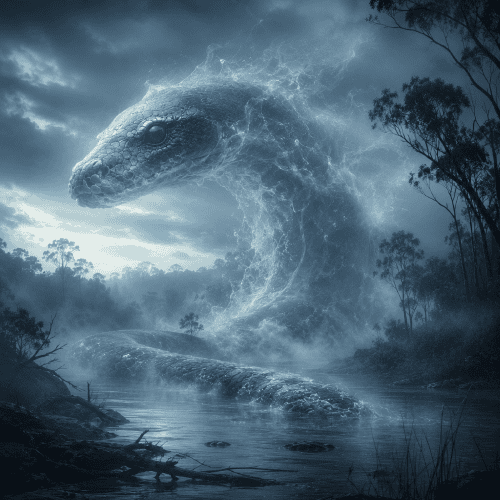
One of the most important figures in Noongar tradition is the Waugal, a powerful rainbow serpent associated with the creation and protection of waterways. According to Noongar stories, the Waugal travelled across the landscape during the Nyitting, shaping rivers, lakes, wetlands, and other water sources as it moved. The Swan River and surrounding waterways are strongly associated with Waugal traditions, and places connected to the serpent remain culturally significant. The Waugal represents both the creative power of water and the responsibility to protect it.
Water is central to Noongar life and spirituality. Rivers, springs, wetlands, and coastal waters provided essential resources while also serving as places of ancestral significance. Stories associated with these environments preserved knowledge about seasonal changes, animal behavior, food sources, and appropriate ways of interacting with Country. Mythology therefore functioned not only as spiritual teaching but also as a way of transmitting practical environmental knowledge.
The Noongar understanding of the year is expressed through six seasons, each marked by changes in weather, plants, animals, and the landscape. These seasons include Birak, Bunuru, Djeran, Makuru, Djilba, and Kambarang. Traditional knowledge associated with the seasons helped determine when particular foods became available, when animals changed their behavior, and when different activities could be undertaken. Seasonal knowledge remains an important expression of the continuing relationship between Noongar people and Country.
Noongar traditions also contain stories of ancestral beings, spirits, and cultural figures whose actions explain particular places and teach principles of conduct. Animals frequently appear within these narratives, reflecting the close relationship between humans and the wider natural world. Such stories communicate lessons about kinship, responsibility, respect, cooperation, and the consequences of breaking cultural law.
Country itself is understood as living and interconnected. Hills, rocks, waterways, trees, caves, and coastal features can carry ancestral associations and cultural responsibilities. Some places are connected with particular families, ceremonies, or forms of knowledge, and access to certain sacred sites may be governed by cultural protocols. Caring for Country is therefore both an environmental responsibility and an expression of cultural identity.
Noongar knowledge has traditionally been preserved through oral storytelling, song, dance, ceremony, art, and language. Elders and knowledge holders have played an essential role in transmitting stories between generations while protecting knowledge that is not intended for public sharing. Contemporary Noongar artists and cultural practitioners continue to use these traditions to express connections between ancestry, Country, and community.
Colonisation caused severe disruption to Noongar communities, including displacement from traditional lands and suppression of language and cultural practices. Yet Noongar cultural traditions have continued and experienced significant revitalization. Language programs, cultural education, artistic practice, heritage protection, and community-led initiatives are helping strengthen the transmission of ancestral knowledge.
Noongar mythology remains a living expression of identity and belonging. Through the Waugal, the Nyitting, seasonal knowledge, and sacred relationships with Country, Noongar traditions preserve a worldview in which people are not separate from the landscape but part of an enduring network connecting ancestors, nature, community, and place.