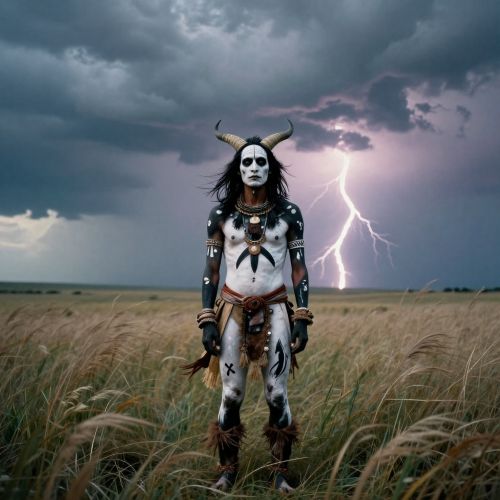


Unktehi : The Horned Water Serpent of the Sioux
Listen
At a glance
| Description | |
|---|---|
| Origin | Dakota Mythology |
| Classification | Spirits |
| Family Members | N/A |
| Region | United States of America |
| Associated With | Floods, Storms, Water |
The Mythlok Perspective
In Mythlok’s Perspective, Unktehi is not merely a monster but an elemental principle given narrative form. It represents the overwhelming force of water that both destroys and renews. Much like Jörmungandr in Norse tradition or the Rainbow Serpent in Australian Aboriginal belief, Unktehi embodies nature’s scale beyond human control. Across cultures, horned or cosmic serpents symbolize primal waters and cyclical rebirth. Unktehi stands firmly within that universal archetype, reminding humanity that survival depends not on conquering nature, but respecting its power.
Unktehi
Introduction
Unktehi is one of the most formidable beings in Lakota and Dakota sacred narratives. Known in the Lakota language as Uŋkčéǧila and often rendered in English as a horned water serpent, Unktehi represents the dangerous, sacred, and unpredictable power of water. In the spiritual worldview of the Oceti Sakowin, water is not merely a resource but a living force, and Unktehi embodies its destructive and transformative potential.
Unktehi is frequently described as dwelling in deep lakes, rivers, and underground waters. Floods, drownings, and sudden storms were sometimes attributed to this being’s movements. Yet Unktehi is not simply a monster. Within Dakota and Lakota cosmology, even malevolent forces serve a purpose. The existence of Unktehi reflects the belief that balance requires both danger and harmony. Without forces that test humanity, there can be no spiritual growth or renewal.
In some oral accounts, including those shared by Lakota holy man John Fire Lame Deer in the twentieth century, Unktehi is connected to a primordial flood that reshaped the world. From catastrophe came renewal, reinforcing the idea that destruction and rebirth are intertwined.
Physical Traits
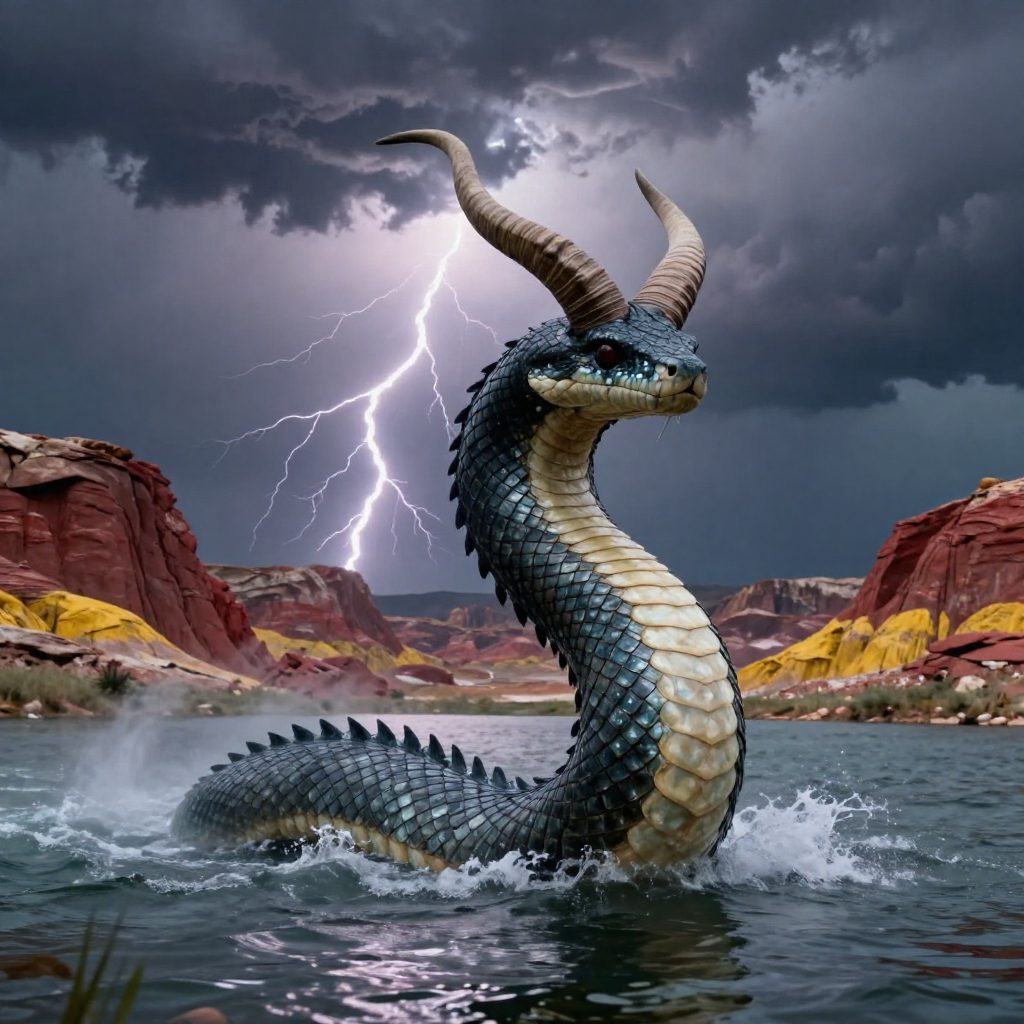
Unktehi is described as a colossal reptilian being with serpentine features. Most traditions portray it as a massive water serpent with prominent horns rising from its head. These horns are sometimes said to reach toward the clouds during storms, emphasizing its link to weather and thunderous skies. Its body is immense enough to span rivers, and its tail is powerful enough to level forests or carve ravines into the earth.
Some accounts describe Unktehi’s scales as hard and flint-like, reflecting light like sunlit water. Others speak of glowing eyes and an aura that instills terror in anyone who encounters it. A recurring tradition states that Unktehi was eventually turned to stone by powerful spiritual forces. In the Badlands of present-day South Dakota, ridges of red and yellow rock have been interpreted in oral lore as the petrified backbone of the great water serpent. These geological formations serve as living reminders of the being’s presence and power.
Unlike dragons of European legend, Unktehi is not typically depicted with wings. Its strength lies in its command over water and its immense physical scale. It belongs to the depths rather than the skies.
Family
In Dakota and Lakota stories, Unktehi is often connected to a primordial female water being named Unk. Unk was once associated with Maka, the Earth spirit, but after conflict and discord she was banished to the waters. There she became a powerful force associated with chaos and imbalance. The Unktehi are sometimes described as her offspring, inheriting her turbulent nature.
This lineage places Unktehi within a broader spiritual framework rather than as an isolated creature. The waters themselves are animated and guarded by powerful spirits. The Unktehi are sometimes referred to collectively as Water Spirits or “Terrible Ones,” reflecting both fear and reverence.
Unktehi also stands in mythic opposition to the Thunder Beings, known in Lakota tradition as Wakíŋyaŋ. These sky beings protect humanity from the excesses of water spirits. Their clashes symbolize the dynamic balance between sky and water, lightning and flood. Neither side is purely good or evil. Instead, their struggle sustains cosmic equilibrium.
Other names
Unktehi appears under several spellings due to dialect differences and oral transmission. Common forms include Unktehila, Unhcegila, Uncegila, and Uŋkčéǧila. The variations reflect the linguistic richness of Lakota and Dakota languages and the challenges of translating sacred names into English.
The term Unktehi is sometimes loosely translated as “water monster” or “horned serpent,” but these translations simplify a much deeper concept. Among medicine people, the true name and deeper spiritual identity of such beings may be treated with caution or kept within ceremonial knowledge.
Although parallels are sometimes drawn between Unktehi and other horned serpents in Indigenous North American traditions, it is important to recognize that Unktehi belongs specifically to the spiritual landscape of the Lakota and Dakota nations.
Powers and Abilities
Unktehi’s primary domain is water. It is believed to cause floods by swelling its massive body, making rivers and lakes overflow. Sudden drownings and water-related accidents were sometimes attributed to its anger. The Unktehi are said to lurk beneath the surface, seizing those who enter their territory without proper respect.
Yet the being’s power is not exclusively destructive. When properly acknowledged and appeased, Unktehi could grant protection or even sacred gifts. Some traditions connect water spirits with the origins of important ceremonial knowledge. This dual capacity reflects the broader Lakota understanding that powerful forces demand reverence rather than outright rejection.
In mythic narratives, Unktehi battles the Thunder Beings during violent storms. Lightning strikes represent the Thunder Beings’ attempts to subdue the water serpent. When storms clear and rainbows appear, they are sometimes interpreted as signs of temporary truce between sky and water.
Shamans and holy people were believed to possess rituals and sacred objects capable of warding off or calming Unktehi. This reinforces the idea that spiritual discipline allows humans to navigate dangerous forces without being destroyed by them.
Modern Day Influence
Unktehi continues to live within oral storytelling, ceremonial knowledge, and cultural identity among Lakota and Dakota communities. Sacred sites in Minnesota and South Dakota are associated with water spirits. Places such as Boiling Springs in Savage, Minnesota, known to the Dakota as Maka Yusota, are revered as spiritually potent waters connected to powerful beings.
Oheyawahi, also called Pilot Knob in Dakota County, Minnesota, is another landmark linked through oral history to Unktehi’s movement along the Mississippi and Minnesota Rivers. Such stories tie geography to spiritual memory, reinforcing Indigenous relationships with land and water.
In contemporary discussions, interpretations of Unktehi sometimes intersect with environmental activism. For many, the horned water serpent symbolizes the need to respect and protect water sources. Rather than viewing Unktehi as merely evil, modern perspectives often emphasize its role as guardian and enforcer of balance.
Unktehi also appears in academic studies of Plains spirituality and in artistic representations that celebrate Indigenous cosmology. Through storytelling, education, and cultural revitalization, the horned water serpent remains a living presence.
Related Images
Blogs & Opinions
Urban Legends
Glorious Epics
Mythical Events


Source
Lame Deer, & Erdoes, R. (1972). Lame Deer: Seeker of visions. Simon and Schuster. (Cited in , )
National Park Service. (2024). Unktehi and the Flood as told by Lame Deer. U.S. Department of the Interior.
https://www.nps.gov/articles/000/unktehi-and-the-flood-as-told-by-lame-deer.htm
Dooling, D. M., & Walker, J. R. (2000). The sons of the wind: The sacred stories of the Lakota. University of Oklahoma Press.
Gods and Monsters. (2025). Unktehi: The powerful water serpent of Native American myth. https://godsandmonsters.info/unktehi/
Marlena Myles. (2017). Unk & Unktehi. https://marlenamyl.es/project/unk-unktehi/
Walker, J. R. (1983). Lakota mythology. University of Nebraska Press.
Devils Lake Journal. (2026). The history and culture of the Spirit Lake Dakota.
https://www.devilslakejournal.com/news/2147/message-from-garcia-the-history-and-culture-of-the-spirit-lake-dakota/
Towahkon. (2011). A Lakota story about Mille Lacs. http://www.towahkon.org/Unktehi.html
Frequently Asked Questions
What is Unktehi in Lakota tradition?
Unktehi is a powerful horned water serpent in Lakota and Dakota sacred narratives, associated with floods, storms, and the spiritual power of water.
Is Unktehi considered evil?
Unktehi is often portrayed as dangerous and destructive, but within Lakota belief systems it represents a necessary force of balance rather than pure evil.
Where does Unktehi live?
Unktehi is believed to dwell in deep lakes, rivers, and underground waters across the Great Plains.
Who are Unktehi’s enemies?
Unktehi frequently battles the Thunder Beings, known as Wakíŋyaŋ, who represent sky and lightning forces.
Are there sacred sites connected to Unktehi?
Yes, certain locations in Minnesota and South Dakota are associated with water spirits and linked through oral tradition to Unktehi.