

Mount Osore : Japan’s Sacred Mountain Between Life and Death
At a glance
| Description | |
|---|---|
| Mythology | Japanese Mythology |
| Country | Japan |
| Closest airport | Misawa Airport (MSJ) |
| Type | Natural |
| Accessibility | 04/10 |
Mythlok Perspective
Mount Osore is not portrayed as a place of punishment, but as a landscape shaped by grief made visible. In Mythlok’s reading, the mountain functions less as a hell and more as a threshold where sorrow, memory, and hope coexist without resolution. Unlike moralised underworlds, Osorezan accepts suffering as part of the human condition rather than a consequence of sin. Comparable liminal geographies appear elsewhere. The Greek River Styx frames death as passage, not judgment, while the Tibetan Bardo describes an in-between state shaped by consciousness rather than terrain. Mount Osore stands among these traditions as a physical map of transition, where the earth itself participates in mourning.
Mount Osore
Introduction
Mount Osore, known in Japanese as Osorezan or “Fear Mountain,” is one of Japan’s most spiritually charged landscapes. Located on the remote Shimokita Peninsula in Aomori Prefecture, this active volcanic region is renowned for its stark grey terrain, sulfurous steam vents, and eerie silence. For centuries, these natural features have shaped its reputation as a liminal place where the living come into close contact with the realm of the dead.
Regarded as one of Japan’s three most sacred mountains alongside Mount Kōya and Mount Hiei, Mount Osore occupies a unique position in the country’s spiritual geography. Unlike forested pilgrimage sites or mountaintop monasteries, Osorezan confronts visitors with desolation rather than beauty. Yet it is precisely this harshness that gives the mountain its power. It is not merely a destination, but an experience shaped by grief, memory, and belief, drawing pilgrims who seek solace, closure, or spiritual understanding.
Connection with Mythology
Mount Osore’s mythological importance is rooted in Japanese Buddhist cosmology, where it is believed to serve as one of the gateways to the underworld. The mountain’s volcanic landscape closely mirrors traditional Buddhist descriptions of hell, with bubbling mud pools, scorched earth, and noxious fumes evoking realms of suffering described in sutras. These physical features are not symbolic additions but natural phenomena that shaped belief over time.
At the heart of this mythology lies Bodai-ji Temple, founded in 862 CE by the monk Ennin following a revelatory dream. The temple is dedicated to Jizō Bosatsu, the bodhisattva who protects children, travelers, and wandering souls. According to belief, the spirits of children who die prematurely gather in the Sai-no-Kawara, stacking stones as penance, only for demons to knock them down. Jizō shelters these souls, offering compassion amid suffering.
Surrounding Lake Usori and the encircling peaks reinforce this cosmological symbolism. The eight surrounding mountains are often interpreted as the petals of a lotus, with the lake representing a vision of paradise beyond torment. Together, these elements transform Mount Osore into a sacred threshold where hell and salvation exist side by side.
Ways to Get There
Reaching Mount Osore is deliberately difficult, and its isolation has long been considered part of the pilgrimage itself. Most travelers begin their journey from Tokyo by taking the Tōhoku Shinkansen to Hachinohe, followed by regional rail lines to Shimokita Station. From there, limited buses operate seasonally to the mountain, typically between May and October when the temple grounds are open.
Driving offers greater flexibility, particularly for those exploring the wider Shimokita Peninsula, though roads are narrow and weather conditions can change quickly. During winter months, heavy snowfall makes access impossible, and the mountain is entirely closed. This restricted accessibility reinforces Mount Osore’s role as a destination that must be sought with intention rather than convenience.
What to Look For
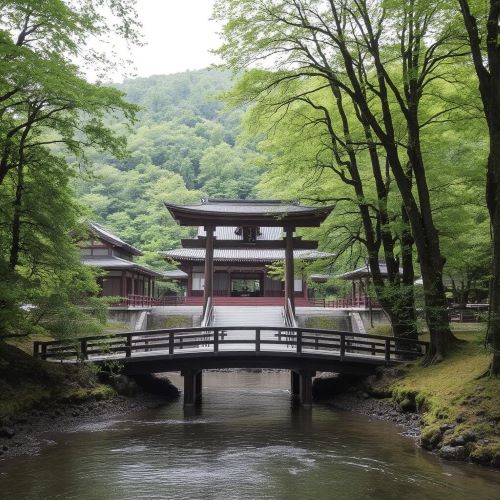
The experience of Mount Osore unfolds gradually, beginning with Bodai-ji Temple, the spiritual core of the site. The temple grounds include memorial halls, ritual spaces, and sulfur-fed hot springs used by pilgrims for purification. The air is thick with the smell of sulfur, a constant reminder of the mountain’s volcanic nature.
Beyond the temple lies Sai-no-Kawara, a barren riverbed covered in stone cairns built by grieving families. Pinwheels, toys, and red bibs left for Jizō statues create moments of color against the monochrome landscape. Steam vents, known locally as jigoku or “hells,” hiss and bubble nearby, reinforcing the sense of standing within a myth made real.
At the edge of the caldera lies Lake Usori, its pale blue-green waters highly acidic yet visually serene. Nearby, Gokuraku Beach represents paradise, offering a symbolic counterpoint to the surrounding hellscape. During festival periods, visitors may also encounter itako mediums, traditionally blind women who perform spirit-calling rituals, offering messages believed to come from the dead.
Importance in cultural history
Mount Osore has played a central role in Japanese attitudes toward death and mourning for over a millennium. Folk sayings from the Edo period reflect a widespread belief that the dead travel to Osorezan after passing, making it not just a sacred mountain but a destination for souls themselves. This belief shaped pilgrimage practices that continue into the present day.
The tradition of itako mediums further anchors the mountain in cultural history, blending Buddhist doctrine with older shamanic practices. While the number of practitioners has declined, the rituals remain deeply symbolic, representing Japan’s enduring relationship with ancestral veneration and grief.
Literature, visual art, and modern media frequently depict Mount Osore as a liminal space, neither fully of this world nor the next. Its continued relevance lies in its refusal to sanitise death, instead offering a space where sorrow, remembrance, and faith coexist openly.
Best time to travel
Mount Osore is accessible only from late May to October, with the temple closing entirely during winter. Each season offers a different experience. Summer, particularly late July, coincides with the Itako Taisai festival, when spiritual rituals and memorial services draw pilgrims from across Japan. This is the most culturally immersive period but also the busiest.
Spring and early autumn provide quieter conditions, allowing visitors to experience the landscape with fewer crowds. Autumn foliage in late September and October adds unexpected color to the otherwise stark terrain. Winter travel is not possible, as heavy snow renders the region inaccessible and dangerous.


Source
Kimball, D. (2025, October 2). Mt. Osore (Osorezan) | Venture Into the Buddhist Maw of Hell.
https://donnykimball.com/osore-2ce2c8012e48
Tokyo Weekender. (2025, November 20). Mount Osore: Japan’s Gateway to the Underworld. https://www.tokyoweekender.com/art_and_culture/history/mount-osore-the-gateway-to-the-underworld/
Rome2Rio. (2018, June 30). Aomori to Mount Osore – 2 ways to travel via train, and car. https://www.rome2rio.com/s/Aomori/Mount-Osore
Airial Travel. (2025, September 9). Mount Osore (Osorezan) (2025) – Airial Travel. https://airial.travel/attractions/japan/mutsu/mount-osore-osorezan-iny2u6ET
A Picturesque Life. (2024, September 6). Osorezan Bodaiji Temple: Why You Will Love Fear …. https://apicturesquelife.com/2024/09/07/osorezan-bodaiji-temple/
Japan Starts Here. (2025, December 28). Osorezan Bodai-ji, Japan’s Door to Hell.
The Gate 12. (2023, April 3). Sacred Mount Osore’s Temples, Hot Springs and “Hells”.
https://thegate12.com/article/84
Frequently Asked Questions
Why is Mount Osore considered sacred?
Mount Osore is believed to be a gateway to the underworld in Japanese Buddhist belief, making it a pilgrimage site for mourning and spiritual reflection.
Is Mount Osore associated with hell in Japanese belief?
Yes, its volcanic terrain closely resembles Buddhist descriptions of hell, reinforcing its mythological role as a place of judgment and transition.
Who is Jizō Bosatsu at Mount Osore?
Jizō Bosatsu is a bodhisattva believed to protect children and wandering souls, central to the rituals performed at the site.
Can tourists visit Mount Osore freely?
Access is seasonal and limited to warmer months. Visitors must follow temple guidelines and respect its religious significance.
Are itako mediums still active at Mount Osore?
Yes, though fewer in number, itako mediums continue to perform spirit-calling rituals during specific festivals.