

Kitsune vs. Kumiho vs Huli Jing : The Three Legendary Fox Spirits of Asia
Across East Asia, the fox is far more than a clever animal of the wild. In Japan, Korea, and China, foxes appear in legends as supernatural beings capable of magic, deception, transformation, and sometimes wisdom. Three of the most famous fox spirits in folklore are the Kitsune of Japan, the Kumiho of Korea, and the Huli Jing of China.
At first glance, these creatures appear nearly identical. All three are mystical fox spirits known for shape-shifting into humans, particularly beautiful women, and influencing the lives of people around them. Yet the deeper you explore these traditions, the more their personalities and cultural roles diverge.
Understanding Kitsune vs. Kumiho vs Huli Jing reveals how different cultures interpret the same creature through their own beliefs, fears, and spiritual philosophies.
Origins in East Asian Folklore
The earliest fox spirit stories appear in ancient Chinese folklore, where the Huli Jing was believed to be a fox that gained supernatural powers after living for many years. Chinese texts dating back over two thousand years describe foxes that could transform into humans, manipulate dreams, or bring fortune or misfortune depending on their intentions.
From China, the idea of mystical fox spirits spread across East Asia through cultural exchange, literature, and religion. As the concept traveled, it evolved differently in neighboring regions.
In Japan, the fox spirit became known as the Kitsune, closely linked to the Shinto deity Inari, the god of rice, agriculture, and prosperity. Because of this connection, foxes in Japan often became sacred messengers of the gods rather than purely dangerous tricksters.
In Korean folklore, the fox spirit developed into the Kumiho, a nine-tailed fox often portrayed in darker stories. Unlike the more morally complex fox spirits in China and Japan, Korean tales frequently depict the Kumiho as a predator that feeds on human energy or organs.
Thus, although these spirits share a common mythological ancestor, their reputations vary dramatically across cultures.
Appearance and Supernatural Powers
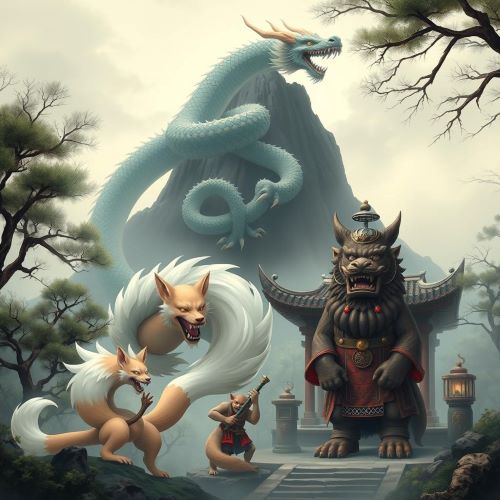
One of the most iconic features shared by these creatures is the multiple tails associated with powerful fox spirits. In Chinese mythology, the Huli Jing can grow additional tails as it ages and gains spiritual power. The most legendary version is the nine-tailed fox, which represents immense magical ability and ancient wisdom.
The Japanese Kitsune also follows this tradition. According to folklore, a fox can gain up to nine tails after living for centuries. Each tail symbolizes increasing intelligence and magical strength. A nine-tailed Kitsune is considered extremely powerful and nearly divine. Similarly, the Kumiho of Korean legends is usually described specifically as a nine-tailed fox, emphasizing its supernatural nature.
All three fox spirits share a remarkable set of magical abilities. These often include shape-shifting into humans, creating illusions, controlling fire or spirit energy, influencing dreams, and possessing individuals. Many stories describe them transforming into elegant women who interact with human society. Yet despite these shared powers, their motivations and behavior differ significantly depending on the cultural tradition.
Personality and Moral Nature
The most striking difference in the debate of Kitsune vs. Kumiho vs Huli Jing lies in how each culture portrays the fox spirit’s personality. In Chinese folklore, the Huli Jing is morally ambiguous. Some tales portray them as seductive spirits that drain life force from humans, while others depict them as wise immortals or loyal companions. In many classical Chinese stories, a fox spirit may even fall in love with a human and live peacefully among people.
The Japanese Kitsune often embodies duality as well, but with a more positive interpretation. Some Kitsune are mischievous tricksters that enjoy confusing humans, yet many are benevolent guardians serving the deity Inari. These fox spirits can reward kindness, protect villages, and even marry humans in romantic legends.
The Kumiho, however, carries a darker reputation in Korean tradition. Many Korean stories describe the Kumiho as a dangerous creature that consumes human hearts or livers in order to become fully human. Although modern interpretations sometimes soften this portrayal, traditional folklore often frames the Kumiho as a deceptive predator rather than a helper.
This difference reflects cultural attitudes toward supernatural beings. While Chinese and Japanese stories often allow spirits to coexist with humans, Korean tales frequently emphasize the danger of trusting something that disguises itself as human.
Cultural Influence and Modern Appearances
The enduring popularity of fox spirits means that Kitsune, Kumiho, and Huli Jing continue to appear throughout modern culture. In Japan, the Kitsune remains a beloved figure in festivals, shrine iconography, anime, and video games. Statues of foxes can be seen guarding thousands of Inari shrines across the country. In modern storytelling, Kitsune often appear as mystical guardians or clever shapeshifters.
In China, the Huli Jing appears frequently in classical literature such as the famous Qing dynasty collection Strange Tales from a Chinese Studio, where fox spirits are portrayed as intelligent supernatural beings capable of romance, wisdom, and trickery.
The Kumiho has become a major figure in Korean dramas, films, and webtoons. Modern stories often reinterpret the Kumiho as a tragic or misunderstood character rather than purely monstrous, blending traditional folklore with contemporary storytelling. These modern adaptations demonstrate how ancient legends continue to evolve while retaining their mythological roots.


No posts were found.