

Core Ideas of Mongolian Culture From Sky Worship to Shamanism
Mongolian mythology is not built like a fixed religious system with rigid doctrines or centralized scriptures. Instead, it is a fluid and deeply experiential worldview shaped by the vast steppes, harsh climates, and nomadic traditions of Central Asia. At its core, Mongolian mythology reflects how people understand existence through balance, nature, ancestry, and the unseen forces that guide life. It is less about worship in isolation and more about living in harmony with a constantly moving world.
The Eternal Sky and Tengrism
At the heart of Mongolian mythology lies Tengrism, the spiritual foundation centered on the eternal blue sky, known as Tenger. Unlike many belief systems that personify gods in elaborate forms, Tenger is vast, abstract, and ever-present. It represents cosmic order, fate, and the overarching force that governs all existence.
The sky is not just above—it is a living authority that observes and influences life. Human actions are believed to align or conflict with this cosmic order. Success, failure, and destiny are often interpreted as reflections of one’s relationship with Tenger. This creates a worldview where morality is tied not to rigid laws but to harmony with the natural and cosmic balance.
Tengrism does not demand temples or idols. The open sky itself becomes the sacred space. This simplicity reflects the nomadic lifestyle, where spirituality travels with the people rather than being confined to structures.
Balance Over Good and Evil
One of the defining concepts in Mongolian mythology is the emphasis on balance rather than dualistic conflict. Unlike systems that divide existence into strict categories of good versus evil, Mongolian thought sees opposing forces as complementary.
Sky and earth, life and death, creation and destruction are all necessary parts of a larger cycle. Disruption occurs not because one force is inherently wrong, but because balance is lost. This perspective encourages moderation, awareness, and adaptability in daily life.
Rather than seeking to conquer opposing forces, individuals aim to align themselves with them. This idea is deeply tied to survival on the steppe, where understanding and adapting to nature is more important than trying to dominate it.
Nature as a Living Presence
Nature in Mongolian mythology is not symbolic—it is alive. Mountains, rivers, forests, and even winds are believed to house spirits often referred to as lus or savdag. These are not distant gods but localized forces tied to specific landscapes.
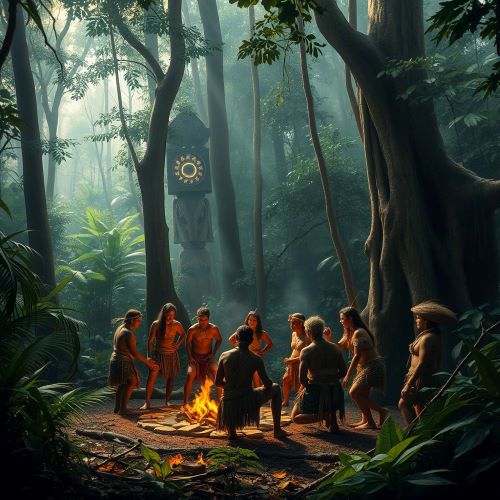
A mountain is seen as a guardian presence. A river carries intention and memory. Even a stretch of land can hold spiritual significance. This animistic worldview fosters deep respect for the environment. Before interacting with nature—whether crossing a river or traveling through a mountain pass—people often perform small rituals or gestures of acknowledgment. This relationship creates a sense of responsibility. Humans are not separate from nature but part of a shared system where every action has consequences beyond the visible.
The Role of Shamanism
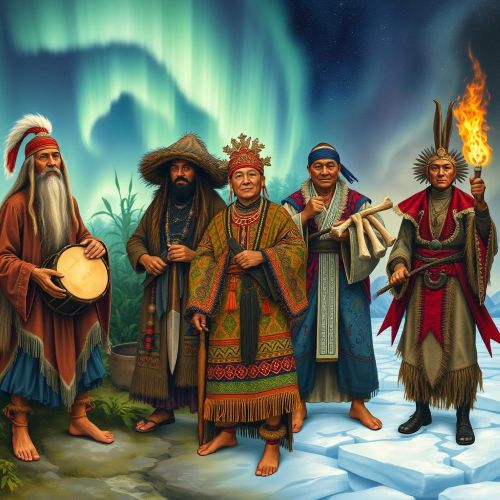
Shamanism plays a central role in connecting the human and spiritual worlds within Mongolian mythology. Shamans are not priests bound to doctrine but individuals who possess the ability to communicate with spirits.
Their role is deeply personal and often revealed through visions, inherited traits, or intense life experiences. Through rituals involving drumming, chanting, and trance-like states, shamans enter spiritual realms to seek guidance, healing, or protection.
They act as intermediaries between humans, nature spirits, and ancestors. This reinforces the idea that the spiritual world is not distant but interwoven with everyday life. Problems in the physical world often have spiritual dimensions, and shamans help restore balance between the two.
Ancestral Continuity and Identity
In Mongolian mythology, ancestors remain an active part of existence. They are not viewed as gone but as continuing presences who influence and guide their descendants. This creates a powerful sense of continuity, where the past and present are deeply connected. Honoring ancestors is essential for maintaining harmony and receiving protection. Family lineage becomes more than genealogy—it is a spiritual connection that shapes identity and purpose.
This belief also strengthens community bonds. Individuals are not isolated beings but part of an ongoing narrative that stretches across generations. Actions in the present are seen as affecting both ancestors and future descendants.
Nomadic Influence and Fluid Existence
The nomadic lifestyle of the Mongolian people has profoundly shaped their mythology. Constant movement across vast landscapes creates a worldview where nothing is truly permanent, yet everything remains connected.
This fluidity is reflected in myths that emphasize journeys, transformation, and resilience. Stability is not found in staying still but in adapting to change. Even spiritual practices reflect this mobility, as rituals and beliefs are carried rather than anchored.
Heroes in Mongolian mythology are not defined solely by conquest or dominance. Instead, they embody endurance, adaptability, and harmony with their environment. Survival itself becomes a sacred act, reinforcing the idea that life is a continuous journey rather than a fixed state.
Symbols, Animals, and Cosmic Connection
Animals hold deep symbolic significance in Mongolian mythology. Creatures like wolves, horses, eagles, and deer are not just part of the natural world but carry spiritual meaning. The wolf is often linked to origin and strength, representing resilience and survival. Horses symbolize freedom, movement, and the bond between humans and the land. Eagles serve as connectors between earth and sky, embodying vision and transcendence.
These animals are not worshipped in isolation but understood as expressions of larger cosmic forces. Their presence in myths reflects the interconnectedness of all life, where humans, animals, and spirits exist within the same system.
Rituals and Everyday Spirituality
Rituals in Mongolian mythology are not elaborate or distant—they are woven into daily life. Simple acts like offering milk to the earth, tying blue scarves (khadag), or lighting fires serve as direct interactions with the spiritual world.
These practices reinforce the idea that humans are active participants in maintaining balance. Spirituality is not confined to specific moments but exists in everyday actions and decisions. Each gesture, no matter how small, contributes to harmony between the physical and unseen realms.
Conclusion
Mongolian mythology offers a perspective that is deeply grounded in balance, connection, and respect. It teaches that the world is alive, that forces both seen and unseen shape existence, and that humans are part of a larger, interconnected system.
Rather than focusing on control or dominance, it emphasizes alignment—with nature, with ancestors, and with the eternal sky. In a world that often seeks certainty and structure, Mongolian mythology stands as a reminder that wisdom can also be found in movement, adaptability, and the quiet understanding of balance.

No posts were found.