

Kampilan : The Long War Blade of Mindanao
Mythlok Perspective
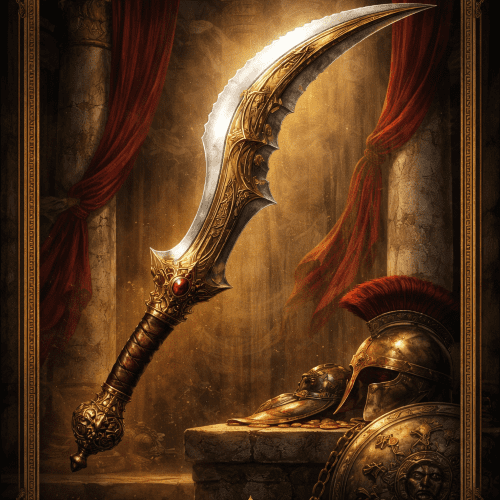
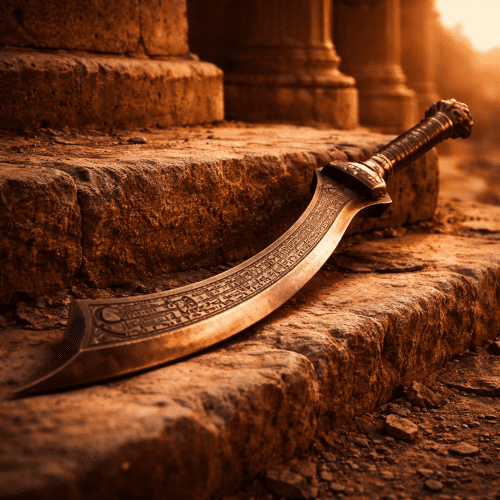
In Mythlok’s perspective, the Kampilan represents weaponry as territorial assertion. Unlike ceremonial blades that signify rank alone, this Filipino war sword is elongated for reach, built for decisive strikes in close combat. Comparable to the Indonesian parang in regional martial function, yet more imposing in silhouette, it reflects a seafaring warrior culture where presence and intimidation mattered as much as impact. The blade’s length extends authority forward, projecting dominance before contact is made.
Kampilan
Introduction
The Kampilan is a legendary sword deeply rooted in Philippine history and mythology. Wielded by warriors of the southern Philippines, it stands as a symbol of bravery, strength, and martial tradition. With its distinctive design and fearsome reputation, this weapon has been immortalized in folklore and epic tales.
Beyond its role in battle, the Kampilan represents a legacy of resistance, identity, and cultural pride. This blog delves into its origins, supernatural attributes, legendary wielders, and the lasting impact it holds in Philippine heritage.
Origins
The Kampilan has its roots in pre-colonial Philippines, where it was wielded by indigenous warriors and noble leaders like the datus. Historical accounts suggest it played a role in significant battles, including the legendary clash at Mactan in 1521, where Lapu-Lapu is believed to have used it against Ferdinand Magellan.
More than a weapon, the Kampilan showcases the artistry of Filipino blacksmiths. Its long, single-edged blade widens towards the tip, making it a formidable tool for combat. The hilt often features intricate carvings, with pommels shaped like mythical creatures such as the Bakunawa, a serpent from local folklore. These decorative elements not only enhance its aesthetic appeal but also symbolize power, status, and deep cultural ties.
Think you know your myths and legends? Dive into the world of ancient stories and test your knowledge with our engaging quizzes on Mythlok!
Powers
In Filipino mythology, the Kampilan is more than just a blade—it is a conduit of supernatural power and ancestral protection. Legends speak of warriors who wielded it gaining extraordinary strength, with some even believed to be impervious to harm. Rituals performed during its forging were thought to infuse the weapon with spiritual energy, linking it to the wisdom and guidance of ancestors.
A unique aspect of the Kampilan’s mythos is its connection to celestial forces, particularly the Bakunawa, a serpent-like creature said to control cosmic events. Warriors invoking its power were believed to channel its might, gaining an edge in battle. Some tales even suggest the sword could slice through anything, from armor to stone, making it a feared and revered weapon both in physical and spiritual warfare.
Owners/Users
Throughout Philippine history and mythology, the Kampilan has been wielded by legendary figures known for their bravery and leadership. Lapu-Lapu, the famed datu of Mactan, is perhaps its most well-known bearer, his victory over Magellan cementing the sword’s status as a symbol of resistance. Similarly, Rajah Sulayman, a fierce opponent of Spanish colonization, is often depicted with a Kampilan, underscoring its association with power and defiance.
Beyond historical warriors, the Kampilan appears in epics and folklore. Rajah Indarapatra, a hero of the Maranao people, is said to have used it to vanquish monstrous threats, reinforcing its mystical reputation. Datu Marikudo, the legendary chieftain of the Ati, is also linked to the Kampilan, wielding it to defend his people’s sovereignty. Whether in history or mythology, this iconic sword embodies strength, leadership, and the enduring spirit of resistance.
Instances used
The Kampilan has played a crucial role in both historical battles and mythological narratives across the Philippines. It was widely used in military encounters, valued for its effectiveness in both individual duels and large-scale warfare. Warriors prized its long, single-edged blade for powerful slashing and thrusting techniques, making it a dominant weapon in pre-colonial combat. Additionally, some indigenous groups employed the Kampilan in headhunting rituals, elevating its status beyond a mere tool of war to a symbol of prestige and warrior prowess.
Beyond the battlefield, the Kampilan features prominently in Filipino epics and oral traditions. In the Maranao legend of Indarapatra at Sulayman, Rajah Indarapatra wields a Kampilan to defeat fearsome monsters terrorizing his land. Similarly, in the lore surrounding the Battle of Mactan, it is believed that Lapu-Lapu and his warriors used the Kampilan to overcome Spanish forces, turning it into a lasting emblem of resistance. Today, the Kampilan remains an essential part of Filipino martial heritage, showcased in cultural festivals and martial arts demonstrations that keep its legacy alive.




Sources
Jocano, F. L. (1975). Philippine prehistory: An anthropological overview of the beginnings of Filipino society and culture. Philippine Center for Advanced Studies, University of the Philippines.
Stone, G. C. (1999). A glossary of the construction, decoration and use of arms and armor in all countries and in all times. Dover Publications. (Original work published 1934)
Tarling, N. (Ed.). (1992). The Cambridge history of Southeast Asia: Volume 1, From early times to c. 1800. Cambridge University Press. https://doi.org/10.1017/CHOL9780521355056
Metropolitan Museum of Art. (n.d.). Sword (Kampilan), Philippines. The Met Collection. https://www.metmuseum.org/art/collection/search
National Museum of the Philippines. (n.d.). Ethnographic collection: Bladed weapons of Mindanao. https://www.nationalmuseum.gov.ph
British Museum. (n.d.). Kampilan (Philippines). https://www.britishmuseum.org/collection
Encyclopaedia Britannica. (n.d.). Philippines: Precolonial weapons and warfare. https://www.britannica.com/place/Philippines
Scott, W. H. (1994). Barangay: Sixteenth-century Philippine culture and society. Ateneo de Manila University Press.
Frequently Asked Questions
What is a Kampilan?
A Kampilan is a traditional Filipino sword, particularly associated with Moro warriors of Mindanao.
How long is a Kampilan sword?
It is typically longer than most Southeast Asian swords, often exceeding 40 inches in total length.
Who used the Kampilan?
It was used by various warrior groups in the southern Philippines, especially in Mindanao and Sulu.
Is the Kampilan connected to any historical figure?
It is often linked in folklore to Lapu-Lapu, though historical certainty remains debated.
What makes the Kampilan unique?
Its extended blade, distinctive hilt design, and role in regional warfare distinguish it from other Filipino swords.