

Asgaya Gigagei : The Red Man of Thunder and Healing
Listen
At a glance
| Description | |
|---|---|
| Origin | Cherokee Mythology |
| Classification | Gods |
| Family Members | N/A |
| Region | United States of America |
| Associated With | Thunder, Healing, Medicine |
Asgaya Gigagei
Introduction
Asgaya Gigagei, known in Cherokee mythology as the “Red Man” or “Red Woman”, is a powerful spirit associated with thunder, lightning, and healing. Among the Cherokee, he is one of the mysterious beings who bridge the world of storms and medicine. His dual nature—appearing as either male or female—makes him a unique presence within Native American cosmology. Both feared and revered, Asgaya Gigagei represents the sacred balance between destruction and restoration, storm and serenity, illness and healing.
He occupies a central position in Cherokee spiritual practice as a spirit invoked by medicine men, especially during rituals intended to heal the sick or restore harmony after misfortune. Like thunder itself, Asgaya Gigagei’s presence signals both danger and cleansing power, embodying the transformative forces of the natural world that sustain and challenge human life.
Physical Traits
Descriptions of Asgaya Gigagei are rare in the recorded corpus of Cherokee oral tradition, yet his defining characteristic—the color red—runs deeply through every mention. The name itself, meaning “Red Man” or “Red Woman,” symbolizes life, blood, lightning, and the energy of transformation. This red hue is not merely physical but spiritual, representing both the brilliance of lightning and the vitality of living energy that flows through the natural world.
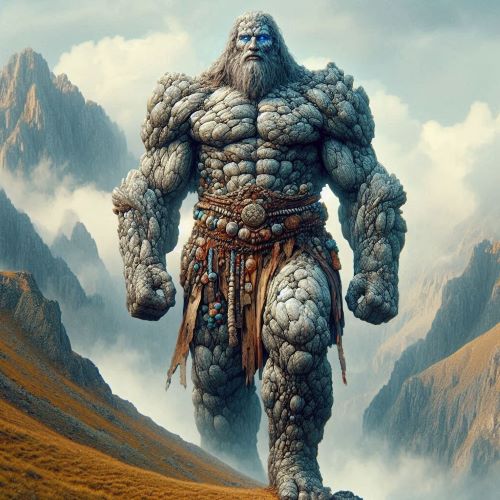
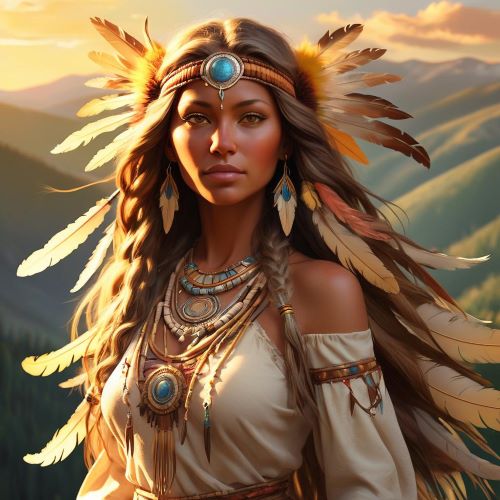
Asgaya Gigagei is sometimes envisioned as tall, radiant, and surrounded by flashes of red and white light. His presence may manifest in the crimson sky before a storm or the glow of lightning behind thunderclouds. When appearing in ritual, he is said to shift form between masculine and feminine aspects, reflecting his duality as both healer and storm-bringer. He embodies the natural forces that heal through change and purify through chaos.
Family
In Cherokee cosmology, Asgaya Gigagei exists within a network of spirits tied to thunder and water. He is often mentioned alongside the Thunder Beings, divine forces who dwell in the mountains and clouds, controlling lightning and rainfall. Though not explicitly described as their leader or kin, he shares their elemental power and purpose.
Unlike other deities with defined genealogies, Asgaya Gigagei stands apart as a spiritual being rather than a familial one. His essence lies in energy and transformation rather than bloodline. In some traditions, his presence echoes that of Aniyvdaqualosgi, the powerful Thunderers who act as protectors of humanity. Asgaya Gigagei may thus be understood as a singular manifestation of these greater natural forces, personalized through ritual and healing.
Other Names
Asgaya Gigagei appears under several transliterations, reflecting linguistic variation and regional usage among Cherokee-speaking peoples and later ethnographers. The name is sometimes written as Asagaya Gigaei or Asgaya Gigagei, both meaning “Red Man.” The dual-gender interpretation, where he may appear as a woman, leads some sources to also refer to him as the “Red Woman.”
Each name emphasizes the color red as an essential part of his identity—a hue linked to thunder, blood, and sacred vitality. Within Cherokee cosmology, colors carry deep symbolism, and red often denotes the south, war, strength, and life. Thus, Asgaya Gigagei’s name alone situates him as a being of intense energy, capable of both harm and healing.
Powers and Abilities
Asgaya Gigagei’s powers are vast and deeply intertwined with Cherokee medicine and spiritual practice. He governs thunder and lightning, commanding the storms that cleanse and nourish the earth. When invoked by medicine men, his power extends into the realm of healing, allowing practitioners to draw upon his energy to expel illness and restore balance.
During healing ceremonies, the medicine man calls upon Asgaya Gigagei for assistance. If the patient is male, the deity manifests as a woman; if the patient is female, he appears as a man. This dynamic gender shift reflects the spiritual balance necessary for healing—union of opposites, restoration of harmony, and renewal of life-force.
Beyond healing, Asgaya Gigagei is also regarded as a protector. His thunder warns of approaching danger, his lightning purifies the land, and his storms mark renewal after destruction. He is not inherently benevolent or wrathful; rather, his power depends on how humans interact with the natural and spiritual order. When treated with reverence, he brings restoration. When ignored or disrespected, his storms can be fierce reminders of nature’s supremacy.
Through these dual roles—as both destroyer and healer—Asgaya Gigagei encapsulates a vital Cherokee understanding of balance. Every force in the world carries its counterpart, and every storm that devastates also purifies the path for new life.
Modern Day Influences
Though many details of Asgaya Gigagei’s worship were lost with colonization and suppression of Cherokee spiritual practices, his name endures in contemporary retellings of Native American mythology. He appears in mythological encyclopedias, Cherokee folklore studies, and modern digital archives as a symbol of healing and transformation.
In recent decades, Cherokee cultural revitalization has encouraged renewed interest in ancestral spirituality. Scholars and cultural educators reference Asgaya Gigagei in discussions of traditional medicine and the role of gender balance in indigenous healing systems. His gender-fluid nature has drawn attention from modern interpreters exploring indigenous perspectives on duality and identity.
Asgaya Gigagei’s imagery occasionally appears in visual art, storytelling, and spiritual writing as an emblem of red thunder and healing light. For many, he represents the resilience of Cherokee cosmology—a reminder that ancient wisdom continues to flow like lightning through modern consciousness. His enduring story connects the rhythms of the natural world to the human spirit, showing that thunder, light, and life itself are all part of the same sacred current.
Related Images
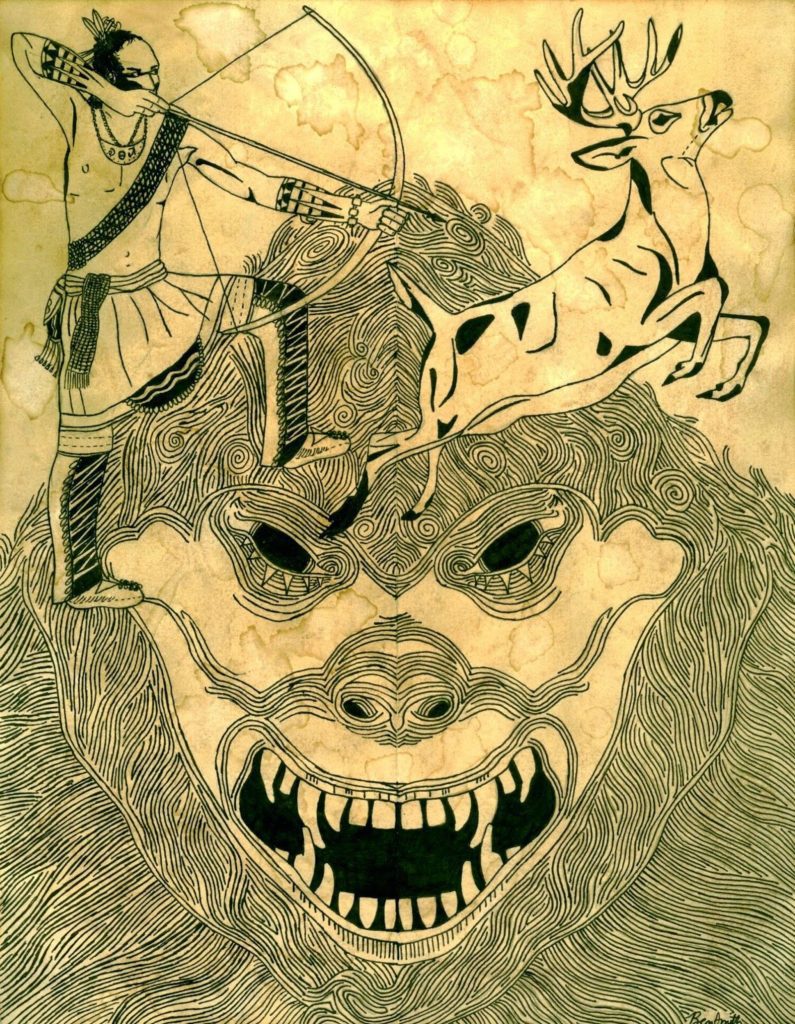



Frequently Asked Questions
Who is Asgaya Gigagei in Cherokee mythology?
Asgaya Gigagei, often referred to as the “Great Stone” or “Great Spirit,” is a significant deity in Cherokee mythology. He represents the strength and stability of the earth and is revered as a powerful protector of the Cherokee people.
How is Asgaya Gigagei honored in Cherokee culture?
The Cherokee honor Asgaya Gigagei through various rituals and ceremonies that express gratitude for the earth’s resources. Offerings, songs, and dances are performed to seek his blessings and reinforce the connection between the community and the Great Spirit.
How does Asgaya Gigagei compare to other deities in Cherokee mythology?
Asgaya Gigagei shares similarities with other nature deities across various mythologies, representing themes of protection and nurturing. However, his unique stories and attributes reflect the specific cultural values and beliefs of the Cherokee people, highlighting their connection to the earth.
Sources
Angelfire. (n.d.). Thunder Gods of Native America. Retrieved November 7, 2025, from https://www.angelfire.com/ca/Indian/ThunderGods.html
Godchecker. (2018, October 23). Asgaya Gigagei – The Cherokee God of Thunder. Retrieved November 7, 2025, from https://www.godchecker.com/cherokee-mythology/ASGAYA-GIGAGEI/
Mooney, J. (1900). Myths of the Cherokee: From the Nineteenth Annual Report of the Bureau of American Ethnology, Part I. Washington, DC: Government Printing Office.
Occult World. (2018, July 24). Asgaya Gigagei (Red Man). Retrieved November 7, 2025, from https://occult-world.com/asgaya-gigagei/
Oxford Reference. (n.d.). Asgaya Gigagei. In Oxford Reference Online. Retrieved November 7, 2025, from https://www.oxfordreference.com/display/10.1093/oi/authority.20110803095428314
Simple English Wikipedia. (n.d.). Cherokee Mythology. Retrieved November 7, 2025, from https://simple.wikipedia.org/wiki/Cherokee_mythology
Spence, L. (1914). The Myths and Legends of the North American Indians. London, UK: George G. Harrap & Co.
Native History Association. (n.d.). The Red Man and the Uktena. Retrieved November 7, 2025, from https://nativehistoryassociation.org/redman_uktena.php