
Tablet of Destinies : The Mesopotamian Symbol of Fate and Authority
| Description | |
|---|---|
| Origin | Mesopotamian Mythology |
| Classification | Clay tablet inscribed with divine decrees |
| Owners/Users | Enlil, Anu, Marduk, Ninurta, Kingu |
| Symbolism | Cosmic authority, Legitimacy, Fate, order vs. chaos |
| Source Texts | Enuma Elish, Myth of Anzu |
Mythlok Perspective
In Mythlok’s View, the Tablet of Destinies represents humanity’s early attempt to anchor cosmic uncertainty into something tangible and written. Mesopotamian culture trusted inscription as permanence, so fate itself became a tablet of clay. Unlike the Greek Moirai who weave destiny invisibly, or the Norse Norns who carve it into a cosmic tree, Mesopotamia localized destiny into an object that could be stolen, reclaimed, and legitimized. This makes the Tablet less about inevitability and more about rightful authority over order.
Tablet of Destinies
Introduction
The Tablet of Destinies stands as one of the most powerful symbols in ancient Mesopotamian belief. Revered across Sumerian, Akkadian, and Babylonian traditions, the Tablet of Destinies was not simply a divine object but the very source of cosmic authority. Whoever possessed it held the power to decree fate, legitimize kingship, and command the structure of the universe itself.
In a civilization where writing was sacred and clay inscriptions made laws permanent, the idea of destiny being physically inscribed carried enormous theological weight. The Tablet of Destinies transformed divine will into something tangible and binding. Its theft caused chaos among the gods, its recovery restored order, and its transfer marked shifts in divine supremacy. Through this single symbol, Mesopotamian mythology expressed one of its deepest concerns: that power without legitimacy leads to disorder, and that fate must be anchored in rightful authority.
Description
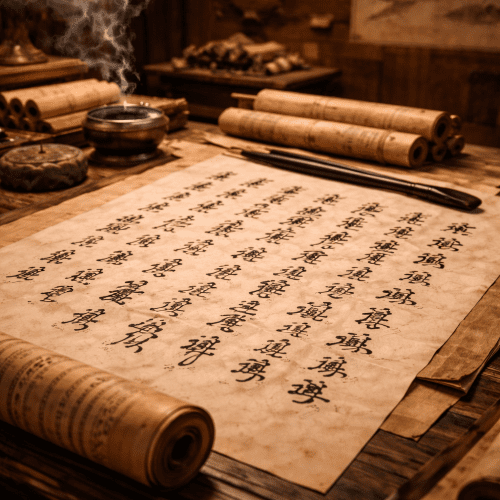
The Tablet of Destinies was imagined in Mesopotamian tradition as a sacred clay tablet inscribed with cuneiform signs and impressed with divine seals. Unlike ordinary administrative tablets used in temples and palaces, the Tablet of Destinies carried cosmic authority. It functioned as a permanent, unalterable decree that legitimized the rule of whichever god possessed it.
Ancient texts describe it not merely as a symbolic object but as a binding legal instrument of the universe. In Mesopotamian thought, writing was power. Once something was inscribed in clay and sealed, it became irrevocable. The Tablet of Destinies therefore represented sovereignty itself. Some traditions associate it with divine emblems or the sacred “me,” the decrees that governed civilization, order, and natural law.
Rather than being a decorative object, the Tablet was believed to record the structure of reality. Life, death, kingship, and cosmic balance were bound within its inscriptions. Possessing it meant possessing the authority to define destiny.
Mythological Context
The Tablet of Destinies appears most prominently in Mesopotamian myth cycles preserved in Sumerian and Akkadian literature. One of the central sources is the Babylonian creation epic, Enuma Elish, composed during the late second millennium BCE. In this epic, the Tablet symbolizes the transfer of supreme divine authority.
Earlier Sumerian traditions, particularly the myth of Anzû, also center on the Tablet. These stories were tied to the religious authority of Nippur, the sacred city of Enlil. Over time, as political power shifted to Babylon, the same motif was reinterpreted to elevate Marduk above earlier gods.
The Tablet consistently represents cosmic order. When held by a legitimate deity, the universe remains stable. When stolen or misused, chaos erupts. Through these narratives, Mesopotamian cultures expressed a profound belief that authority must be sanctioned and that disorder arises when divine hierarchy is disrupted. The Tablet also appears indirectly in flood and creation traditions such as the Epic of Atrahasis, where destiny, divine decree, and human survival are tightly intertwined.
Owners/Users
The Tablet of Destinies passed through the hands of several major deities across different traditions. In early accounts, Anu, the sky god, is associated with ultimate authority. However, the Tablet becomes more closely linked to Enlil, who rules from his temple Ekur in Nippur. As lord of wind and decrees, Enlil is frequently described as its rightful guardian. The myth dramatically shifts when Anzu, a powerful lion-headed eagle, steals the Tablet from Enlil. This act halts divine functions and throws the cosmos into disarray.
In the Babylonian theological tradition, Tiamat grants the Tablet to her consort Kingu, giving him command over her monstrous army. After Kingu’s defeat, the Tablet passes to Marduk, symbolizing his elevation as king of the gods. Other figures, such as Ninurta, also interact with the Tablet when restoring order after Anzû’s rebellion. Each transfer reflects political and theological transitions within Mesopotamian history.
Instances of Use
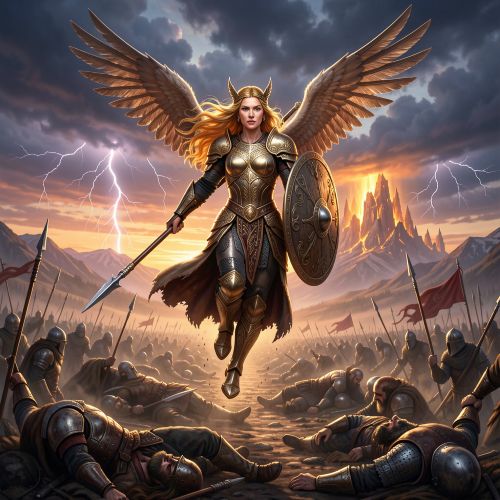
The most famous episode involving the Tablet of Destinies is the Anzû myth. While Enlil bathes, Anzû seizes the Tablet and proclaims himself ruler. With the Tablet in his possession, divine decrees cease to function. Even powerful gods hesitate to confront him because the Tablet grants him authority over fate itself. Eventually, Ninurta confronts and defeats Anzû, reclaiming the Tablet and restoring cosmic order. This story emphasizes that destiny, though powerful, must remain in rightful hands.
In Enuma Elish, Kingu wears the Tablet as a breastplate during battle. By fastening it to his chest, he symbolically absorbs its authority. When Marduk defeats Tiamat and Kingu, he takes the Tablet and secures his supremacy. This moment legitimizes Babylon’s political rise. Some lesser-known traditions also describe divine intervention by Enki, who uses cunning rather than brute force to ensure that authority returns to stability. Across versions, the Tablet consistently determines who can command reality.
Symbolism and Interpretations
The Tablet of Destinies symbolizes more than fate. It embodies legitimacy, sovereignty, and the written word as an instrument of divine power. In Mesopotamian civilization, writing had sacred authority. Laws, contracts, and royal inscriptions were impressed into clay to make them permanent. The Tablet transforms this cultural reality into cosmic theology. What is written cannot easily be undone.
Scholars interpret the Tablet as a reflection of political ideology. As city-states competed for dominance, myths elevated their patron gods. The transfer of the Tablet mirrors real-world shifts in power, especially from Sumerian centers like Nippur to Babylon under Marduk’s supremacy. It also expresses a philosophical tension between determinism and agency. Destiny exists, but it can be stolen, fought over, and restored. Order is fragile, not automatic.
Comparative Analysis
The struggle over the Tablet of Destinies parallels other ancient myths in which authority is secured through combat. In Enuma Elish, Marduk’s defeat of Tiamat resembles Ninurta’s victory over Anzû. In both cases, a younger champion defeats chaos and claims divine kingship.
Comparatively, Norse mythology places destiny in the hands of the Norns, who carve fate into Yggdrasil rather than into a single object. Greek mythology distributes destiny among the Moirai. Mesopotamian tradition is unique in concentrating ultimate authority into a tangible artifact. The Tablet’s role as a written decree also anticipates later religious ideas about divine law and heavenly records. While not directly copied, thematic echoes appear in Near Eastern and Mediterranean traditions.
Modern Influence
Modern scholarship continues to study the Tablet of Destinies as a key to understanding Mesopotamian theology and kingship ideology. Its themes have influenced fantasy literature and role-playing games, where artifacts that grant dominion over fate frequently appear. Academic discussions connect it to broader Near Eastern motifs found in biblical literature, especially in creation and flood narratives. The Tablet remains central in Assyriology as a symbol of how ancient societies conceptualized power, order, and divine legitimacy.
Legacy
The enduring legacy of the Tablet of Destinies lies in its representation of cosmic structure. It captures the Mesopotamian conviction that order must be maintained against chaos and that authority must be sanctioned. Across centuries of Sumerian, Akkadian, and Babylonian storytelling, the Tablet of Destinies remained a constant reminder that sovereignty is not merely strength but legitimacy inscribed into the fabric of reality.


Sources
Annus, A. (2002). The god Ninurta in the mythology and royal ideology of ancient Mesopotamia. Harvard University Press.
Black, J. A., Cunningham, G., Robson, E., & Zólyomi, G. (1998). The electronic text corpus of Sumerian literature. University of Oxford. https://etcsl.orinst.ox.ac.uk/
Coulter, C. R., & Turner, M. (2000). Encyclopedia of ancient deities (Vols. 1-2). McFarland & Company.
Dalley, S. (Trans.). (1989). Myths from Mesopotamia. Oxford University Press.
Ford, J. N. (2011). The Tablet of Destinies and the transmission of power in Enūma eliš. In G. Wilhelm (Ed.), Organization (pp. 1-20). Academia.edu. https://www.academia.edu/1776036
George, A. R. (1992). The Babylonian Gilgamesh epic. Oxford University Press.
Lambert, W. G. (1981). Babylonian creation myths. Eisenbrauns.
Wikipedia contributors. (2026). Tablet of Destinies (mythic item). Wikipedia. https://en.wikipedia.org/wiki/Tablet_of_Destinies_(mythic_item)[1]
Frequently Asked Questions
What is the Tablet of Destinies in Mesopotamian mythology?
The Tablet of Destinies is a divine artifact believed to grant its holder authority over fate, cosmic order, and kingship in Sumerian and Babylonian myths.
Who stole the Tablet of Destinies?
The lion-eagle Anzû famously stole the Tablet from Enlil, causing cosmic chaos until it was recovered.
What role does the Tablet play in Enuma Elish?
In Enuma Elish, Kingu receives the Tablet from Tiamat, but after Marduk defeats them, he claims it to establish supreme authority.
Is the Tablet of Destinies a real archaeological object?
No confirmed physical Tablet of Destinies has been discovered. It exists as a mythological concept reflected in ancient texts.
What does the Tablet of Destinies symbolize?
It symbolizes divine legitimacy, the power of written decree, and the fragile balance between order and chaos.