

Cabbit : A Hybrid Creature That Biology Rejects
| Description | |
|---|---|
| Origin | United States of America |
| Classification | Cryptid |
| Demeanour | Friendly |
| Habitat | Rural areas |
| Status | Proven Hoax |
Mythlok Perspective
From the Mythlok perspective, the Cabbit is less about deception and more about perception. It represents the human instinct to mythologise biological anomalies rather than accept randomness or mutation. Where ancient cultures created chimeras through divine symbolism, modern societies create hybrids through misunderstanding and media amplification. Cross-culturally, the Cabbit mirrors creatures like the jackalope of North America or composite beasts found in Asian and European folklore. Unlike sacred hybrids born of mythic intent, the Cabbit emerges accidentally, shaped by technology, photography, and viral storytelling. In that sense, it is a modern myth for a modern age, revealing how folklore evolves even when science has the answers.
Cabbit
Introduction
The Cabbit is one of the most enduring animal hybrid legends to emerge from folklore, often described as a creature that is half cat and half rabbit. Although modern genetics makes it clear that such a hybrid cannot exist, the idea of the Cabbit has survived for centuries, resurfacing repeatedly in newspapers, television, and digital media. Unlike fear-driven cryptids, the Cabbit occupies a softer space in urban legend culture, representing curiosity, misinterpretation, and the human fascination with impossible creatures.
The legend gained particular traction in English-speaking countries during periods when scientific literacy was limited and unusual animal traits were explained through storytelling rather than biology. Over time, the Cabbit became closely associated with certain cat breeds, photographic hoaxes, and media exaggeration. Today, it stands as a textbook example of how folklore evolves from misunderstood reality rather than malicious invention.
Physical Attributes
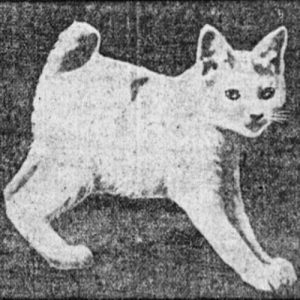
Descriptions of the Cabbit consistently blend feline and rabbit-like features in a way that feels plausible at first glance. The creature is usually said to have a cat-like head, face, and front legs, paired with elongated hindquarters that resemble those of a rabbit. The tail is often described as short, rounded, or cotton-like, reinforcing the illusion of a leporine rear half. Movement plays a crucial role in Cabbit sightings, with many witnesses describing a hopping or springing gait instead of a typical feline walk.
Some accounts mention mismatched fur textures or colouration, with the front appearing sleek like a cat and the rear denser or fluffier like a rabbit. Red or unusually reflective eyes are occasionally added to heighten the strangeness. From a biological standpoint, these traits closely align with real genetic mutations found in tailless or bobtailed cats, particularly those affecting the spine and pelvis. Such deformities can alter posture and movement, creating the impression of a hybrid animal without any cross-species origin.
First Sighting/Reporting
References to cat-rabbit hybrids appear surprisingly early in written history. Seventeenth- and eighteenth-century naturalists recorded second-hand reports of animals that supposedly combined feline and rabbit traits, though these accounts were usually speculative and based on observation rather than evidence. In the nineteenth century, the myth gained renewed momentum when unusual cats were misinterpreted as biological anomalies rather than genetic variations.
By the early twentieth century, newspapers in the United States began publishing sensational stories of Cabbit sightings, often framed as local curiosities. Rural communities, in particular, became fertile ground for these reports, as farm cats with deformities were assumed to be the result of accidental crossbreeding. The legend reached peak visibility in the late twentieth century when a supposed Cabbit was presented on American television, only to later be identified as a cat with skeletal abnormalities. Despite repeated debunking, each new appearance refreshed public interest.
Other Names
The word “Cabbit” itself is a simple portmanteau, but regional variations of the name have appeared across cultures and languages. In Spanish-speaking folklore, similar creatures have been referred to using blended terms combining words for cat and rabbit. French folklore records playful names that imply the same hybrid idea, while English-language sources have alternated between “cat-rabbit” and “rabbit-cat” depending on which traits were emphasised.
In modern digital culture, the Cabbit has acquired additional nicknames through memes and fictional reinterpretations. These evolving names demonstrate how the legend adapts linguistically to different cultural contexts while retaining its core identity as an impossible hybrid.
Modus Operandi
Unlike predatory cryptids, the Cabbit has no associated pattern of aggression or threat. Its “modus operandi,” if it can be called that, lies entirely in perception. Sightings typically occur when an observer encounters an animal that visually contradicts their expectations, such as a cat that hops or lacks a tail. The brain fills in the gaps by constructing a narrative that feels more extraordinary than the truth.
In hoax-driven cases, the Cabbit has been deliberately manufactured through photo manipulation, stitched specimens, or exaggerated storytelling intended to attract attention. Historically, these hoaxes relied on limited access to verification. In the digital era, they spread rapidly through social media, where images circulate faster than fact-checking. In every documented case, further examination has traced Cabbit claims back to misidentified cats, medical deformities, or intentional fabrication.
Pop Culture References
Pop culture has played a major role in keeping the Cabbit alive. Television appearances in the late twentieth century brought the legend into mainstream conversation, even when experts immediately dismissed the claims. Fictional portrayals soon followed, particularly in Japanese animation and fantasy storytelling, where Cabbit-like creatures are often depicted as magical, loyal companions.
Video games, comics, and internet culture have further softened the image of the Cabbit, transforming it from a supposed biological mystery into a whimsical symbol of hybrid imagination. These portrayals rarely claim realism, but they reinforce the name and visual concept, ensuring that the Cabbit remains culturally recognisable long after its scientific dismissal.
Current Status
From a scientific perspective, the Cabbit is definitively classified as a hoax or misidentification. Cats and rabbits belong to entirely different biological families and possess incompatible chromosome structures, making reproduction impossible. No verified DNA evidence has ever supported the existence of a cat-rabbit hybrid, and every physical specimen examined has been explained through known genetic conditions or anatomical deformities.
Despite this, the Cabbit continues to circulate online as an urban legend. Its persistence reflects not ignorance, but the enduring appeal of liminal creatures that sit between categories. As long as unusual animals exist and stories are shared faster than facts, the Cabbit will likely remain part of modern folklore.




Source
Messybeast.com. (n.d.). Cabbits – A brief history. http://messybeast.com/cabbit.htm
Public Domain Super Heroes Fandom. (2024, October 28). Cabbit. https://pdsh.fandom.com/wiki/Cabbit
Leslie Macklin. (2024, September 22). Cabbit. https://www.lesliemacklin.com/creaturepedia/cabbit
Minnesota’s New Country. (2025, May 19). Cabbit sightings in MN: Fact or folklore https://minnesotasnewcountry.com/cabbits-central-minnesota/
The Institute for Environmental Research and Education. (2025, November 6). Is Cabbit real?
https://iere.org/is-cabbit-real/
Messybeast.com. (n.d.). Cabbits – Recent claims and hoaxes. http://messybeast.com/cabbit2.htm
Hartwell, S. (2014, June 6). Friday catblogging: The cabbit. https://freewhitewater.com/friday-catblogging-the-cabbit/
Shuker, K. (2020, April 9). Legends and lore of the Manx cat. https://karlshuker.blogspot.com/2020/04/legends-and-lore-of-manx-cat-mythic.html
Frequently Asked Questions
Is the Cabbit a real animal?
No, the Cabbit is not real. All documented cases are misidentified cats or deliberate hoaxes.
Why do people think cats and rabbits can hybridise?
This belief comes from visual similarities caused by genetic mutations in certain cat breeds, not actual interbreeding.
Are Manx cats responsible for Cabbit sightings?
Yes, Manx cats are frequently linked to Cabbit reports due to their tailless bodies and hopping gait.
Has a Cabbit ever been scientifically proven?
No verified DNA or biological evidence has ever supported the existence of a Cabbit.
Why does the Cabbit still appear online today?
The legend persists due to memes, fictional media, and viral images that prioritise curiosity over verification.