


Knockers : The Mine Spirits of Cornish Folklore
Listen
At a glance
| Description | |
|---|---|
| Origin | Cornish Mythology |
| Classification | Hybrids |
| Family Members | N/A |
| Region | England |
| Associated With | Miners |
Knockers
Introduction
Knockers are among the most iconic figures in Cornish mythology, born from the deep mining traditions that shaped Cornwall’s cultural identity for centuries. These subterranean spirits were believed to dwell within the twisting tunnels of the region’s tin mines, where darkness, danger, and uncertainty were a constant reality. Miners long claimed to hear faint knocking echoing through the rock, a sound they believed came from these elusive beings. To some, the Knockers acted as protectors who warned of cave-ins or guided workers toward hidden lodes of ore. To others, they were unpredictable tricksters whose intentions could shift without warning. The legend of the Knockers reveals how miners interpreted the sounds of shifting earth as messages from supernatural companions, transforming the perilous underground world into a place shared with unseen allies.
Physical Traits
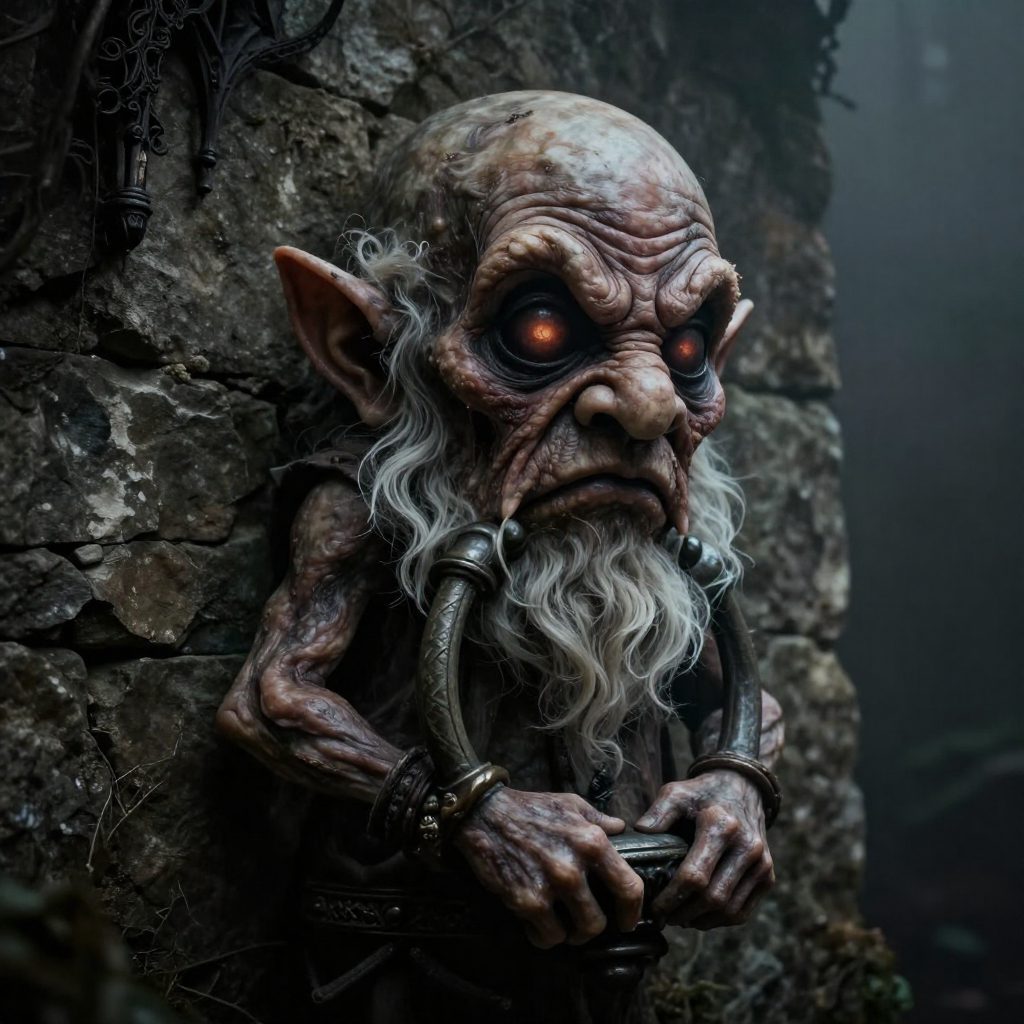
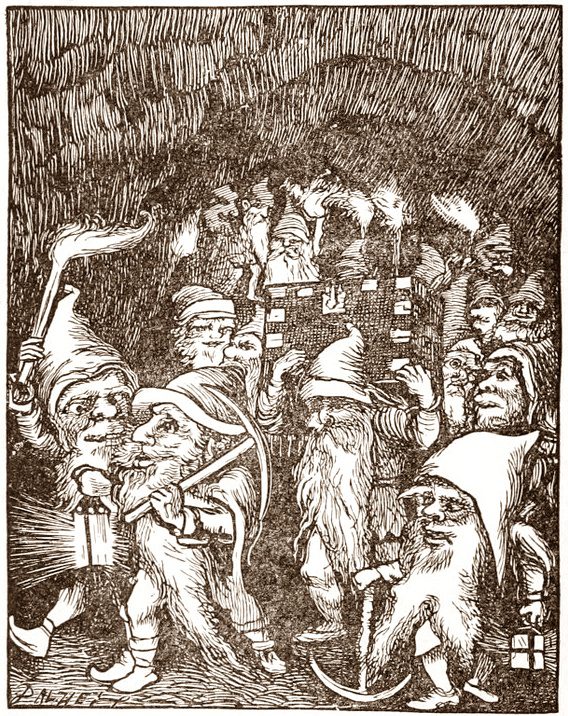
Descriptions of Knockers portray them as small, gnome-like entities standing around two feet tall, their bodies thin but agile enough to navigate narrow mine shafts. Their heads are often depicted as disproportionately large, with wrinkled skin, long arms, and white whiskers that glimmer in lantern light. Folklore places them in miniature versions of miners’ clothes—boots, belts, and tiny helmets—symbolizing their close bond with human laborers. While their faces vary across accounts, they typically appear aged, weathered, and shaped by centuries spent underground. Actual sightings were rare, and most miners reported only brief shadows, rustling movements, or a passing silhouette. This fleeting visibility contributed to their mystique, suggesting that the Knockers preferred to remain half-seen, half-heard, existing on the threshold between the physical and spiritual worlds.
Family
Cornish folklore offers little in terms of structured family relationships among Knockers, instead portraying them as communities of mine dwellers whose presence extends through generations. They are often imagined as ancient spirits tied to the earliest mining traditions, long predating modern operations. Some tales claim the Knockers were the lingering souls of miners who perished in explosions, collapses, or flooding, continuing to work in the afterlife as guardians or restless echoes of Cornwall’s mining past. Others suggest they are a distinct race of earthbound faeries that naturally inhabit subterranean spaces rather than the surface world. This sense of collective identity, rather than a detailed family lineage, reflects how miners saw the Knockers as part of the mine’s living spirit—beings who shared their hardships, their dangers, and their hopes of discovering wealth beneath the earth.
Other names
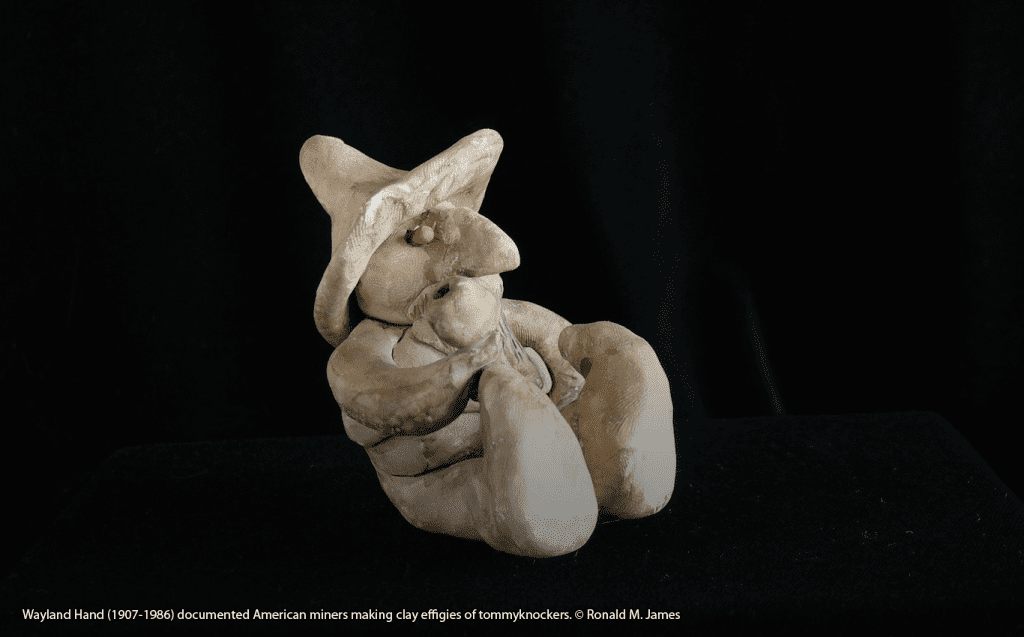
Across different regions and time periods, Knockers have been known by several names that mirror the spread of mining culture. In Cornwall they are often called Knackers, while in Wales their close counterparts are known as Coblynau, spirits also tied to mining traditions. When Cornish miners emigrated to the United States during the nineteenth-century mining boom, they carried the legend with them, and the beings became known as Tommyknockers in mines across Pennsylvania, Nevada, and Colorado. These American versions retained the characteristic knocking and the mixture of helpfulness and mischief, cementing the myth in the lore of early gold and silver miners. Though names differ, each tradition shares the belief in underground spirits who communicate through tapping sounds, marking a widespread cultural attempt to explain the mysterious noises of working mines.
Powers and Abilities
The defining ability of Knockers lies in their mysterious knocking, the sound that gave them their name. Miners interpreted these taps as warnings of imminent danger, particularly unstable rock, weakened beams, or rising water. In other situations, the knocking was understood as a sign that valuable ore lay close by, encouraging miners to follow the sound in hopes of striking a rich vein. They also displayed a streak of mischief, moving tools, hiding food, or luring miners down incorrect passages when offended or ignored. Despite this unpredictability, their intentions were rarely malicious unless treated disrespectfully. Many miners left small offerings such as crumbs or pasty crusts to maintain goodwill, believing the Knockers preferred coexistence over conflict. Their ability to vanish instantly, move through stone, and appear only when they chose reinforced the belief that they belonged to a supernatural realm existing parallel to the physical mine.
Modern Day Influence
Although the mines of Cornwall have long since fallen silent, the legacy of the Knockers continues to thrive. In the United States, the transformed Tommyknocker persists in mining folklore and remains a cultural symbol in former gold-rush towns. Stephen King’s 1987 novel The Tommyknockers renewed public interest by reimagining the beings in a science-fiction setting, introducing them to modern audiences across literature and television. In Cornwall itself, Knockers are celebrated in local heritage tours, museum exhibits, storytelling festivals, and educational materials that preserve the region’s mining history. They also appear frequently in fantasy games, folklore studies, and digital media exploring Celtic mythologies. Today, Knockers embody the deep bond between workers and the land, symbolizing resilience, superstition, and the human impulse to find meaning in the unseen forces of nature. Their story survives as a testament to Cornwall’s past, ensuring that the faint knocking of the mines continues to echo in cultural memory.
Related Images




Source
Deacon, B. (2018). Knockers, knackers, and ghosts: Immigrant folklore in the western mines. Academia.edu. https://www.academia.edu/31849151/Knockers_Knackers_and_Ghosts_Immigrant_Folklore_in_the_Western_Mines
James, R. M. (2019). The folklore of Cornwall: The oral tradition of a Celtic nation. University of Exeter Press.
King, S. (1987). The Tommyknockers. G. P. Putnam’s Sons.
MacKillop, J. (1998). Dictionary of Celtic mythology. Oxford University Press. [ from refs]
Monaghan, P. (2004). Dictionary of Celtic mythology. Infobase Publishing. [ from refs]
Penwith Eye. (2017). Creatures of Cornish folklore: Piskies, spriggans and knockers. https://penwitheye.co.uk/2017/10/creatures-cornish-folklore-piskies-spriggans-and-k…
Tregarthen, E. (1906). The old man of Cury and other stories of Cornish folklore. T. C. & E. C. Jack.
Briggs, K. M. (1976). A dictionary of fairies: Hobgoblins, brownies, bogies, and other supernatural creatures. London: Penguin Books.
Bord, J., & Bord, C. (1986). The secret country: An interpretation of the folklore of fairyland. London: Granada.
Simpson, J., & Roud, S. (2000). A dictionary of English folklore. Oxford: Oxford University Press.
Westwood, J. (1985). Folklore of Cornwall. London: Batsford.
Deane, T. (2010). Cornish folklore and legends. Truro: Cornwall Heritage Press.
Frequently Asked Questions
What are Knockers in Cornish mythology?
Knockers are small, supernatural spirits believed to live in Cornish tin mines, known for their knocking sounds that warned miners of danger or indicated hidden ore.
Why are they called Knockers or Tommyknockers?
The name comes from the tapping sounds miners heard underground. When Cornish miners emigrated to America, the beings became known as Tommyknockers in U.S. mining communities.
Are Knockers considered good or bad?
They are viewed as dual-natured—helpful when respected but mischievous when ignored or offended. Their knocks could signal either fortune or danger.
What did miners do to appease Knockers?
Miners often left food offerings, such as pasty crusts, to earn their protection and avoid their tricks.
Do Knockers still appear in modern culture?
Yes. They appear in literature, folklore studies, heritage sites, fantasy media, and notably in Stephen King’s novel The Tommyknockers.