
Vladimir Propp : The Folklorist Who Decoded the Structure of Fairy Tales
Mythlok Perspective
In Mythlok’s Perspective, Vladimir Propp represents a turning point in how humanity understands storytelling. Rather than viewing myths and folktales as random cultural creations, Propp demonstrated that narratives follow structural patterns rooted in shared human imagination. His approach reveals that myths across the world operate through similar narrative logic. The journey of a Russian folktale hero, for example, often mirrors the quest structures seen in Indian epics or African oral traditions. Comparable patterns can be seen in Greek heroic myths and Japanese folklore, where characters move through trials, helpers, and final victories that echo Propp’s narrative functions. This cross-cultural consistency suggests that storytelling itself may be a universal human language.
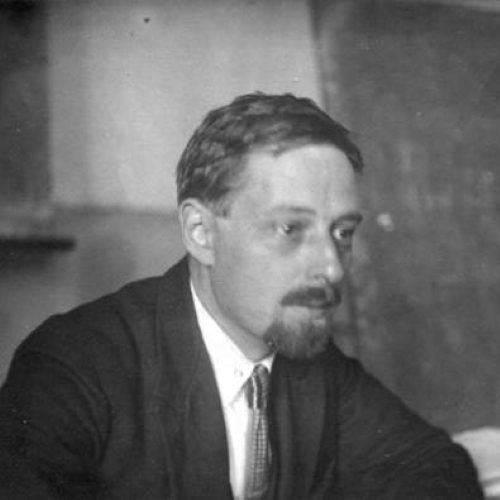
Vladimir Propp
Introduction
Vladimir Propp (1895–1970) was a Russian folklorist whose work transformed the way scholars understand folktales and mythic narratives. Born in Saint Petersburg in the Russian Empire to a family of German descent, Propp initially trained in philology before turning his attention to folklore studies. At a time when most researchers focused on collecting stories or tracing their historical origins, Propp took a radically different approach. He asked a simple but powerful question: what structural elements make a folktale work?
His answer became one of the most influential theories in narrative studies. By carefully analyzing hundreds of Russian fairy tales, Propp identified recurring narrative patterns that appeared again and again regardless of the story’s characters or setting. These patterns formed the basis of what he called the “morphology” of the folktale, a structural framework that revealed how stories are built.
Propp’s work eventually influenced not only folklore scholarship but also literary theory, anthropology, film studies, and modern storytelling. His ideas helped shape structuralist thinking and inspired later scholars such as Claude Lévi-Strauss. Today, Propp remains essential reading for anyone studying myths, folktales, and narrative structure.
Area of Expertise
Vladimir Propp specialized in the structural analysis of folktales, particularly Russian wonder tales known as skazki. Rather than examining individual themes or characters, he focused on how stories are constructed. His research aimed to identify the building blocks that form the backbone of traditional narratives.
Propp’s most famous discovery was that folktales share a set of recurring narrative actions that he called “functions.” These functions describe events that move the story forward, such as a hero leaving home, encountering a helper, receiving a magical object, or defeating a villain. Through his research, Propp identified 31 narrative functions that appear in a consistent sequence across many folktales.
Another important part of his analysis involved character roles. Propp observed that while characters change from story to story, their narrative roles remain consistent. He grouped these roles into seven archetypal categories: the hero, the villain, the donor who provides magical aid, the helper who assists the hero, the princess or reward figure, the dispatcher who sends the hero on a quest, and the false hero who attempts to claim the hero’s achievements.
Propp’s expertise also extended into Slavic folklore traditions, including epic songs known as byliny and ritual practices tied to agricultural life. His later research explored how myth, ritual, and folklore intersected in traditional societies. By examining seasonal festivals, folk customs, and ritual laughter, he sought to understand how ancient cultural practices shaped the stories people told. Because of this interdisciplinary approach, Propp’s work bridges folklore, anthropology, and literary theory. His ideas continue to influence researchers studying storytelling across cultures, from medieval legends to modern cinema.
Books & Publications
Propp’s most famous work is “Morphology of the Folktale”, first published in Russian in 1928. In this groundbreaking book, he analyzed over one hundred Russian fairy tales and demonstrated that their narrative structure follows a consistent sequence of functions. Although the book initially received limited attention outside Russia, its English translation in 1958 introduced Propp’s ideas to international audiences and transformed folklore studies.
Another major work, “Historical Roots of the Wonder Tale” (1946), explored the deeper cultural origins of fairy tales. In this study, Propp argued that many folktale motifs originated from ancient rituals and social customs. He suggested that themes such as magical helpers, supernatural journeys, and symbolic rebirth may reflect older ritual practices embedded in traditional storytelling. Propp also published “Russian Heroic Epic” (1958), which examined the structure and themes of Slavic epic poetry. This work expanded his analysis beyond fairy tales, showing how narrative patterns also shaped heroic legends.
Later in his career, Propp wrote studies on folk songs and ritual traditions. His book “Russian Agrarian Festivals” analyzed seasonal celebrations and agricultural customs, highlighting how folklore connects with everyday cultural life. After his death, several collections of his essays were published, including “Theory and History of Folklore” (1984). These writings reveal the broader scope of Propp’s scholarship and his ongoing interest in understanding how narratives emerge from cultural practices.
Research & Contributions
Propp’s greatest contribution was demonstrating that folktales possess an underlying structural system. His analysis showed that while characters, settings, and motifs may change, the sequence of narrative functions often remains stable.
By identifying these functions, Propp effectively created a grammar of storytelling. Just as language follows rules that organize words into sentences, folktales follow patterns that organize events into narratives. This insight allowed scholars to analyze stories scientifically rather than purely descriptively.
His work also played a crucial role in the development of structuralism, an intellectual movement that sought to uncover hidden structures in language, culture, and myth. Anthropologist Claude Lévi-Strauss expanded Propp’s ideas when analyzing mythic narratives across cultures, while literary theorists such as Roland Barthes applied similar structural methods to literature.
Beyond academia, Propp’s framework influenced modern storytelling. Screenwriters, game designers, and authors frequently use narrative structures similar to those described in Morphology of the Folktale. Even Joseph Campbell’s famous “Hero’s Journey” model shares conceptual similarities with Propp’s analysis of narrative progression.
Today, Propp’s theories are applied to a wide range of fields, including film studies, digital storytelling, and artificial intelligence narrative design. His research demonstrated that storytelling follows recognizable patterns, revealing a shared narrative logic across cultures.
Awards & Recognitions
During his lifetime, Vladimir Propp worked primarily within Soviet academia, where scholarly recognition often came through academic positions rather than international awards. He served as a professor at Leningrad State University, where he taught philology and folklore for many years.
Although his research did not initially receive widespread international recognition, this changed dramatically after the translation of Morphology of the Folktale. Western scholars quickly recognized its significance, and Propp’s work became foundational in folklore and literary studies.
Over time, Propp’s influence expanded far beyond Russian scholarship. His ideas are now taught in universities worldwide, and his theories are frequently cited in research on folklore, narrative theory, and myth studies. Today, Propp is widely regarded as one of the most important theorists in folklore scholarship. His work continues to shape academic research and storytelling analysis across multiple disciplines.
Social Media Profiles
Vladimir Propp lived in the early twentieth century and passed away in 1970, long before the rise of social media. As a result, he did not have personal online profiles. However, his work is widely discussed across academic and digital platforms today. Scholarly databases, university websites, and educational channels regularly reference his research. Online resources such as Wikipedia, academic repositories, and digital libraries provide access to his publications and ongoing discussions of his theories.
Folklore communities on platforms such as Reddit, YouTube, and academic blogs also frequently analyze Propp’s 31 narrative functions and their influence on modern storytelling. Through these discussions, Propp’s ideas continue to reach new audiences interested in myths, fairy tales, and narrative structure.
Sources
Wikipedia. (2024). Vladimir Propp. https://en.wikipedia.org/wiki/Vladimir_Propp
Pantheon. (2016). Vladimir Propp biography. https://pantheon.world/profile/person/Vladimir_Propp
Encyclopedia.com. (2025). Propp, Vladimir Iakovlevich. https://www.encyclopedia.com/history/encyclopedias-almanacs-transcripts-and-maps/propp-vladimir-iakovlevich
Kunstkamera. (2005). Propp Vladimir Yakovlevich. http://ethnographica.kunstkamera.ru/en/index.php?title=Propp_Vladimir_Yakovlevich
Propp, V. (1968). Morphology of the folktale (2nd ed., L. Scott, Trans.). University of Texas Press. (Original work published 1928)
Propp, V. (1986). Theory and history of folklore (A. Martin & R. Martin, Trans.). University of Minnesota Press. (Original work published 1963)
Propp, V. (2009). Russian heroic epic (S. Hoersken & S. Hoersken, Trans.). Brepols. (Original work published 1955–1958)



Frequently Asked Questions
Who was Vladimir Propp?
Vladimir Propp was a Russian folklorist and scholar known for analyzing the structure of folktales and identifying recurring narrative patterns known as narrative functions.
What is Vladimir Propp famous for?
He is best known for his book Morphology of the Folktale, in which he identified 31 narrative functions that form the structural framework of many fairy tales.
What are Vladimir Propp’s 31 functions?
They are recurring narrative actions in folktales such as departure, magical aid, struggle, and victory that appear in a consistent sequence across many stories.
How did Vladimir Propp influence storytelling?
Propp’s work shaped structuralist literary theory and influenced storytelling analysis in literature, film, games, and narrative studies.
Is Vladimir Propp related to the Hero’s Journey theory?
While Joseph Campbell’s Hero’s Journey differs in approach, both models analyze recurring patterns in storytelling and are often compared in narrative studies.