

Adrestia : Goddess of Balance
Listen
At a glance
| Description | |
|---|---|
| Origin | Greek Mythology |
| Classification | Gods |
| Family Members | Ares (Father), Aphrodite (Mother) |
| Region | Greece |
| Associated With | Balance, Revolt, Justice |
Adrestia
Introduction
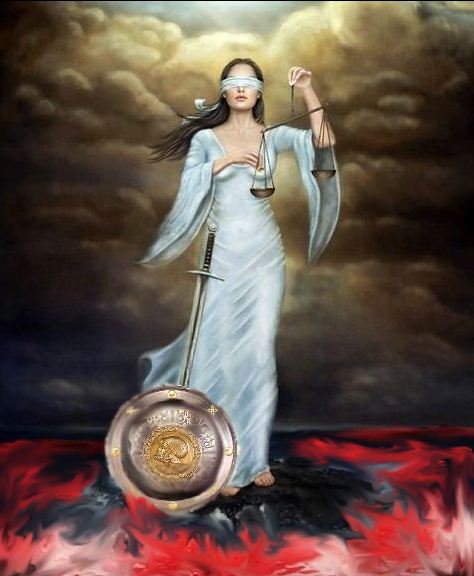
Adrestia, sometimes overlooked in the vast landscape of Greek mythology, stands out as the Goddess of Revolt and an embodiment of balance between order and chaos. Her very name means “she who cannot be escaped,” highlighting her role as an unavoidable force of fate and retribution. Unlike deities who leaned heavily toward a single domain—such as Ares with war or Aphrodite with love—Adrestia bridged opposites, embodying the necessity of both rebellion and harmony. She walked beside warriors in battle, yet also carried the weight of justice in her presence, reminding mortals and gods alike that no excess, whether in cruelty or indulgence, would go unanswered. Closely tied to Nemesis, the goddess of retribution, Adrestia is remembered not only as a figure of resistance but also as a divine guardian of equilibrium between love and war, mercy and punishment.
Physical Traits
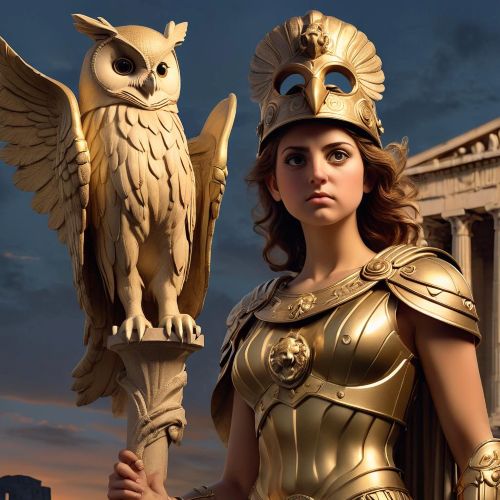
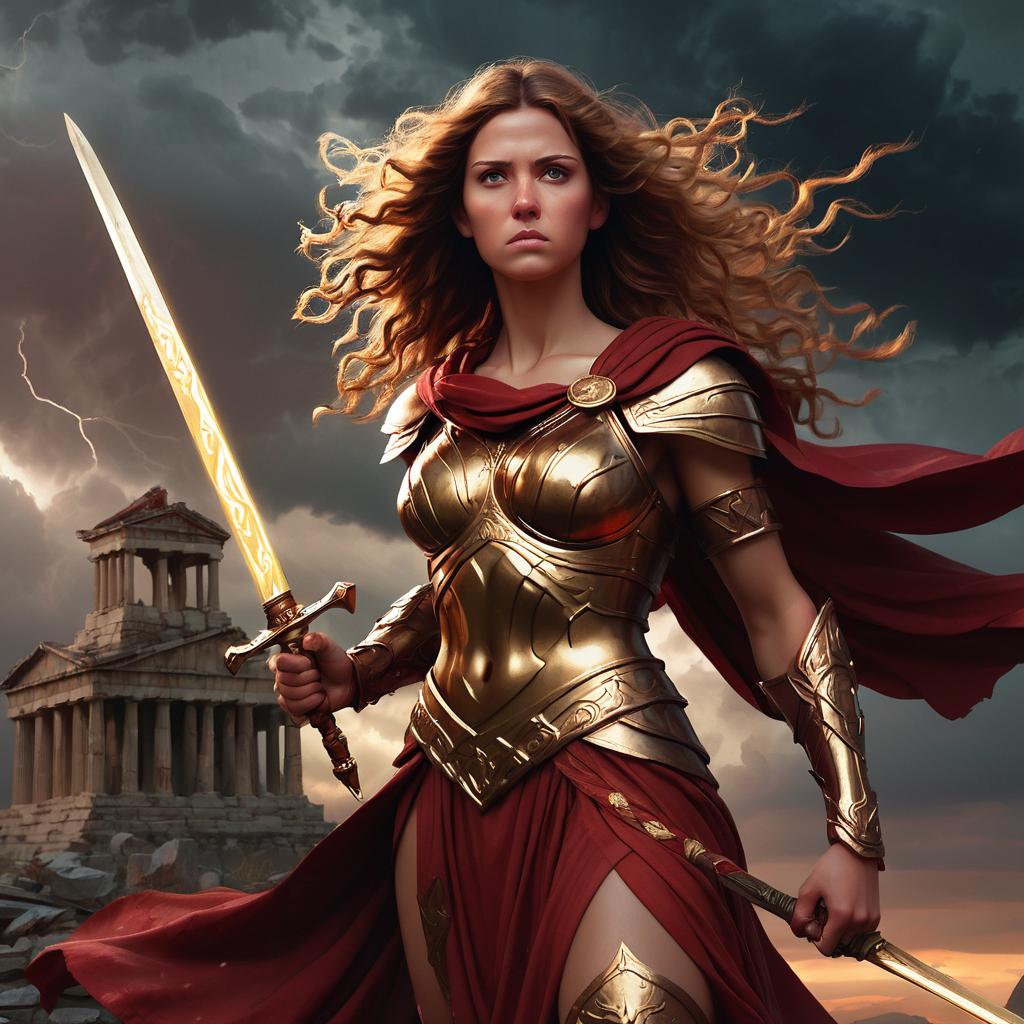
Descriptions of Adrestia’s appearance are scarce in ancient texts, but later traditions and artistic interpretations attempt to capture her essence. She is often envisioned as a tall, commanding woman with a warrior’s stance and a presence that exudes both allure and intimidation. Her features reflect her dual parentage: the sharp, martial bearing inherited from Ares, paired with the graceful beauty of Aphrodite. In some accounts, her eyes are imagined as strikingly unusual—lavender or steel gray—symbolizing her connection to realms beyond the ordinary. Artists frequently depict her clad in battle armor or practical attire that suggests readiness for conflict, while still maintaining an aura of elegance. Scars, both symbolic and literal, are sometimes attributed to her form, reflecting her life intertwined with battles and revolutions. These physical traits emphasize her role as a deity who embodies struggle, resilience, and the inevitability of justice.
Family
Adrestia was born of two powerful Olympians: Ares, god of war, and Aphrodite, goddess of love. From this union came a host of siblings who represented an intricate spectrum of human and divine emotions. Among them were Eros, the god of passionate love; Phobos and Deimos, the personifications of fear and terror; and Harmonia, goddess of harmony, who in some traditions is considered Adrestia’s twin. This unusual lineage placed Adrestia in a unique position, balancing the destructive fury of her father with the seductive charm of her mother. Unlike many deities who were tied to romantic myths or tales of progeny, Adrestia remains largely unattached, with no children or consort attributed to her. Instead, her narrative often intersects with that of Nemesis, under whom she is said to have apprenticed. This association deepened her reputation as an enforcer of balance, ensuring that arrogance, injustice, and cruelty met divine consequences.
Other names
Adrestia appears in mythology under several variant names and titles. The most common alternative is Adrasteia, a name with overlapping meanings tied to inevitability, necessity, and unavoidable fate. In some traditions, Adrasteia is not portrayed as the daughter of Ares and Aphrodite but as a Cretan nymph who nursed the infant Zeus on Mount Ida, showing how myths evolved and merged across regions. This blending of identities often led to Adrestia being linked with Nemesis and Cybele, creating a layered character who represented punishment, protection, and divine law all at once. Her epithets frequently underline her inescapable nature, such as “the inevitable one” or “she who cannot be escaped.” While modern references sometimes shorten her name informally to “Tia” or “Dressy,” the classical resonance of Adrestia remains deeply rooted in themes of divine necessity and resistance.
Powers and Abilities
As a goddess of revolt and balance, Adrestia possessed abilities that reflected her symbolic purpose more than brute force. Immortality, a trait she shared with other deities, granted her immunity from time, disease, and mortal limitations. She also had the ability to traverse the mortal plane freely, appearing at pivotal moments in history to sway the course of events.
Her martial expertise was unmatched; trained in nearly every known form of combat, Adrestia could wield swords, spears, and improvised weapons with equal skill. This versatility made her the embodiment of resistance, where even the simplest tool could become a weapon of change. Her prowess was not limited to fighting—she was also regarded as a mentor who could quickly train others, elevating ordinary people into formidable fighters.
Adrestia’s influence extended beyond the battlefield. She was said to carry the “voice of revolution,” able to spark courage in the oppressed and inspire uprisings against tyranny. Soldiers and rebels alike felt renewed strength at her presence, sometimes turning the tide of wars through her divine encouragement. Yet this gift came at a cost—those empowered by her often collapsed into exhaustion after the fervor subsided, as though drained by the intensity of divine fire.
Her role as “the inescapable one” was tied to her uncanny ability to track anyone she sought, no matter how far they fled. Through meditation, she could extend her awareness beyond her body to locate her target, though the process left her vulnerable until she returned. Alongside her innate abilities, she carried symbolic artifacts that connected her to the legacy of human revolutions: a sword disguised in the shaft of a protest sign, the pistol of Alexander Hamilton, the coat of suffragette leader Emmeline Pankhurst, and a piece of salt from Mahatma Gandhi’s march. These objects reinforced her identity as a timeless presence in humanity’s ongoing struggles for freedom and justice.
Modern Day Influence
Though seldom mentioned in mainstream classical myths, Adrestia has found new life in modern culture, symbolizing resistance and justice across artistic, literary, and digital landscapes. One of the most recognizable references is in the video game Assassin’s Creed Odyssey, where “The Adrestia” is the name of the protagonist’s ship. This vessel becomes a home and symbol of freedom, echoing the goddess’s role as both a companion to warriors and a guardian of balance.
Adrestia’s name has also inspired creative works beyond gaming. In literature, her archetype often appears in stories that explore rebellion, justice, and moral duality. A Swedish crust punk band named Adrestia channels her revolutionary spirit into politically charged music, while art communities produce visual tributes depicting her as both warrior and judge. On Etsy and similar platforms, handmade items dedicated to her symbolize her continued relevance in grassroots creativity.
The Fire Emblem series incorporates her legacy through the Adrestian Empire, a nation rooted in themes of decline, reform, and historical tension, reflecting her mythological role as a force that emerges during crises. Even in unexpected places, such as scientific ventures like Adrestia Therapeutics or modern restaurants borrowing her name, the goddess’s essence persists—signifying inevitability, transformation, and balance.
In online communities and mythological discussions, Adrestia is increasingly reimagined as a patron of resistance movements and personal empowerment. She resonates in contemporary activism, where her archetype mirrors the timeless struggle against oppression and injustice. As modern culture searches for symbols of resilience and equilibrium, Adrestia offers a powerful reminder: revolt and justice are not separate forces, but two halves of the same enduring necessity.
Related Images






Source
Ferris, C. (2024). Adrestia: Greek Goddess Of Revolt And Balance In Mythology. Mystery in History. Retrieved from https://mysteryinhistory.com/adrestia
GreekMythology.com. (n.d.). Adrestia. Retrieved from https://www.greekmythology.com/Other_Gods/Minor_Gods/Adrestia/adrestia.html
Wikipedia contributors. (2025). Adrasteia. In Wikipedia, The Free Encyclopedia. Retrieved from https://en.wikipedia.org/wiki/Adrasteia
Hard, R. (n.d.). A Handbook of Greek Mythology.
Hard, R. (2003, October 16). The Routledge Handbook of Greek Mythology.
Graf, F. (1993, November 1). Greek Mythology: An Introduction.
Frequently Asked Questions
What is lorem Ipsum?
I am text block. Click edit button to change this text. Lorem ipsum dolor sit amet, consectetur adipiscing elit. Ut elit tellus, luctus nec ullamcorper mattis, pulvinar dapibus leo.
What is lorem Ipsum?
I am text block. Click edit button to change this text. Lorem ipsum dolor sit amet, consectetur adipiscing elit. Ut elit tellus, luctus nec ullamcorper mattis, pulvinar dapibus leo.
What is lorem Ipsum?
I am text block. Click edit button to change this text. Lorem ipsum dolor sit amet, consectetur adipiscing elit. Ut elit tellus, luctus nec ullamcorper mattis, pulvinar dapibus leo.
What is lorem Ipsum?
I am text block. Click edit button to change this text. Lorem ipsum dolor sit amet, consectetur adipiscing elit. Ut elit tellus, luctus nec ullamcorper mattis, pulvinar dapibus leo.
What is lorem Ipsum?
I am text block. Click edit button to change this text. Lorem ipsum dolor sit amet, consectetur adipiscing elit. Ut elit tellus, luctus nec ullamcorper mattis, pulvinar dapibus leo.