

Sarutahiko : The Legendary Guide in Japanese Shinto Tradition
Listen
At a glance
| Description | |
|---|---|
| Origin | Japanese Mythology |
| Classification | Gods |
| Family Members | N/A |
| Region | Japan |
| Associated With | Guidance, Travellers |
Sarutahiko
Introduction
Sarutahiko Ōkami stands as one of the most commanding and symbolic deities in Japanese mythology, revered as the chief of the earthly kami, or kunitsukami. His story is most vividly captured in two foundational texts of Shinto tradition—the Kojiki and Nihon Shoki—where he confronts and then guides Ninigi-no-Mikoto, the grandson of Amaterasu, during his divinely ordained descent to the human world. Sarutahiko’s presence at the crossroads between heaven and earth is more than a narrative moment; it represents a powerful motif in Japanese cosmology. He embodies guidance, order, and the harmonisation of celestial authority with earthly life. His role as a sentinel deity emphasises the importance of transition, safe passage, and the idea that even the divine realm requires diplomacy and cooperation to maintain cosmic equilibrium. As a result, Sarutahiko has endured not only as a mythic guardian but also as a cultural symbol of direction, strength, and clarity of purpose.
Physical Traits
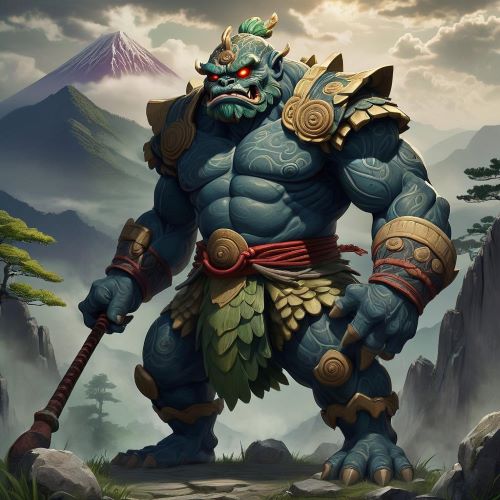
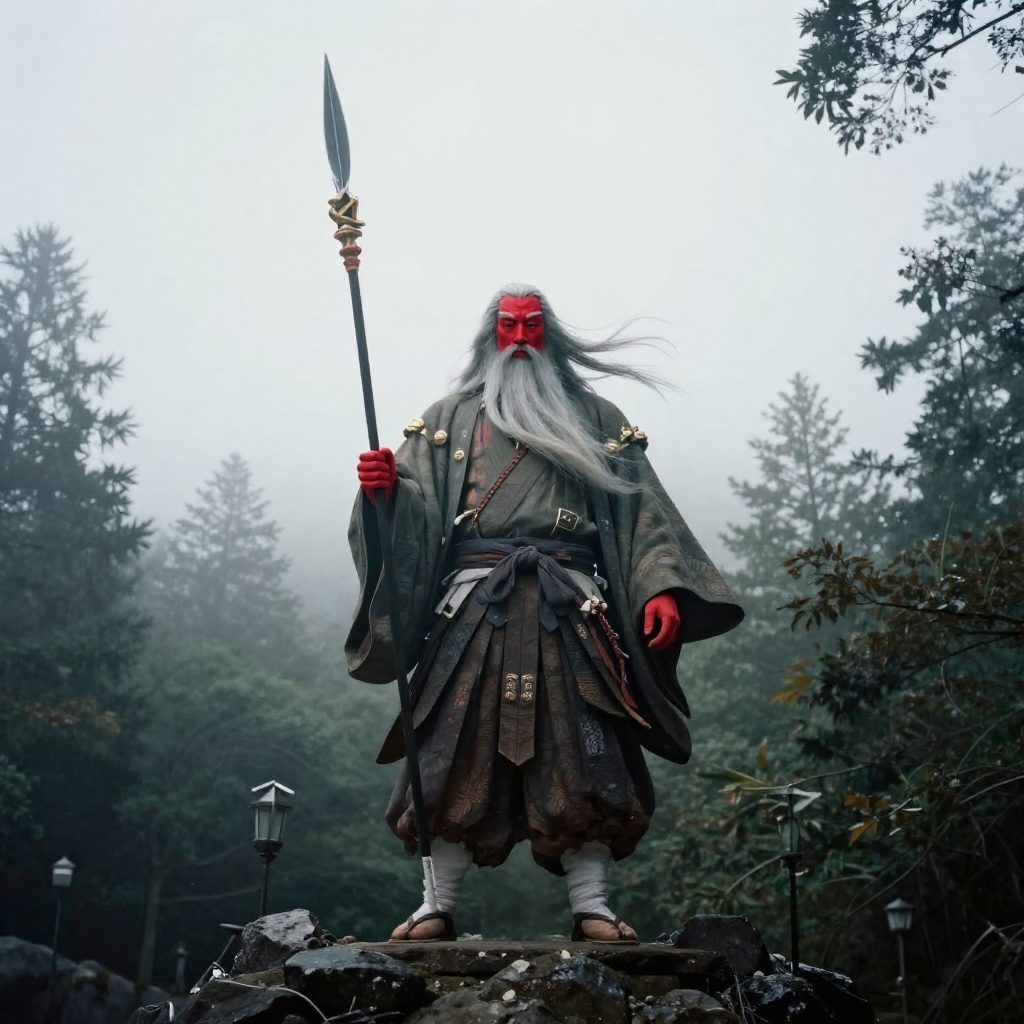
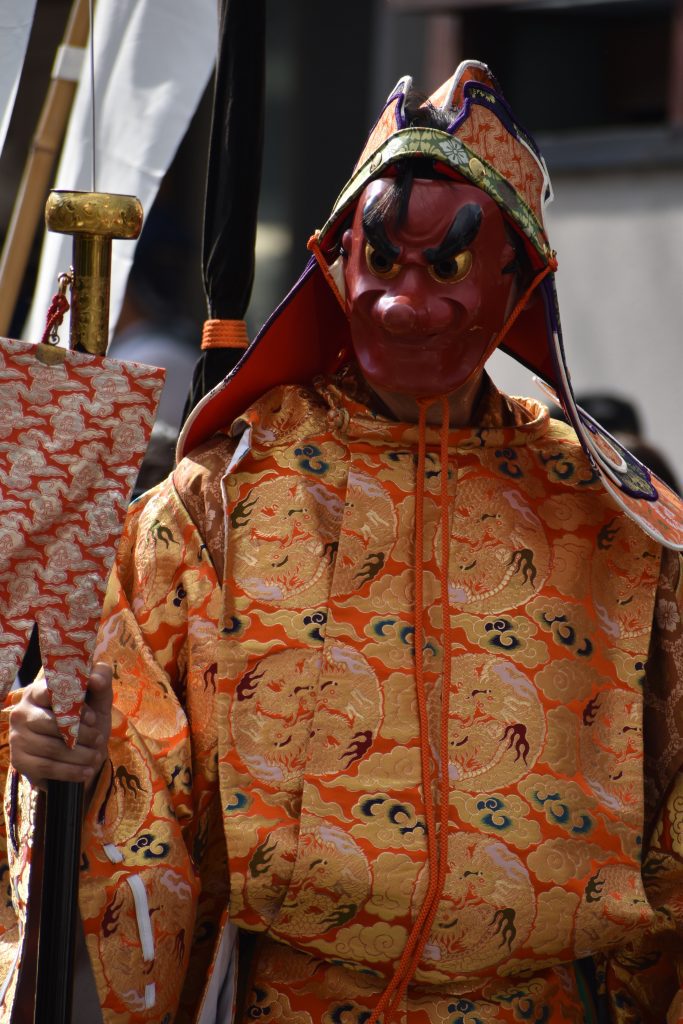
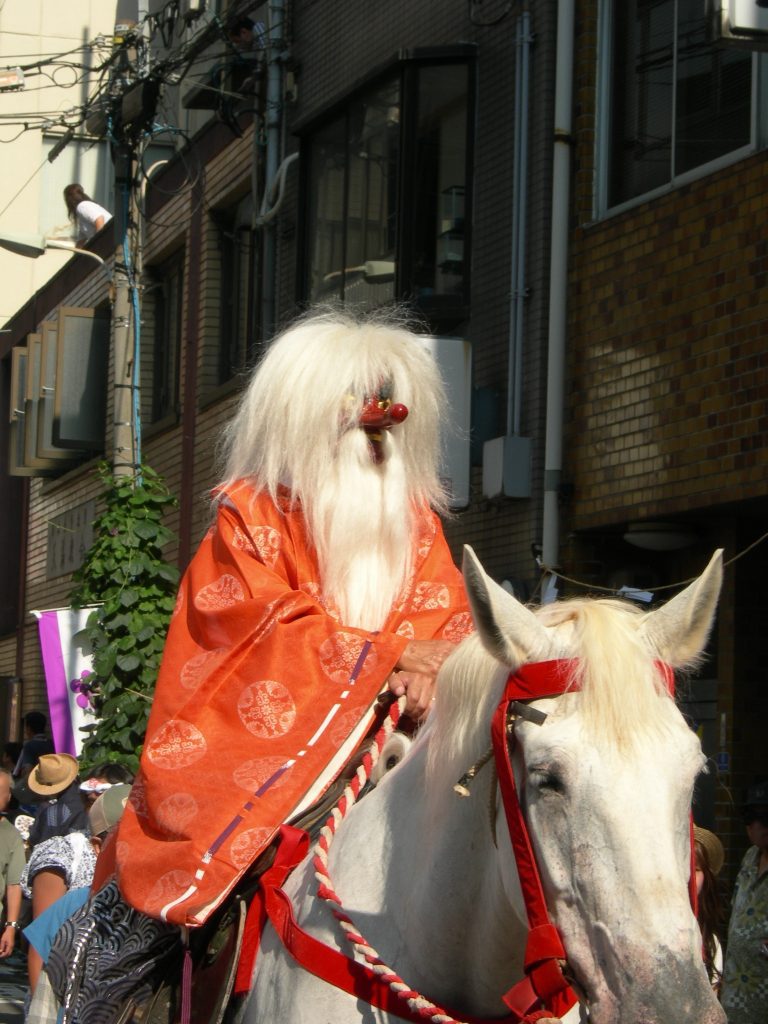
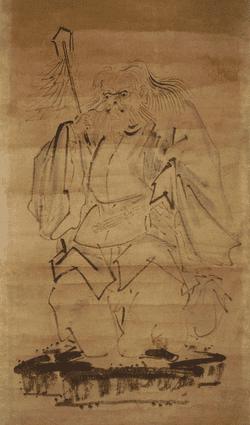
The physical appearance of Sarutahiko is one of the most defining aspects of his mythological identity. Ancient accounts describe him as towering over other deities—an awe-inspiring giant whose sheer stature announces his dominion over the land he guards. His most distinctive feature is his unusually long nose, sometimes said to reach seven hand-spans in length. Paired with a face glowing red like a hozuki lantern and eyes that shine with mirror-like brilliance, Sarutahiko’s features carry both a feral wildness and a divine luminosity. Folk interpretations occasionally link his form to monkeys or wolves, likely arising from the etymology of “saru” and his association with mountains, forests, and liminal spaces. His fearsome presence served a narrative purpose: he was a deity who stood at the threshold, and only beings of equal spiritual authority could approach him without hesitation. This combination of intimidating power and radiant divinity reflects his dual nature as both guardian and guide.
Family
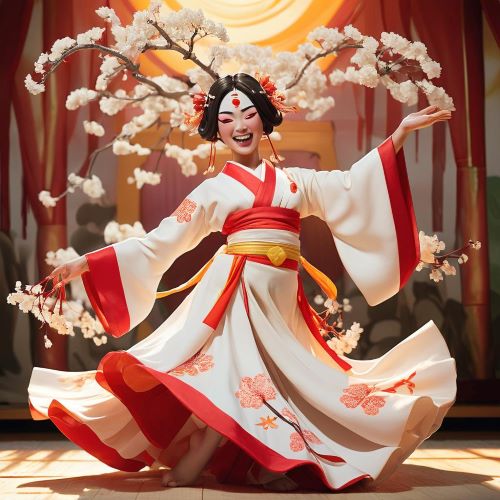
Sarutahiko’s place in the Shinto pantheon becomes more nuanced through his relationship with Ame-no-Uzume, the charismatic goddess of dance, laughter, and revelry. Their meeting during Ninigi’s descent is a defining moment, as it is Uzume who uses charm, wit, and ritual performance to convince Sarutahiko to support the heavenly mission. Their union embodies the balance of firmness and joy—a symbolic pairing that merges the grounded strength of Sarutahiko with the lively, expressive spirit of Uzume. Together, they are credited with founding the Sarume clan, a lineage of ritual performers and shamans whose sacred dances would eventually influence forms like kagura and noh theatre. Certain traditions also associate Sarutahiko with ancestors of noble and regional families, including the Ujitoko clan of Ise, reinforcing his status as a bridge between divine figures and historical communities. His familial connections deepen his mythic resonance, anchoring him both in the heavens and in human culture.
Other names
Across regional traditions and historical texts, Sarutahiko appears under several names, each reflecting a facet of his divine character. He is commonly revered as Sarutahiko Ōkami, with “Ōkami” marking him as a Great Deity—a title reserved only for the highest-ranking kami. Variations such as Sarutabiko, Sarudahiko, and Sarudabiko appear in different provinces, often shaped by local dialects and spiritual customs. Ritual texts also refer to him as Sarutahiko Daimyōjin, emphasising his brilliance and protective radiance. These multiple appellations highlight the breadth of his worship throughout Japan, where he was not confined to a single shrine or region but honoured in different contexts as a patron of crossroads, mountains, villages, and rituals of safe passage. His diverse names also reflect the fluid nature of Shinto tradition, where identity, function, and reverence adapt to community and cultural need.
Powers and Abilities
Sarutahiko’s powers centre on guidance, purification, protection, and control over thresholds—physical and spiritual. As the guardian who stands at the junction of heaven and earth, he governs the safe movement between realms. His guidance of Ninigi is the clearest example, symbolising his authority over transitions, whether divine journeys or human endeavours. His shining eyes represent illumination and clarity, both literal and metaphorical, allowing him to reveal safe paths and dispel confusion. In martial arts, particularly aikido, he is revered as the kami of misogi, or purification, embodying the harmony of heaven and earth through disciplined movement and spiritual balance. His presence in purification rites reinforces his role as a deity who removes obstacles, stabilises chaotic energies, and prepares individuals for new beginnings. Tales of his spear, immense strength, and ability to overcome any obstruction portray him as a deity of decisive action, yet one capable of shifting from resistance to cooperation when approached with respect and wisdom.
Modern Day Influence
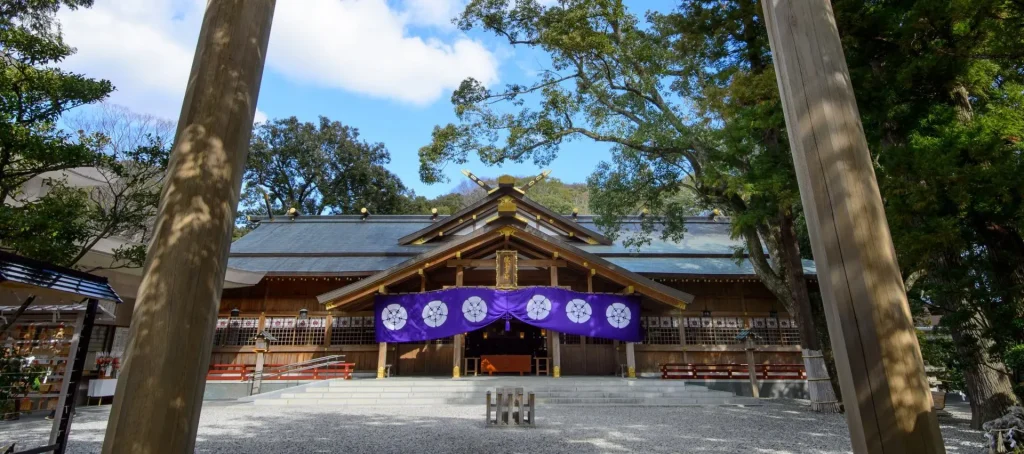
Sarutahiko’s legacy extends far beyond ancient mythology and continues to shape modern Japanese culture. He is venerated at major shrines such as the Tsubaki Grand Shrine and Sarutahiko Jinja in Ise, where pilgrims pray for direction in life, success in new ventures, and safe journeys. His influence is strong in the world of martial arts, where aikido instructors invoke him in rituals of purification and balance. He appears regularly in popular culture, including anime, manga, and video games, especially in series like Shin Megami Tensei, where his imposing form is adapted into powerful guardian characters. Festivals dedicated to guidance and crossing boundaries often reference his symbolism, while traditional performing arts maintain the heritage of the Sarume clan founded through his union with Uzume. Sarutahiko’s modern presence reflects a continuing cultural admiration for resilience, clarity, and the ability to navigate life’s turning points with strength and purpose.
Related Images



Source
Aston, W. G. (Trans.). (1972). Nihongi: Chronicles of Japan from the earliest times to A.D. 697. Tuttle Publishing. (Original work published 1896)
Philippi, D. L. (Trans.). (2012). Kojiki. Princeton University Press. (Original work published 1969)
Kokugakuin University. (n.d.). Encyclopedia of Shinto: Sarutahiko Ōkami. https://www2.kokugakuin.ac.jp/ejn/
Tsubaki Grand Shrine. (n.d.). Sarutahiko-O-Kami. https://www.tsubakishrine.org/history/sarutahiko-o-kami.html
Ono, S. (1962). Shinto: The kami way. Tuttle Publishing.
Atkinson, R. (2013, February 23). Sarutahiko – Monkey or wolf guiding deity? Japanese Mythology. https://japanesemythology.wordpress.com/2013/02/23/sarutahiko-monkey-or-wolf-guiding-deity/
Yoshida, A. (2024). Exploring Japanese mythology: Figures of Sarutahiko. Acta Orientalia. https://www.wisdomlib.org/history/journal/acta-orientalia/d/doc1427833.html
Wikipedia contributors. (2025). Sarutahiko Ōkami. Wikipedia. https://en.wikipedia.org/wiki/Sarutahiko_Ōkami
Frequently Asked Questions
Who is Sarutahiko in Japanese mythology?
Sarutahiko is the chief of the earthly kami and the divine guide who leads Ninigi-no-Mikoto from heaven to earth.
Why does Sarutahiko have a long nose?
His long nose symbolises immense power, divine authority, and his role as a guardian of boundaries and pathways.
Who is Sarutahiko's wife?
Sarutahiko is married to Ame-no-Uzume, the goddess of dance and mirth, whose charm persuaded him to guide the heavenly descent.
What are Sarutahiko’s main powers?
His abilities include guidance, purification, protection over crossroads, and illuminating pathways through divine light.
Does Huli Daiva influence modern culture?
Where is Sarutahiko worshipped today?