

Arabian Nights : The Mythic Influence Behind Middle Eastern Folklore
The Arabian Nights, also known as One Thousand and One Nights, remains one of the most enduring mythological treasures in world literature. More than a simple story collection, it represents a cultural memory bank of Middle Eastern, Persian, Indian, and North African traditions. Its pages are filled with magical beings, hidden worlds, sacred symbols, and extraordinary heroes—each story contributing to a mythic landscape that shaped the region’s worldview for centuries. When discussing Middle Eastern mythology today, the Arabian Nights continues to serve as one of the most powerful and influential sources, preserving ancient beliefs and expanding the global understanding of regional folklore.
Origins of Arabian Nights
Although the written compilation took shape between the 8th and 14th centuries, its roots stretch much deeper into oral storytelling traditions that existed long before. Traders, travellers, court storytellers, and desert wanderers carried these tales across empires, blending Indian fables, Persian epics, Arab legends, and Egyptian folklore into a single, evolving mythical tapestry. This multicultural origin explains why the Arabian Nights feels so vast and varied—its mythological depth reflects centuries of borrowed themes, transformed deities, demonology, and supernatural archetypes.
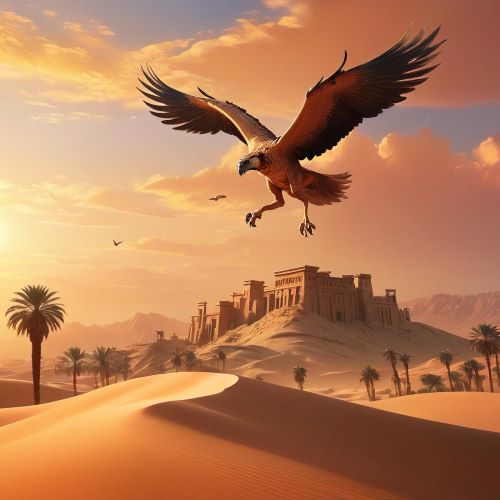
This synthesis also helped preserve fragments of ancient Middle Eastern mythology that might have disappeared. Through characters like magical birds, shape-shifting spirits, and prophetic dream interpreters, we catch glimpses of pre-Islamic Arab cosmology, Mesopotamian symbolism, and Persian mythic motifs. The text, therefore, became a vessel through which mythological memory endured.
Mythical Beings and Magical Symbols
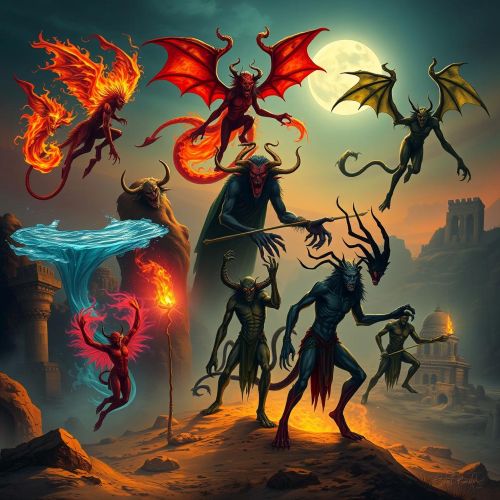
One of the greatest mythological gifts of the Arabian Nights is its supernatural beings. The jinn, in particular, stand out as the most iconic. Rooted in pre-Islamic mythology, jinn appear as beings created from smokeless fire—capable of shifting forms, granting boons, or wreaking havoc. Stories such as The Fisherman and the Jinni and the later Western-popularised tale of Aladdin shaped global perceptions of jinn and helped embed their lore firmly into the mythology of the Middle East.
The ghul—desert spirits that feed on unsuspecting travellers—also gained prominence through these tales, contributing to desert folklore and shaping regional cautionary myths. Magical objects like enchanted lamps, flying carpets, rings with imprisoned spirits, and protective amulets reveal deep cultural beliefs about talismans and divine favour. These objects were more than fantasy—they symbolised luck, destiny, cosmic protection, and the unseen spiritual forces believed to influence human life.
The enchanted cities of the Arabian Nights, such as the City of Brass or the underwater kingdoms visited by Sinbad, reinforced mythological ideas about forgotten civilisations. These places mirror real archaeological mysteries and ancient ruins scattered across the Middle East, merging history with fantasy in a way that continues to define the region’s mythic imagination.
Scheherazade’s Storytelling Legacy
Beyond the magical beings and symbols, the narrative structure of the Arabian Nights itself carries mythological significance. Scheherazade, the legendary storyteller who narrates each tale to delay her execution, represents the sacred role of the storyteller in Middle Eastern culture. Her wit, intelligence, and courage elevate her to a mythic archetype—one who uses knowledge to overcome death and reshape destiny.
In Middle Eastern mythology, storytellers were often seen as guardians of memory, carriers of wisdom, and mediators between human beings and the supernatural realm. Scheherazade embodies all these aspects. Her presence reinforces the mythic belief that stories have the power to heal, preserve, transform, and even save lives. Through her voice, the tales gain continuity, bridging past and present, myth and reality.
Her character continues to inspire modern depictions of wise queens, cunning heroines, and women wielding power through intellect, not force.
The Lasting Influence on Middle Eastern Mythology
Today, the impact of the Arabian Nights on Middle Eastern mythology is visible everywhere—in literature, cinema, visual art, children’s stories, and even modern fantasy. The tales helped standardise the portrayal of jinn in contemporary media, influenced adventure archetypes through Sinbad, and shaped how magical realism is represented in Middle Eastern storytelling.
Moreover, the Arabian Nights offered a mythic identity to everyday places—turning bazaars, deserts, palaces, caravan routes, and old cities into symbols of wonder. It preserved not only supernatural beings but the cultural imagination surrounding Middle Eastern landscapes.
In modern times, artists, writers, and filmmakers continue to reinterpret these stories, blending them with contemporary themes and retelling them for new audiences. The result is a dynamic, living mythology where ancient beliefs coexist with evolving narratives. The Arabian Nights remains a bridge connecting Middle Eastern heritage with global storytelling traditions, ensuring that its mythic influence continues to thrive across generations.
Ultimately, its stories remind us that mythology is not simply inherited—it is crafted, retold, and reborn through every new version. And few works have shaped Middle Eastern mythic consciousness as profoundly as the Arabian Nights.


No posts were found.