

Liqimsa : The Monstrous Swallowers of Oromo Mythology
Listen
At a glance
| Description | |
|---|---|
| Origin | Oromo Mythology |
| Classification | Hybrids |
| Family Members | N/A |
| Region | Ethiopia |
| Associated With | Fear, Devouring |
Liqimsa
Introduction
In the traditional lore of the Borana Oromo people of Ethiopia, the Liqimsa stand among the most fearsome beings ever recorded in East African mythology. Recalled as two monstrous siblings that once terrorised the Ethiopian highlands, the Liqimsa demanded daily human sacrifices and pushed entire communities to the brink of collapse. Their reign is described as so devastating that many Borana clans scattered across new lands, while a remnant of just thirty warriors held their ground on Namdur hill. It is within this moment of desperation that the legend of two heroic brothers emerges—one relying on strategy, the other on courage—who ultimately lure the Liqimsa into a fatal trap, ending their tyranny.
While the myth is packed with dramatic supernatural elements, scholars often interpret it as a symbolic retelling of historical conflicts, particularly the Borana’s encounters and military losses to neighbouring groups such as the Sidama. In this way, the Liqimsa become more than creatures of folklore; they embody a cultural memory of danger, displacement, and resistance, preserved through generations of oral tradition.
Physical Traits
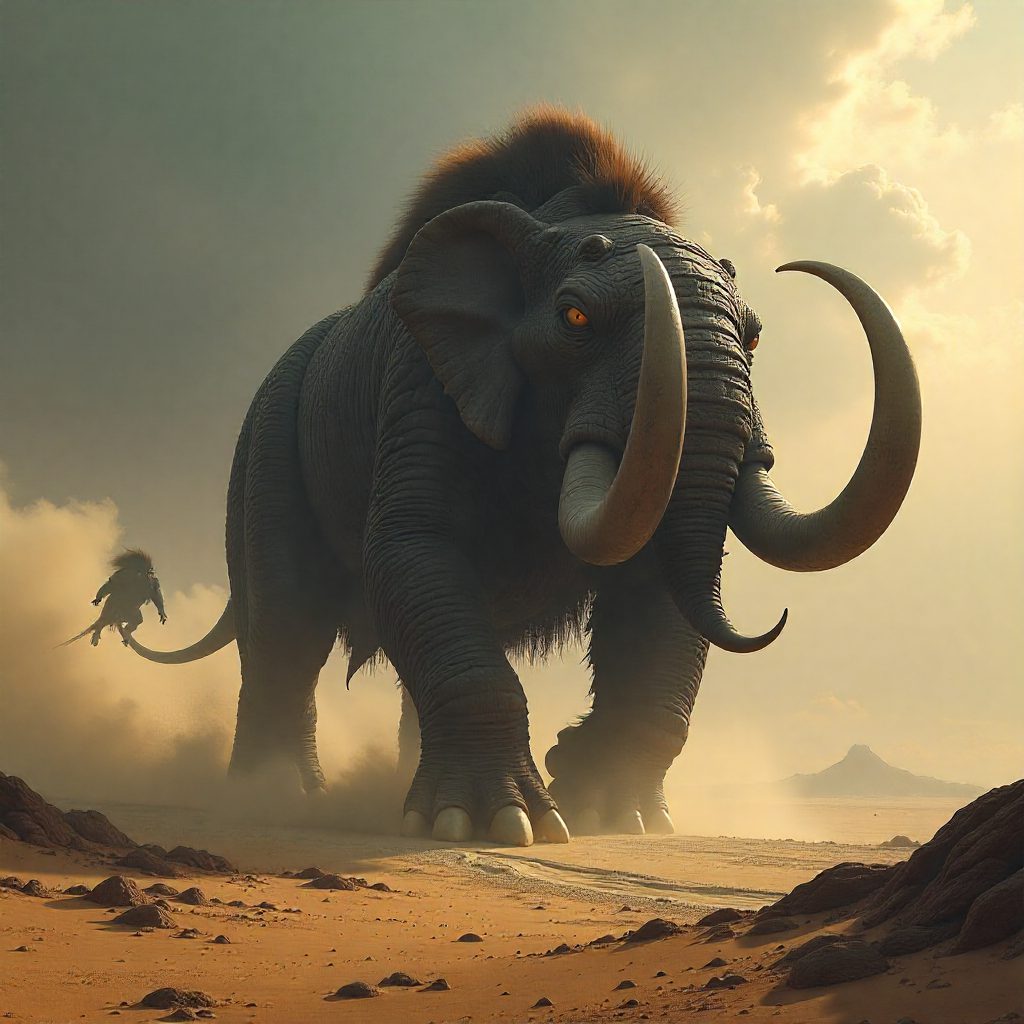
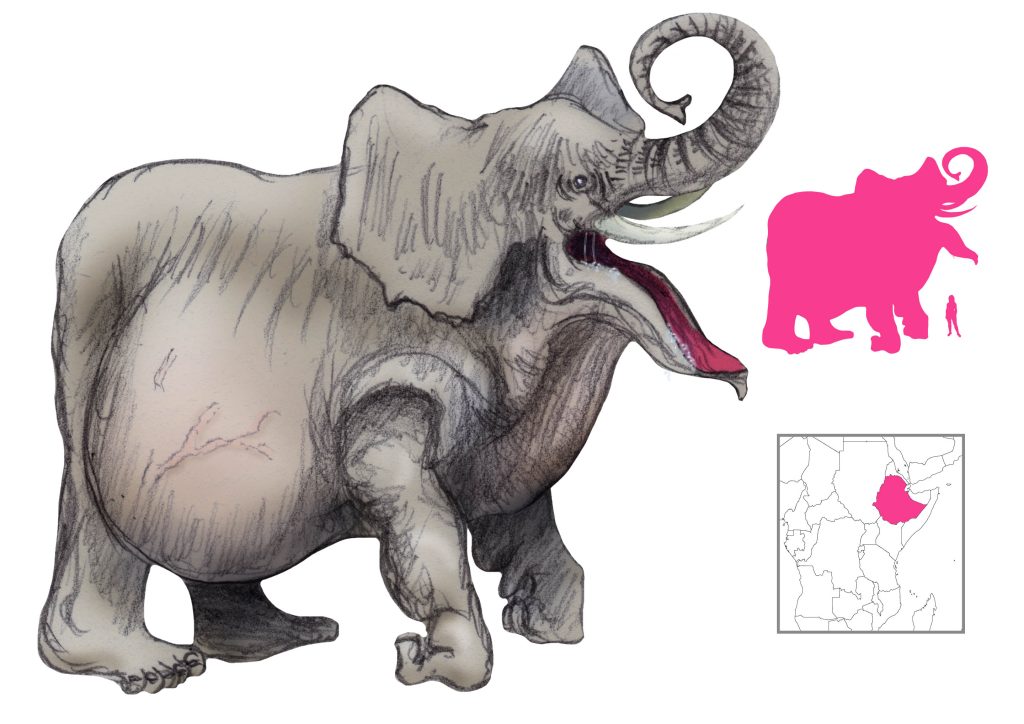
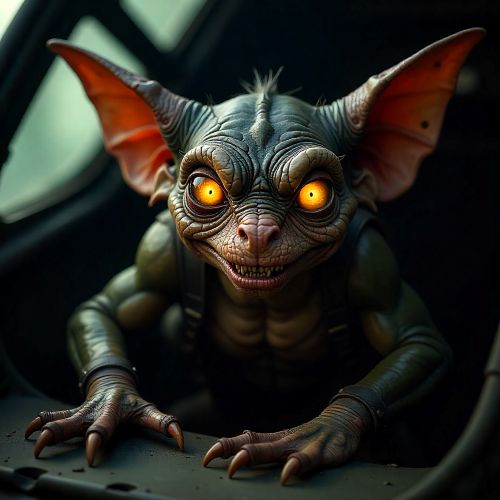
Descriptions of Liqimsa vary among Oromo storytellers, yet all traditions agree on their terrifying size and predatory appearance. They are generally portrayed as elephant-like in scale but far more grotesque, possessing bodies capable of overwhelming entire landscapes. Their massive mouths—large enough to swallow humans whole—serve as the defining feature of their monstrous identity. Many accounts emphasise their nimbleness despite their bulk, noting that they could pursue fleeing people over long distances with frightening speed.
The Liqimsa also had clear physical weaknesses, a crucial detail in the myth. Their bellies were vulnerable, allowing heated spears to pierce their flesh when struck at the right moment. This contrast between invincible exterior and hidden fragility reinforces their role as larger-than-life threats brought down only through intelligence and timing rather than brute force.
Family
In Oromo storytelling, the Liqimsa appear exclusively as a pair of brothers—two monstrous siblings locked in a continual struggle for dominance over territory and prey. Their bond is defined by both cooperation and fierce rivalry, a tension that ultimately becomes their undoing. Unlike many mythic beings who belong to divine lineages or ancestral networks, the Liqimsa exist in isolation. They do not stem from a known family tree, nor do they produce offspring; instead, they represent aberrations within the natural and spiritual order.
This isolation makes their presence even more terrifying, as they exist outside the social, spiritual, and familial frameworks that shape Oromo life. Their world stands in stark opposition to Oromo family structures, where extended households and maternal leadership form the foundation of social stability. The Liqimsa, as chaotic and unrooted beings, embody the breakdown of these harmonious systems.
Other names
While “Liqimsa” is the most recognised name, meaning “swallowers” or “devourers,” the creatures also appear under variant names such as Dhuga in some Borana regions. Dhuga, sometimes translated as “he drinks,” is linked to singular giant beings associated with daily human tribute and immense appetite. Although Dhuga and Liqimsa are not identical in every tradition, they share the core characteristics of monstrous consumption and oppressive power.
The variation in naming reflects the fluidity of Oromo oral tradition, where storytellers adapt terminology across dialects and generations. Through these differing labels, Liqimsa remain anchored in communal memory as archetypal devourers—forces that consume not only bodies but the security and unity of a people.
Powers and Abilities
The primary power of the Liqimsa lies in their overwhelming physical might and insatiable hunger. They are capable of swallowing humans in a single gulp, uprooting trees to use as clubs, and surviving long periods through enforced human sacrifice. Their endurance and scale render them nearly invincible in direct combat, which is why only cunning strategies—rather than strength—could bring them down.
Some traditions introduce behavioural traits that expose moments of vulnerability. Dhuga, for instance, engages in dust-rolling rituals to remove parasites, leaving its underside exposed. In the central Liqimsa myth, the promise of immortality drives the two brothers into conflict, revealing how greed and ambition become the weaknesses that humans exploit.
While the Liqimsa possess no supernatural abilities in the divine sense, their power lies in what they represent: destruction, domination, and the fear of annihilation. In this symbolic framework, defeating them becomes an act of reclaiming autonomy and restoring moral order.
Modern Day Influence
Although Liqimsa rarely appear in major Oromo festivals such as Irreecha or in popular Ethiopian artworks, their legacy lives on as part of a growing global interest in African mythology. Digital archives, ethnographic studies, and online mythological platforms have helped revive and preserve the story, bringing the Liqimsa into broader conversations about indigenous monster traditions alongside better-known figures like the blemmyae or cyclopes.
For the Oromo community, Liqimsa retain cultural significance as metaphors rather than literal beings. Writers and scholars use them to explore themes of oppression, cultural loss, and resilience—issues that resonate deeply within Oromo history. Their image has also found a place in contemporary storytelling, where devouring monsters symbolise modern threats such as corruption, injustice, or the erosion of cultural identity. In this sense, the Liqimsa continue to evolve, shifting from mythic predators into enduring symbols of the struggles and strengths of the Oromo people.
Related Images

Source
Bader, C. (2000). Mythes et legendes de la Corne de l’Afrique. Editions Karthala.
Huntingford, G. W. B. (1955). The Galla of Ethiopia: The kingdoms of Kafa and Janjero. International African Institute.
A Book of Creatures. (2019, October 28). Liqimsa. https://abookofcreatures.com/2019/10/28/liqimsa/
Encyclopedia.com. (2018, May 28). Oromo. https://www.encyclopedia.com/social-sciences-and-law/anthropology-and-archaeology/people/oromo
Oromo Cultures. (n.d.). Oromo history. https://oromocultures.org/oromo-history
101 Last Tribes. (2022, December 31). Oromo people. https://www.101lasttribes.com/tribes/oromo.html
Ethiopia Insight. (2024, July 30). The cosmic myth of the Oromo. https://www.ethiopia-insight.com/2024/07/30/the-cosmic-myth-of-the-oromo/
Baxter, P. T. W. (1991). Oromo Religion: Myths and Rites of the Western Oromo. Cambridge University Press.
Cerulli, E. (1922). Folk Literature of the Oromo People. Rome: Istituto per l’Oriente.
Hassen, M. (1990). The Oromo of Ethiopia: A History 1570–1860. Cambridge University Press.
Gemetchu, M. (2000). Oromo Indigenous Religion and Mythology. Addis Ababa University Press.
Lewis, I. M. (1999). Myth, Ritual, and Kingship in Africa. Oxford University Press.
Frequently Asked Questions
What is the Liqimsa in Oromo mythology?
Liqimsa are monstrous devourers from Borana Oromo folklore, known for demanding human sacrifices and symbolising oppressive forces.
Are Liqimsa based on real animals?
No, they are mythological beings, though their elephant-like features draw inspiration from the East African environment.
How were the Liqimsa defeated?
According to myth, two Borana brothers used cunning and bravery to trick the creatures into self-destruction.
What does the name Liqimsa mean?
The name translates to “swallowers,” referring to their ability to consume humans whole.
Do Liqimsa appear in modern Oromo culture?
Today, they are mainly symbolic figures used in storytelling, scholarship, and discussions of cultural resilience.
