
Ataa Naa Nyonmo : The Supreme God of Ga-Adangbe Spirituality
Listen
At a glance
| Description | |
|---|---|
| Origin | Ga Adangbe Mythology |
| Classification | Gods |
| Family Members | N/A |
| Region | Ghana |
| Associated With | Creation, Supreme Powers |
Ataa Naa Nyonmo
Introduction
Ataa Naa Nyonmo is the Supreme God of the Ga-Adangbe people of Ghana, a creator whose dual nature—both father and mother—embodies balance, unity, and the source of life. Within Ga cosmology, all spiritual systems, including the revered Kple tradition, ultimately lead back to Ataa Naa Nyonmo, whose presence shapes the moral, natural, and cosmic order. Kple is therefore not merely a ritual practice but a structured pathway through which communities honor the Supreme Being and maintain harmony with the spirits believed to carry out His will.
The spiritual expression of Ataa Naa Nyonmo becomes most visible during ceremonies such as the Kplejoo festival, where ritual songs, trance, ancestral invocation, and communal prayers reaffirm humanity’s connection to the divine. Even as modern religions influence the region, the Kple tradition remains a cultural anchor that keeps Ataa Naa Nyonmo central to Ga identity, reminding communities of their origins and the sacredness of their environment.
Physical Traits
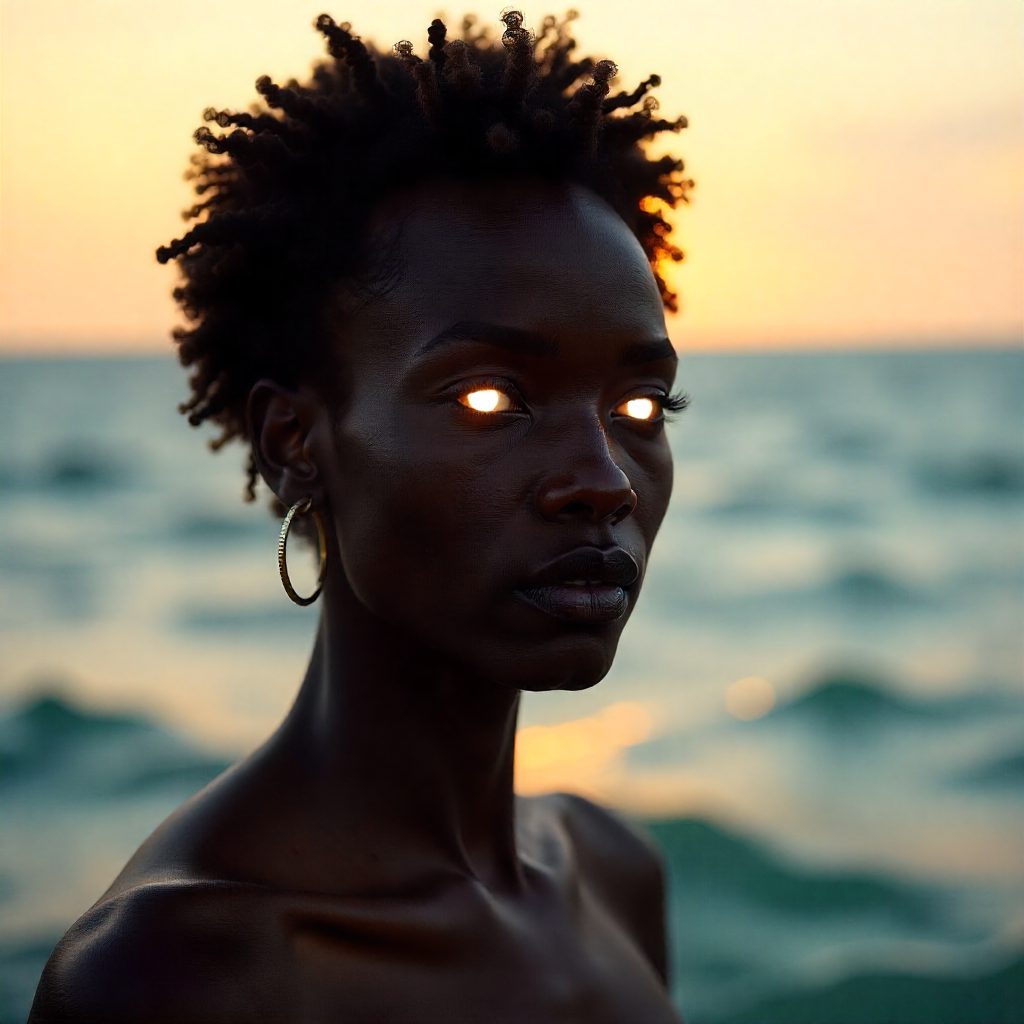
Ataa Naa Nyonmo is not represented in physical form, reflecting the Ga-Adangbe understanding that the Supreme Being transcends human likeness. The deity exists as the essence of sky, wind, rain, sea, and earth—forces that express divine power more authentically than any crafted image. By embodying both masculine and feminine energy, Ataa Naa Nyonmo symbolizes completeness, ensuring that creation reflects equilibrium rather than hierarchy.
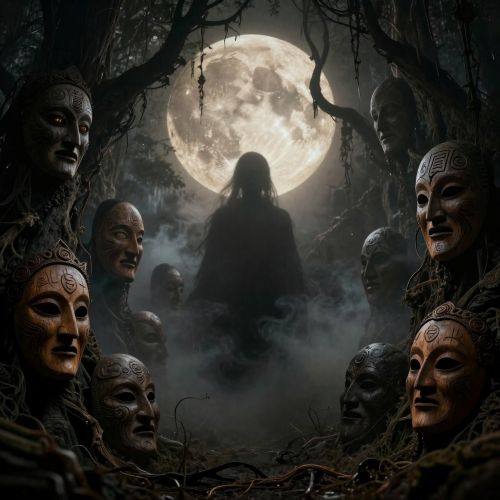
In the Kple tradition, spirits who carry aspects of Ataa Naa Nyonmo’s authority are also not depicted through permanent statues. Instead, masks, cloths, ritual staffs, and specific dance movements symbolize their presence during ceremonies. When mediums enter possession, their altered voice, posture, and gestures serve as temporary embodiments of divine influence. Through these representations, the community experiences Ataa Naa Nyonmo not through idols but through natural forces and sacred performance.
Family
As the Supreme Creator, Ataa Naa Nyonmo does not belong to a conventional divine family. Instead, the deity functions as the origin of all spiritual existence. The spirits associated with Kple—the sea spirit Nai, the lagoon spirit Korle, and the earth-associated Naa Ashieley—are considered emanations of divine will, not offspring in the genealogical sense. Their authority flows from Ataa Naa Nyonmo, who governs the balance of life and empowers each spirit to oversee its respective domain.
Nuumo Gborbu, the powerful ancestral spirit of Nungua, is also connected to the spiritual framework created by Ataa Naa Nyonmo. His guardianship and protective role within the Kple system arise from the belief that divine authority is shared among ancestral leaders who earned spiritual status through service to their people. Thus, the “family” of Ataa Naa Nyonmo is not defined by kinship but by function: all spirits, ancestors, and natural forces exist because of the Supreme Being’s breath of life.
Other names
Ataa Naa Nyonmo is revered through several sacred titles, each emphasizing a different facet of divine nature. The term Nyonmo itself means “God” or “Divinity,” used in everyday prayer and formal rituals. The expanded form Ataa Naa Nyonmo highlights the God’s dual-gender essence—father (“Ataa”) and mother (“Naa”)—which expresses the Ga concept of creation as a balanced act.
In older traditions, the deity may also be called Ofe, referring to the Supreme Sky God whose domain includes the heavens and atmospheric forces.
Within the Kple context, communities use names for specific ritual cycles rather than the deity. Kplejoo, the festival celebrating the descent of spirits, and Kpeledomi, its Dangme counterpart, reference the ceremonies but remain ultimately oriented toward honoring Ataa Naa Nyonmo as the divine source above all spiritual activity.
Powers and Abilities
As the Supreme Being, Ataa Naa Nyonmo holds ultimate authority over creation, morality, and the natural world. The deity governs rainfall, determines the flourishing of crops, oversees the sea and sky, and maintains the cosmic order that allows humans and spirits to coexist. This supreme power ensures that all blessings—fertility, protection, justice, and healing—originate from Ataa Naa Nyonmo even when delivered through intermediary spirits.
Kple ceremonies serve as a channel for accessing these divine forces. When mediums enter possession, worshippers believe they receive messages filtered through spirits acting under Ataa Naa Nyonmo’s direction. Sea spirits regulate tidal safety and fishing success; earth spirits support agriculture and communal stability; ancestral spirits resolve disputes or guide moral conduct. Yet, despite this spiritual diversity, all abilities are ultimately attributed to Ataa Naa Nyonmo, whose presence sustains every realm of Ga existence.
Modern Day Influence
Ataa Naa Nyonmo remains central to Ga-Adangbe spiritual consciousness, even as the region has embraced Christianity and Islam. Many Ga prayers—formal or informal—still begin by invoking the Supreme Being, reflecting a cultural continuity that transcends religious transformation. The belief in a balanced, dual-natured creator also influences Ga perspectives on gender, community roles, and ecological stewardship.
The Kplejoo festival continues to reinforce these connections. In urban centers such as Nungua and Kpone, the festival blends traditional ritual with modern celebration, drawing visitors who seek to understand the ancient foundations of Ga identity. Performances, chants, and possession ceremonies retain their original purpose: honoring Ataa Naa Nyonmo and ensuring spiritual alignment for the community.
Contemporary Ga artists, writers, dancers, and cultural scholars often incorporate themes connected to Ataa Naa Nyonmo—creation duality, nature reverence, ancestral presence—into their work. Environmental activism has also begun to reference traditional beliefs, using Ga spirituality to advocate for the protection of lagoons, coastlines, and natural habitats considered sacred. In this way, Ataa Naa Nyonmo continues to shape moral consciousness and cultural expression in modern Ghana.
Related Images


Source
Fieldhouse, P. (2021). The Kpele & Klama deities of the Ga-Dangme people of Ghana. Historical Huniah Blog. https://historicalhuniah.blogspot.com/2021/05/the-kpele-religion-of-ga-dangme-people.html
The GaDangme. (n.d.). Kpele. https://thegadangme.com/kpele/
Yale University. (2025). Kpelle summary. eHRAF World Cultures. https://ehrafworldcultures.yale.edu/cultures/fd06/summary
Wikipedia. (2025). Ga-Adangbe. https://en.wikipedia.org/wiki/Ga-Adangbe
Wikipedia. (2025). Ga-Adangbe people. https://en.wikipedia.org/wiki/Ga-Adangbe_people
Nukunya, G. K. (2003). Tradition and change in Ghana: An introduction to sociology. Accra: Ghana Universities Press.
Parker, J. (2000). Making the town: Ga state and society in early colonial Accra. Portsmouth: Heinemann.
Meyerowitz, E. L. R. (1951). The sacred state of the Ga. London: Faber and Faber.
Agyekum, K. (2010). African cultural values: An introduction. Accra: University of Ghana Press.
Frequently Asked Questions
Who is Ataa Naa Nyonmo in Ga-Adangbe tradition?
Ataa Naa Nyonmo is the Supreme Creator God of the Ga-Adangbe people, embodying both father and mother, and serving as the source of all spiritual authority.
Is Ataa Naa Nyonmo associated with the Kple tradition?
Yes. Kple is a ritual system that connects worshippers with spirits who act under the guidance of Ataa Naa Nyonmo, reaffirming the Supreme Being’s presence in community life.
Why does Ataa Naa Nyonmo have both male and female aspects?
The dual nature symbolizes balance and completeness, reflecting the Ga belief that creation arises from unified masculine and feminine forces.
Are there other gods under Ataa Naa Nyonmo?
Yes. Spirits like Nai (sea deity), Korle (lagoon spirit), and Nuumo Gborbu (ancestral protector) operate as intermediaries empowered by the Supreme Being.
How is Ataa Naa Nyonmo worshipped today?
Through prayers, cultural festivals like Kplejoo, and rituals honoring ancestral and natural spirits. Many Ga continue to acknowledge Ataa Naa Nyonmo even within modern religions.
