

Betobeto-san : The Phantom Footsteps of Japanese Folklore
Listen
At a glance
| Description | |
|---|---|
| Origin | Japanese Mythology |
| Classification | Spirits |
| Family Members | N/A |
| Region | Japan |
| Associated With | Footsteps, Nights |
Betobeto-san
Introduction
Among Japan’s many mysterious yokai, Betobeto-san stands out precisely because of its subtlety. Rather than appearing in monstrous form or striking terror through dramatic displays, Betobeto-san is known for something far more understated: the sound of unseen footsteps trailing a lone traveler. Rooted in the folklore of regions such as Nara and Shizuoka, this yokai crystallizes a very human fear—the sense that someone is following you when the path behind you is empty. Its entire legend is built on this psychological tension, turning an everyday experience into a cultural story passed quietly from one generation to the next.
What makes Betobeto-san especially compelling is the etiquette embedded in its myth. Unlike malicious spirits, it is neither violent nor disruptive. Instead, it responds to courtesy. A simple request for it to “go ahead” causes the footsteps to drift forward and disappear into the night. This blend of unease and politeness captures the essence of Japanese folklore, where supernatural forces often coexist with humans through ritual and respect.
Physical Traits
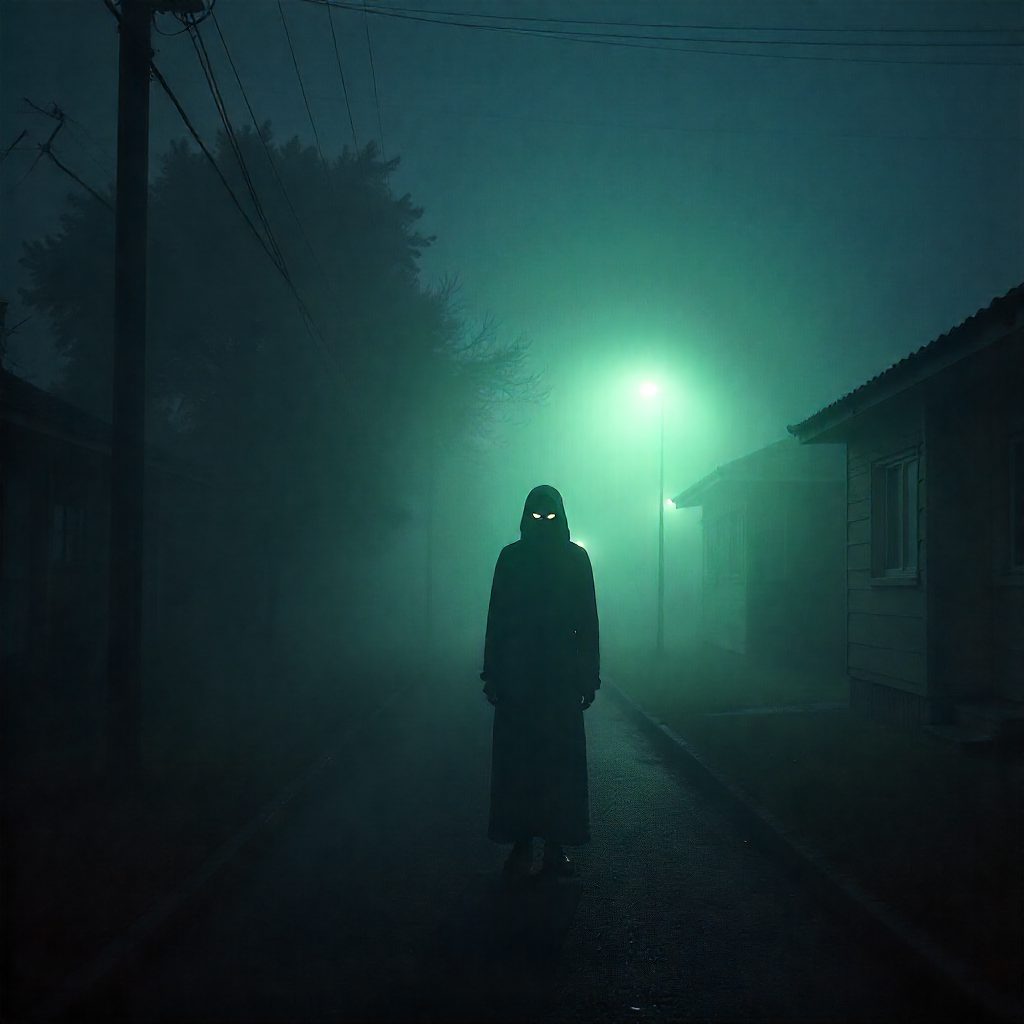
Betobeto-san is defined most clearly by what cannot be seen. Classical folklore describes it as completely invisible, revealing its presence only through the rhythmic “beto beto” sound of wooden geta clogs hitting the ground. The footsteps match the traveler’s pace, speeding up or slowing down in perfect synchrony, heightening the unsettling feeling of being shadowed. The absence of a body, shadow, or outline has always set Betobeto-san apart from yokai that rely on visual horror.
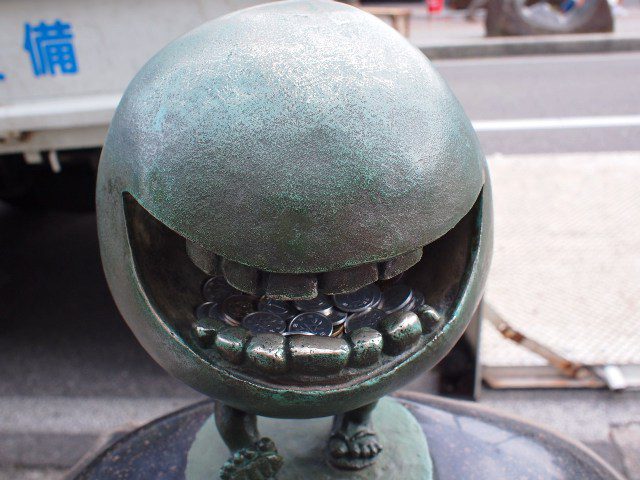
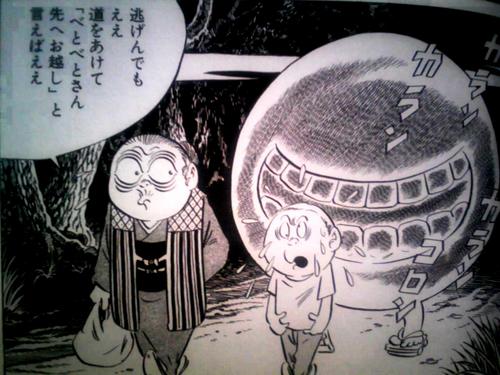
In the modern era, this invisibility inspired creative interpretations. Shigeru Mizuki, whose artwork significantly shaped contemporary yokai imagery, reimagined Betobeto-san as a plump, translucent, childlike creature with stubby legs and a wide grin. Although this form does not appear in earlier texts, it became iconic, helping Betobeto-san gain popularity beyond the regions that originally told its stories. Yet even with this friendly visual, traditional folklore maintains that the yokai is never truly seen—only heard, only sensed, never confirmed by the eye.
Family
Betobeto-san does not belong to any divine lineage or structured yokai family, making it an unusually solitary figure in Japanese myth. Many supernatural beings are connected through stories of origin, kinship, or role, but Betobeto-san simply appears wherever travelers walk alone at night. This independence reinforces its nature as a momentary companion—one that joins a person briefly, then departs without consequence.
Folklorists sometimes classify it among “road-following yokai,” alongside beings like Bishagatsuku from Fukui Prefecture, which also manifests through sound rather than form. These connections, however, are thematic rather than genealogical. Betobeto-san has no parents, offspring, or mythological lineage. Its entire identity is tied to the transient encounters that keep its legend alive.
Other names
The name Betobeto-san is entirely onomatopoeic, derived from the repetitive “beto beto” sound associated with wooden clogs hitting pavement. The suffix “-san,” an honorific used in everyday Japanese conversation, gives it an unexpectedly polite tone, reflecting the cultural habit of personifying even supernatural entities with respect.
Regional variations exist. In parts of Fukui Prefecture, a similar figure is known as Bishagatsuku, named for the “bisha bisha” sound of footsteps on snow. These variants reflect how local landscapes influence the auditory character of yokai legends. Some English sources occasionally translate the name incorrectly as “Mr. Sticky,” confusing the homophonous “beto beto,” which can also imply stickiness. However, the correct interpretation always refers to footsteps, not texture. Despite occasional reinterpretations, Betobeto-san remains the standard name, preserved in hiragana to highlight its fluid, sound-based identity.
Powers and Abilities
Betobeto-san’s abilities are minimal yet psychologically powerful. Its defining power is the creation of footsteps that follow a person persistently, matching their rhythm and encroaching just close enough to feel uncanny. Though invisible, it is perceptive, responding to verbal acknowledgment. The traditional ritual to dismiss it involves stepping aside and politely saying, “After you, Betobeto-san” (osaki ni dōzo). Once invited to pass, the footsteps move ahead and gradually fade, signaling its departure.
Importantly, Betobeto-san is never harmful. It does not attack, possess, or frighten with intention. Its influence lies entirely in the mind of the listener, stirring unease through sound alone. This distinguishes it from predatory yokai and situates it among spirits that coexist with humans rather than oppose them. The emphasis on courtesy as the key to dispersing it also reflects the broader cultural theme that even the supernatural responds to etiquette.
Modern Day Influence
Betobeto-san’s transformation from regional tale to national icon owes much to modern media, especially the works of Shigeru Mizuki. His series GeGeGe no Kitarō introduced Betobeto-san’s now-famous round, friendly appearance, making the yokai approachable and memorable for younger audiences. Statues of Betobeto-san now line Mizuki Shigeru Road in Sakaiminato, a major tourist attraction celebrating his contributions to yokai culture.
In contemporary culture, Betobeto-san appears in manga, anime, video games, folklore encyclopedias, and online discussions. It is frequently invoked as a symbol of eerie but harmless hauntings, appealing to audiences who enjoy supernatural stories without malevolent undertones. Psychologically, modern writers interpret Betobeto-san as a metaphor for anxiety or the invisible pressures that follow people in everyday life.
Local communities also use the yokai as a cultural emblem. Stations along the JR Sakai Line bear yokai-themed names, with Betobeto-san among them. These modern acknowledgments show how folklore continues to evolve—shifting from rural superstition into a meaningful cultural brand.
Related Images



Source
Davisson, Z. (2013). Betobeto-San – The footsteps yokai. Hyakumonogatari. https://hyakumonogatari.com/2013/09/10/betobeto-san-the-footsteps-yokai/
GeGeGe no Kitarō Wiki. (2025). Beto-Beto-san. Fandom. https://gegegenokitaro.fandom.com/wiki/Beto-Beto-san
San’in Monogatari. (2012). Youkai: Betobeto-san. WordPress. https://saninstory.wordpress.com/2012/09/25/youkai-betobeto-san/
Lucille_reaper. (2019). Japanese urban legends: Betobeto-san. Wattpad. https://www.wattpad.com/465598703-creepy-japanese-urban-legends-betobeto-san
Mizuki, S. (1982). GeGeGe no Kitarō (Vol. 10). Kodansha.
Foster, M. D. (2015). The book of yokai: Mysterious creatures of Japanese folklore. University of California Press.
Wikipedia. (n.d.). Betobeto-san. Retrieved from https://en.wikipedia.org/wiki/Betobeto-san
Foster, M. D. (2009). Pandemonium and Parade: Japanese Monsters and the Culture of Yōkai. University of California Press.
Mizuki, S. (2003). Yōkai Dai Zukan [Great Illustrated Encyclopedia of Yōkai]. Tokyo: Kodansha.
Komatsu, K. (1994). Yōkai Bunka-ron [Theories of Yōkai Culture]. Tokyo: Kadokawa Shoten.
Reider, N. T. (2010). Japanese Demon Lore: Oni from Ancient Times to the Present. Utah State University Press.
Foster, M. D. (2015). The Book of Yōkai: Mysterious Creatures of Japanese Folklore. University of California Press.
Frequently Asked Questions
What is Betobeto-san in Japanese folklore?
Betobeto-san is an invisible yokai known for following travelers at night, revealing itself only through the sound of footsteps.
How do you get rid of Betobeto-san?
Tradition says you can dispel it by stepping aside and politely saying, “After you, Betobeto-san,” prompting it to move ahead and disappear.
Is Betobeto-san dangerous?
No, Betobeto-san is completely harmless. Its presence causes unease but it never harms or threatens people.
Where does the legend of Betobeto-san come from?
The legend originates primarily from Nara and Shizuoka Prefectures, later spreading through folklore collections and modern media.
Why is Betobeto-san depicted differently in media?
Modern portrayals, especially by Shigeru Mizuki, gave it a friendly shape, even though original folklore describes it as entirely invisible.