Aymara Mythology
Aymara mythology is part of the living cultural and spiritual traditions of the Aymara people, whose communities are concentrated across the highlands of Bolivia, southern Peru, and northern Chile. Rather than forming a single fixed mythology with a standardized pantheon, Aymara traditions encompass stories, sacred beings, ancestral powers, rituals, and oral knowledge connected to mountains, lakes, agriculture, weather, animals, and the cycles of human life. These traditions have developed over centuries and continue to be transmitted through language, family practices, ceremonies, music, and community life.
At the heart of many Aymara traditions is a close relationship between people and the natural and spiritual worlds. Pachamama, often translated as Mother Earth, is an important sacred presence associated with fertility, nourishment, agriculture, and the continued wellbeing of communities. Offerings and rituals directed toward Pachamama can form part of agricultural and seasonal practices, reflecting ideas of reciprocity between human communities and the forces that sustain life. These practices should not be understood as belonging exclusively to the Aymara, since related concepts occur across the wider Andean cultural region.
Mountains also hold profound spiritual importance. Achachilas are ancestral or mountain-associated beings traditionally understood as powerful protectors connected with particular landscapes and communities. In some Aymara contexts, prominent mountains may be approached as mallkus, a term that can refer to powerful mountain beings or authorities depending on regional usage. Sacred landscapes are therefore not simply geographical features but can form part of a living spiritual relationship between communities, ancestors, and the environment.
The Lake Titicaca region occupies an important place in the wider Andean cultural landscape and is associated with numerous traditions concerning origins, sacred places, ancestors, and the relationship between humans and the natural world. However, Aymara traditions are diverse, and there is no single creation narrative that represents every Aymara community. Stories and beliefs vary according to locality, historical experience, and interaction with neighboring Andean peoples.
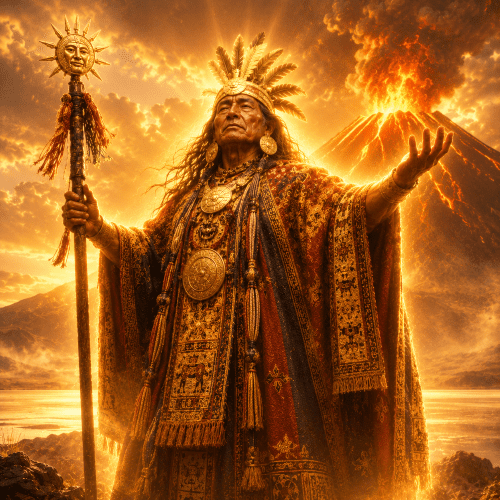
Aymara ritual specialists have traditionally played important roles in maintaining relationships with the spiritual world. Yatiris, often described as knowledgeable ritual specialists, may perform ceremonies, interpret coca leaves, and conduct offerings and prayers. Other specialists, including amawt’as, have traditionally been associated with accumulated knowledge and spiritual understanding. UNESCO documentation records the continued presence of such ritual specialists in Aymara communities and their role in ceremonies involving offerings, prayer, and communication with sacred beings.
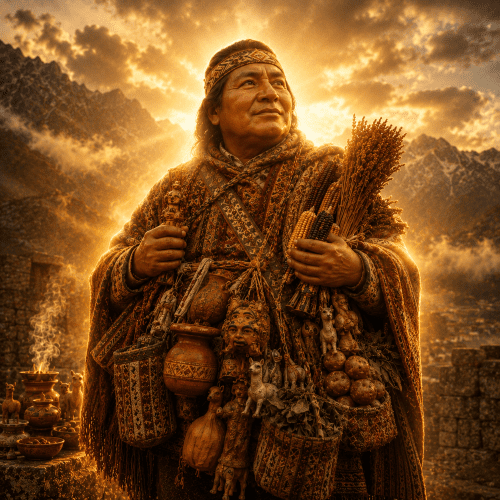
Aymara mythology is also closely connected with agriculture and the changing seasons. Rain, fertility, harvests, animals, mountains, and water are woven into traditional understandings of wellbeing and reciprocity. Rituals can involve offerings, food, drink, music, textiles, and communal participation, demonstrating that Aymara spirituality is expressed through practice as much as through stories. Oral traditions have historically provided an important means of transmitting knowledge between generations, while the Aymara language remains a significant vehicle for cultural continuity. UNESCO safeguarding programmes specifically identify oral traditions, language, agricultural knowledge, music, and textile arts as important elements of Aymara cultural heritage.
The history of Aymara spirituality also includes centuries of interaction with Christianity. Following Spanish colonization, Indigenous religious practices encountered Catholic beliefs, producing different forms of religious coexistence and adaptation across the Andes. Contemporary Aymara communities may therefore participate in Catholic festivals while also maintaining Indigenous ceremonies and relationships with sacred landscapes. These practices vary considerably between communities and should not be reduced to a single form of syncretism.
Today, Aymara mythology remains a living tradition rather than merely a record of an ancient civilization. Stories, rituals, music, agricultural knowledge, sacred landscapes, and Indigenous languages continue to connect present-day communities with their ancestors and environment. Understanding Aymara mythology therefore means looking beyond a list of gods and legendary characters to explore a worldview in which land, mountains, ancestors, agriculture, community, and spiritual forces remain deeply interconnected.