

Opochtli : The Left Handed Aztec God of Fishing
At a glance
| Description | |
|---|---|
| Origin | Aztec Mythology |
| Classification | Gods |
| Family Members | Debatable |
| Region | Mexico |
| Associated With | Hunting, Fishing |
Opochtli
Introduction
The Aztec civilization worshipped a vast pantheon of gods, each associated with different aspects of nature, society, and everyday life. Among the lesser-known deities is Opochtli, the patron god of fishermen, bird catchers, and those who depended on the lakes and waterways of central Mexico. Although he was not one of the principal gods of the Aztec Empire, Opochtli held an important place among communities whose livelihoods relied on fishing and water-based activities.
Most of what is known about Opochtli comes from early colonial accounts and surviving Aztec codices. Rather than being remembered for great battles or cosmic events, he was celebrated as a culture hero who introduced practical skills and tools that made fishing and aquatic hunting more efficient. His association with innovation and survival reflects the close relationship the Aztecs shared with the lakes surrounding their capital, Tenochtitlan.
Physical Traits
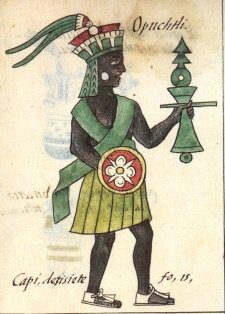
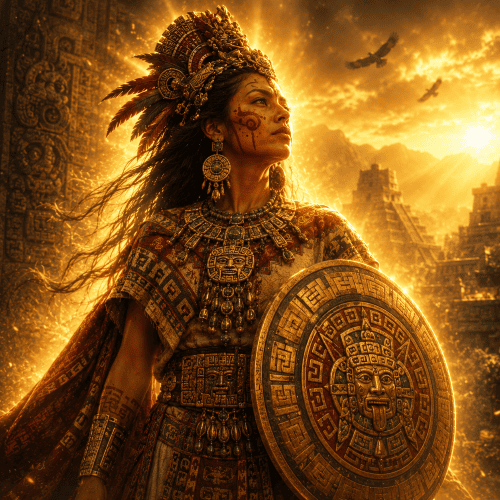
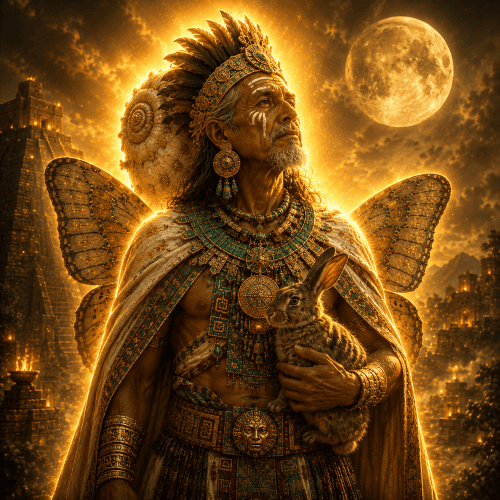
Opochtli is traditionally depicted with his body painted black, symbolizing his divine nature. He wears a headdress decorated with feathers from aquatic birds along with a distinctive coronet. In surviving descriptions, he is shown wearing white sandals and carrying a red shield decorated with a white four-petaled flower. He also holds a ceremonial cup, while some artistic depictions include fishing or hunting implements associated with his role as the patron of fishermen.
His appearance emphasizes his connection to the natural world, particularly the lakes, marshes, and wetlands that were central to Aztec life. Rather than being portrayed as a fearsome warrior, Opochtli’s imagery highlights his role as a provider and protector of those who earned their living from the water.
Family
Unlike many major Aztec deities, Opochtli’s family relationships are not clearly recorded in surviving historical sources. Ancient Nahuatl texts do not identify his parents, siblings, or consort with certainty, and later attempts to connect him to prominent gods such as Coatlicue, Huitzilopochtli, or Mixcoatl are not supported by reliable evidence.
Some scholars associate Opochtli with the Tlaloque, the group of water-related deities who served the rain god Tlaloc. However, his exact place within the Aztec pantheon remains uncertain, making him one of the more mysterious gods in Aztec mythology.
Other Names
The name Opochtli comes from the Nahuatl language and means “The Left-Handed One” or simply “The Left.” The name refers to his reputation as a left-handed hunter and inventor. In Aztec cosmology, the left side was also associated with the south, giving his name both a literal and symbolic meaning.
Powers and Abilities
Opochtli was revered as the divine patron of fishermen, bird catchers, and boatmen. According to Aztec tradition, he invented several important tools that transformed fishing and hunting into more efficient practices. These inventions included the atlatl or spear thrower, bird snares, fishing nets, canoe poles, and harpoon-like fishing weapons used on the lakes surrounding Tenochtitlan.
His influence extended beyond these inventions. Opochtli was believed to watch over those who relied on rivers and lakes for their livelihood, ensuring successful fishing expeditions and safe travel across the water. As a result, he became a symbol of ingenuity, craftsmanship, and humanity’s ability to live in harmony with nature.
Although not one of the principal gods of the Aztec Empire, Opochtli represented the practical knowledge that allowed communities to thrive. His myths celebrate innovation and resourcefulness rather than warfare or conquest, making him a unique figure within the Aztec pantheon.
Modern Day Influence
Following the Spanish conquest of the Aztec Empire in the sixteenth century, the worship of Opochtli gradually declined along with many other Indigenous religious traditions. Despite this, his legacy survives through historical manuscripts, codices, and archaeological research that continue to shed light on Aztec religion and daily life.
Today, Opochtli remains an important figure in the study of Aztec mythology, particularly for understanding the role that fishing, waterways, and innovation played in ancient Mesoamerican society. While he is less well known than deities such as Quetzalcoatl, Tlaloc, or Huitzilopochtli, Opochtli continues to be recognized as the patron of the fishing communities that once flourished around the lakes of the Valley of Mexico and as a symbol of the ingenuity that helped sustain the Aztec civilization.
Related Images