


Kuda Sembrani : The Magical Flying Horse of Malaysian Folklore
At a glance
| Description | |
|---|---|
| Origin | Malaysian Mythology |
| Classification | Animals |
| Family Members | N/A |
| Region | Malaysia |
| Associated With | Flight, Speed, Endurance |
Mythlok Perspective
From the Mythlok perspective, Kuda Sembrani stands apart from the familiar image of the winged horse by being a creature of multiple realms. While the Pegasus tradition is primarily associated with the sky, Malay traditions connect Kuda Sembrani with both air and water. Its role in Sulalatus Salatin as a means of crossing between an underwater kingdom and the human world makes it less a symbol of flight alone and more a mythical bridge between worlds. Its enduring appeal lies in that ability to make boundaries—between land, sea, sky, and legend—seem remarkably thin.
Kuda Sembrani
Introduction
Kuda Sembrani, also written as Kuda Semberani, is a legendary winged horse found in Malay literary and folkloric traditions. The name is closely associated with the image of a supernatural horse capable of flying, and the Kamus Dewan, one of the principal Malay dictionaries, defines kuda semberani as a winged horse that can fly.
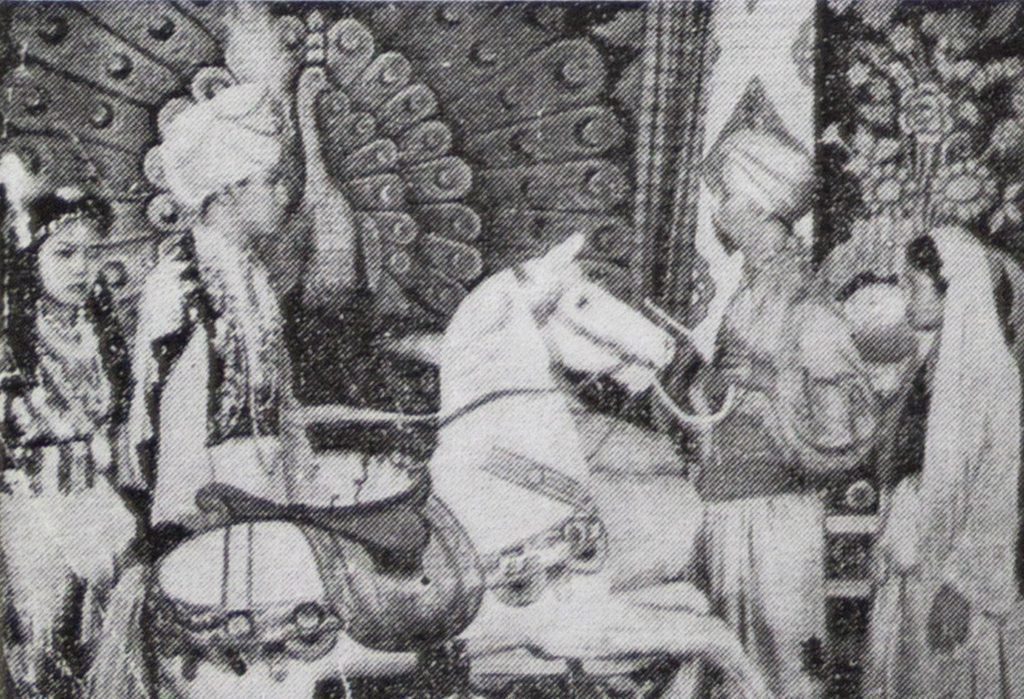
The creature appears in the Malay literary tradition of Sulalatus Salatin, commonly known as the Malay Annals. In one of its most memorable episodes, Raja Suran, after spending time in an underwater kingdom, is given a male Kuda Semberani named Farasu’l-Bahri by Raja Aktabu’l-Ard. The magical horse carries Raja Suran out of the sea and eventually returns to the water. This episode gives Kuda Sembrani an unusual place in Malay legend: it is not simply a creature of the sky, but one capable of connecting the human world with realms beyond it.
The creature is also documented in Walter William Skeat’s Malay Magic, his extensive study of folklore and popular religion in the Malay Peninsula. Skeat records a Kuda Sĕmbrani as a magical flying horse used in Malay shadow theatre and notes that it was believed to be capable of both flying through the air and swimming through water. Together, these traditions establish Kuda Sembrani as one of the distinctive supernatural horses of the Malay cultural imagination.
Physical Traits
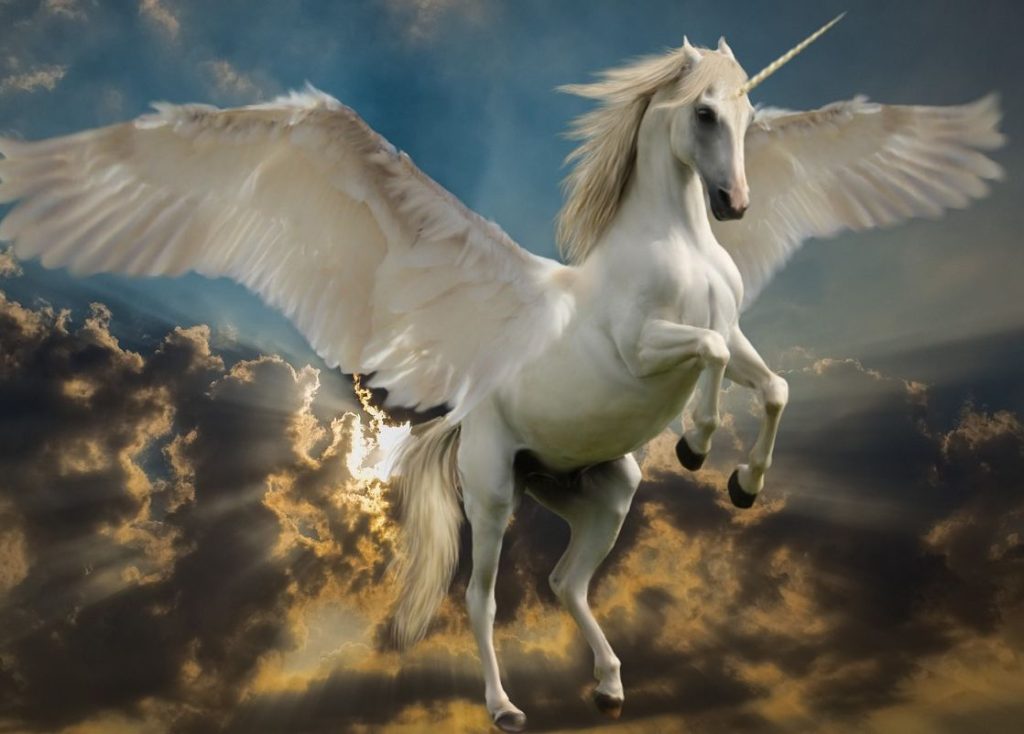
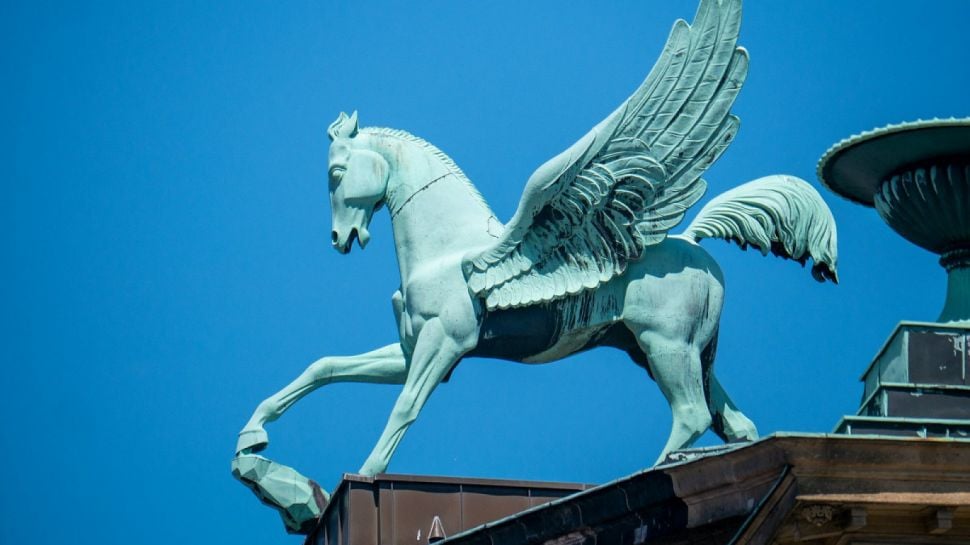
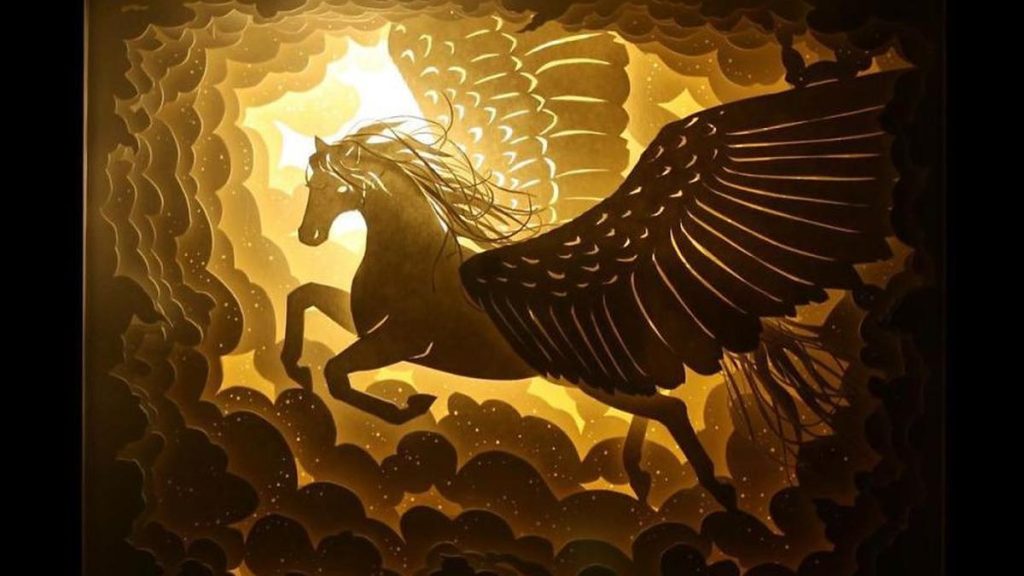
Kuda Sembrani is fundamentally depicted as a winged horse. Unlike ordinary horses, its supernatural nature is expressed through its ability to leave the ground and travel through the sky. The Malay definition of semberani directly preserves this association, describing it as a horse with wings that can fly.
The Sulalatus Salatin tradition provides another important detail. Raja Aktabu’l-Ard gives Raja Suran a male Kuda Semberani, Farasu’l-Bahri, as a means of returning from the underwater realm. The horse emerges from the sea carrying its rider and later returns to the water. Its ability to move between land, sea, and sky gives it a physical nature that is considerably more extraordinary than that of an ordinary winged horse.
Descriptions of Kuda Sembrani in later retellings often emphasize wings, supernatural beauty and a majestic appearance. However, the older Malay sources are less concerned with detailed coloration or anatomy than with the creature’s extraordinary function. Its defining physical feature is therefore its winged equine form, while its ability to travel beyond the ordinary physical world is central to its identity.
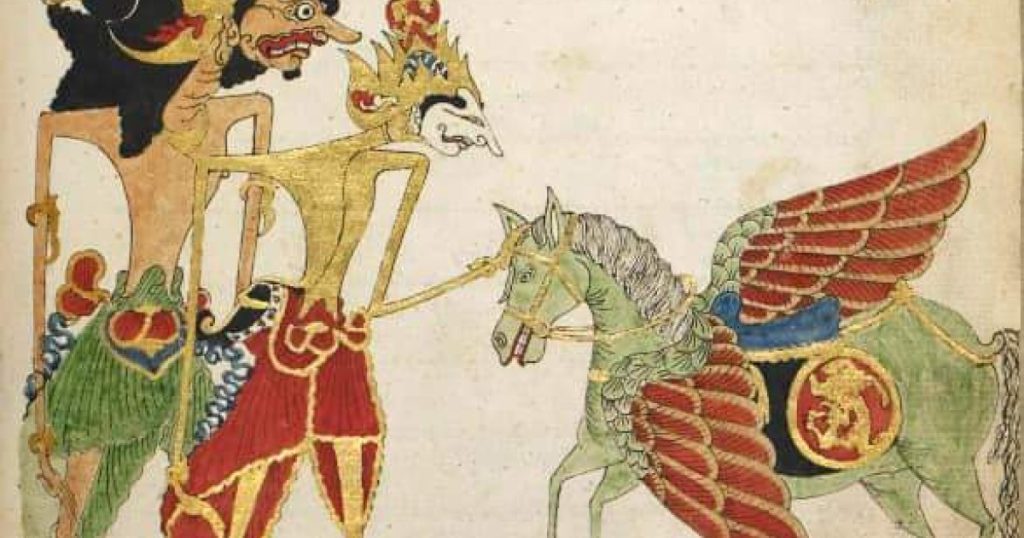
In Malay shadow theatre, Kuda Semberani was represented as a stylized puppet rather than as a naturalistic animal. Skeat’s documentation of the figure provides evidence that the creature was not confined to written literature but also formed part of traditional performance culture.
Family
Kuda Sembrani does not have a clearly established family lineage in the surviving Malay traditions. Instead, its importance comes from its relationships with rulers, heroes and supernatural realms. The most significant association occurs in Sulalatus Salatin. Raja Suran encounters Raja Aktabu’l-Ard, the ruler of an underwater kingdom, and eventually prepares to return to the human world. Raja Aktabu’l-Ard gives him the male Kuda Semberani Farasu’l-Bahri. Raja Suran mounts the horse, which carries him out of the sea and toward the shore. After Raja Suran reaches land, the horse returns to the sea.
This episode places Kuda Sembrani within a larger network of Malay stories involving kingship, supernatural kingdoms and journeys between different realms. Rather than belonging to a defined family of mythical horses, it functions as a magical companion and vehicle for extraordinary journeys. The name Farasu’l-Bahri itself is significant within the story because the horse is treated as a distinct supernatural individual rather than merely an unnamed magical animal. Its role is closely connected to Raja Suran’s passage between the underwater kingdom and the terrestrial world.
Other Names
The most established forms of the name are Kuda Sembrani and Kuda Semberani. The spelling semberani is recorded in the Kamus Dewan, which defines kuda semberani as a winged horse capable of flight. Older sources also use the spelling Kuda Sĕmbrani. Skeat uses this form when describing the magical flying horse represented in Malay shadow theatre.
In the Sulalatus Salatin, the creature appears as kuda semberani, with the particular horse given to Raja Suran named Farasu’l-Bahri. The term is therefore more securely associated with the concept of a winged or flying horse than with a collection of separate regional names. Modern descriptions may translate or explain it as a flying horse, but Kuda Sembrani and Kuda Semberani remain the principal forms associated with the Malay tradition.
Powers and Abilities
Flight is the defining power of Kuda Sembrani. Malay sources consistently associate semberani with a winged horse capable of flying through the sky. Its abilities extend beyond the air, however. Skeat’s Malay Magic records that the Kuda Sĕmbrani was believed to be capable of swimming through water as well as flying through the air. This unusual combination gives the creature an important distinction from the more familiar European image of a winged horse.
The episode of Farasu’l-Bahri in Sulalatus Salatin provides a literary demonstration of this supernatural mobility. The horse carries Raja Suran out from the underwater kingdom, travels through the sea and reaches the shore before returning to the water. Kuda Sembrani can therefore be understood as a creature of extraordinary movement. It crosses boundaries that ordinary animals cannot: sky and sea, supernatural realm and human world. Its greatest power is not simply speed or physical strength, but its ability to make impossible journeys possible.
This role also explains why the creature fits naturally into Malay heroic literature. A supernatural horse allows kings and legendary figures to cross enormous distances and move between worlds that would otherwise remain inaccessible.
Modern Day Influence
Kuda Sembrani continues to occupy a place within discussions of Malay folklore and traditional culture. Its presence in historical literature and traditional performance gives it a cultural identity that extends beyond the modern fantasy image of a winged horse. Its connection with wayang kulit, or shadow puppetry, is particularly significant. Skeat documented a Kuda Sĕmbrani figure being used in Malay shadow theatre, demonstrating that the creature was represented visually as part of traditional performance.
The creature has also become increasingly visible in modern discussions of Malaysian and wider Malay folklore, where it is frequently presented as a symbol of supernatural travel and the extraordinary relationship between legendary heroes and magical beings. Modern retellings often emphasize its wings and its association with heroic journeys, while the older literary tradition provides a deeper connection to underwater kingdoms and royal narratives.
Kuda Sembrani also demonstrates how mythological creatures can travel across cultural boundaries. Related flying-horse traditions appear elsewhere in the wider Nusantara world, but Malay sources give Kuda Semberani its own literary identity through works such as Sulalatus Salatin and through traditional Malay performance.
Today, Kuda Sembrani remains an evocative figure within Malay folklore: a winged horse whose significance lies not simply in its ability to fly, but in its capacity to cross boundaries between worlds. From the pages of the Malay Annals to the figures of traditional shadow theatre, its enduring image reflects a tradition in which legendary horses could carry heroes farther than any ordinary creature ever could.
Related Images



Sources
Ahmad, A. S. (Ed.). (1986). Sulalatus Salatin (Sejarah Melayu) (4th ed.). Dewan Bahasa dan Pustaka.
https://fliphtml5.com/wuwth/itrf/SULALATUS_SALATIN_SEJARAH_MELAYU_%5BA._Samad_Ahmad%5D/
Brown, C. C. (1952). The Malay Annals. Journal of the Malayan Branch of the Royal Asiatic Society, 25(2/3), 5–276. https://www.jstor.org/stable/41502950
Dewan Bahasa dan Pustaka. (2005). Kamus Dewan (4th ed.). Dewan Bahasa dan Pustaka.
https://prpm.dbp.gov.my/Cari1?d=246792&keyword=semberani
Leyden, J. (Trans.). (1821). Malay Annals. Longman, Hurst, Rees, Orme, and Brown.
Skeat, W. W. (1900). Malay magic: Being an introduction to the folklore and popular religion of the Malay Peninsula. Macmillan and Co.
Skeat, W. W., & Blagden, C. O. (1900). Malay magic: Being an introduction to the folklore and popular religion of the Malay Peninsula. Macmillan and Company. https://archive.org/details/malaymagicbeing00blaggoog
Malay Magic; Being an Introduction to the Folklore and Popular Religion of the Malay Peninsula. (1900). Nature, 62, 145–146. https://www.nature.com/articles/062145a0
YalaOrg. (n.d.). Sejarah Melayu. https://sites.google.com/site/yalaorg/malay-annals-a-companion-handbook/research-material-for-malay-annals/3-sejarahmelayu
Frequently Asked Questions
What is Kuda Sembrani?
What powers does Kuda Sembrani have?
Kuda Sembrani is known primarily for flight. Malay traditions also describe it as capable of swimming, allowing it to cross both sky and sea.
Where does Kuda Sembrani come from?
Kuda Sembrani appears in Malay literary and folkloric traditions, including Sulalatus Salatin, also known as the Malay Annals.
What is Kuda Sembrani’s connection to Raja Suran?
In Sulalatus Salatin, Raja Suran receives a Kuda Semberani named Farasu’l-Bahri, which carries him from an underwater kingdom back toward the human world.
Is Kuda Sembrani similar to Pegasus?
Both are legendary winged horses, but Kuda Sembrani belongs to Malay tradition and is notably associated with both flight and travel through water.
