


Jumong : Founder of the Korean Goguryeo Kingdom
Listen
At a glance
| Description | |
|---|---|
| Origin | Korean Mythology |
| Classification | Demigods |
| Family Members | Lady Yuhwa (Mother), Lady Ye Soseono (Wife), Yuri (Son) |
| Region | South Korea |
| Associated With | Royalty, Warfare |
Jumong
Introduction
Jumong stands as one of the most influential figures in Korean mythology and early Korean history, remembered as the founder of Goguryeo, one of the Three Kingdoms that shaped the Korean peninsula. His story appears in key Korean historical sources such as the Samguk Sagi and Samguk Yusa, where elements of divine birth, supernatural talent, political struggle, and cultural destiny merge into a single powerful narrative. Through these records, Jumong emerges not only as a heroic archer but also as a state-builder whose arrival marked a turning point in the formation of early Korean civilization. Over centuries, he has remained a foundational symbol of resilience, nationhood, and the belief that great leaders are guided by divine purpose.
Physical Traits
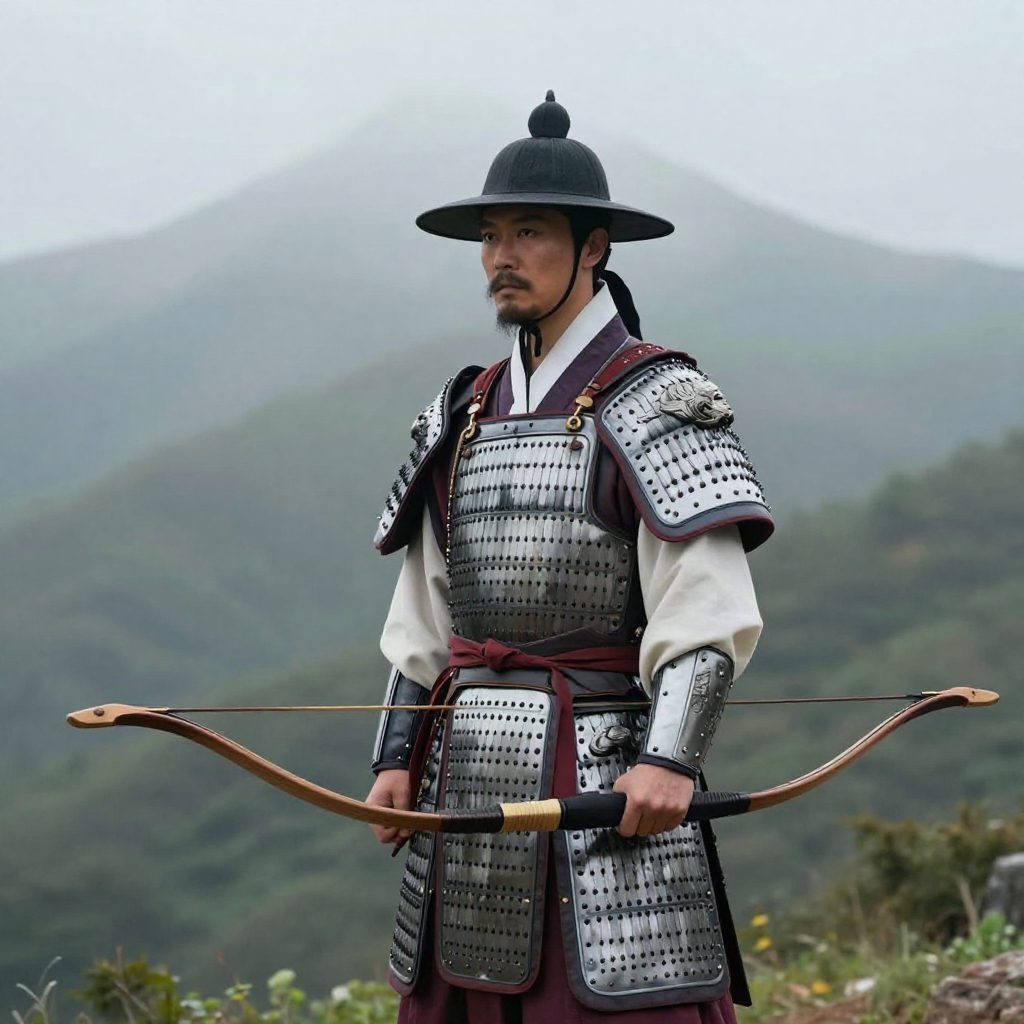
Although no historical portrait of Jumong survives, Korean tradition consistently describes him as possessing an exceptional presence. His name itself, often interpreted as “skilled archer,” hints at the physical abilities that defined him from a young age. Myths portray him as a remarkably gifted marksman whose arrows never missed their mark, demonstrating the coordination and vision attributed to legendary warriors. This reputation for accuracy later became a metaphor for his ability to make decisive choices and overcome threats with clarity and precision. Tales also refer to his endurance and agility, traits that allowed him to escape danger, travel long distances, and lead his followers across rugged terrain. These physical characteristics helped establish him as a natural leader whose strength matched the monumental task of founding a new kingdom.
Family
The story of Jumong gains much of its power from his extraordinary lineage. His mother, Lady Yuhwa, was the daughter of Habaek, a deity associated with the Amnok (Yalu) River. According to legend, she conceived Jumong after being embraced by the sunlight sent by Haemosu, a heavenly prince believed to be the son of the supreme sky deity. This unusual birth marked Jumong from the beginning as someone destined for greatness, straddling the boundary between the mortal world and the divine.
His early life in the kingdom of Buyeo was marked by conflict with King Geumwa’s sons, whose jealousy drove him to flee. After founding Goguryeo in 37 BCE, Jumong married Lady Ye Soseono, a highly capable leader who offered political stability and resources essential to the new kingdom’s survival. Their partnership strengthened the foundation of Goguryeo, and their descendants would continue the dynastic line, beginning with Yuri, who became the second ruler. In this way, Jumong’s family formed a bridge between divine ancestry and the emerging human state.
Other names
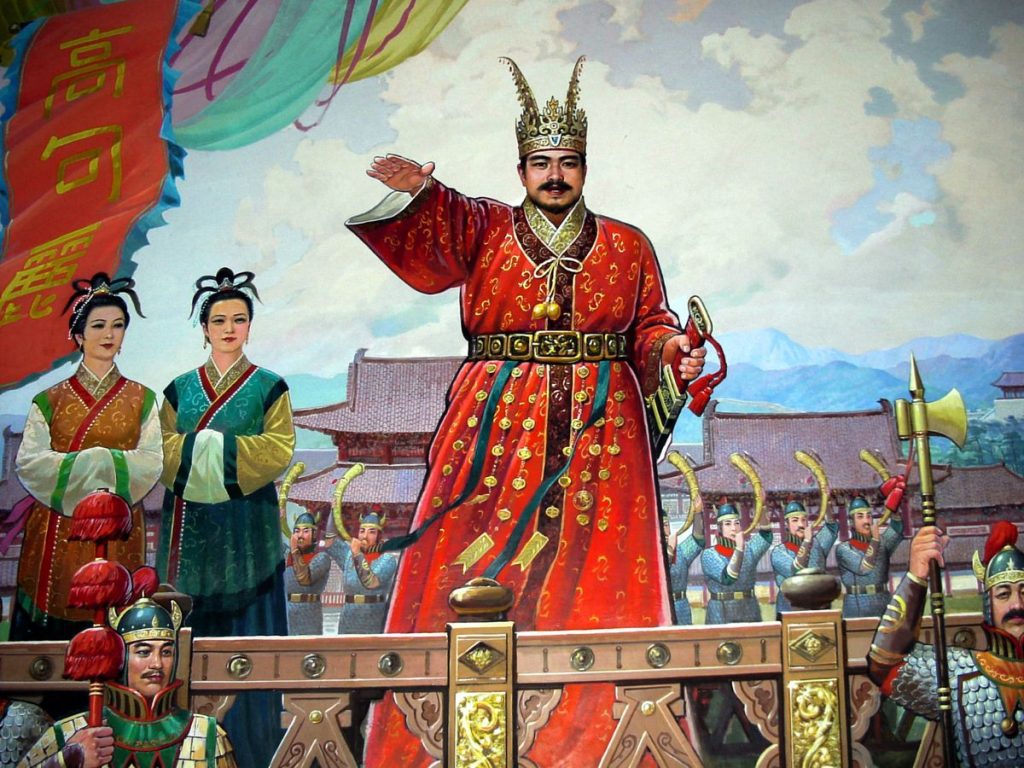
Throughout Korean historical texts, Jumong appears under several names, each reflecting a different aspect of his identity. His birth name, Chumo or Go Jumong, connects him to the Go lineage that became the royal house of Goguryeo. After his death, he was honored with the posthumous title Dongmyeongseongwang, meaning “Holy King Dongmyeong,” a designation that emphasized his sacred role in establishing the eastern kingdom. In some records, he is also referred to as Chumo-wang, a title that affirms his authority and solidifies his status as the kingdom’s revered founder. These various names demonstrate how myth and history combined to shape his legacy, presenting him not just as a ruler but as a sanctified figure whose achievements reached beyond the earthly realm.
Powers and Abilities
Jumong’s legend attributes to him a range of abilities that exceed those of ordinary men, reflecting his divine heritage and the expectations of a foundational hero. His unmatched archery skill stands at the core of his mythos, with stories describing how he mastered the bow from childhood and performed feats impossible for others. This talent was more than a martial skill—archery symbolized discipline, intelligence, and cosmic harmony in ancient Korea, linking Jumong’s abilities to the mandate of heaven.
In addition to his physical talents, Jumong demonstrated strategic brilliance. His decision to leave Buyeo, gather followers, and establish a new kingdom shows a visionary understanding of political opportunity. He unified fragmented tribes, stabilized borders, and initiated the political structures that allowed Goguryeo to rise into a major regional power.
Some legends even suggest he could communicate with animals or influence natural elements, reflecting a spiritual connection that elevated him from hero to culture-bringer. These powers contributed to the belief that Jumong’s leadership was guided by higher forces, making him a king chosen not merely by circumstance but by destiny.
Modern Day Influence
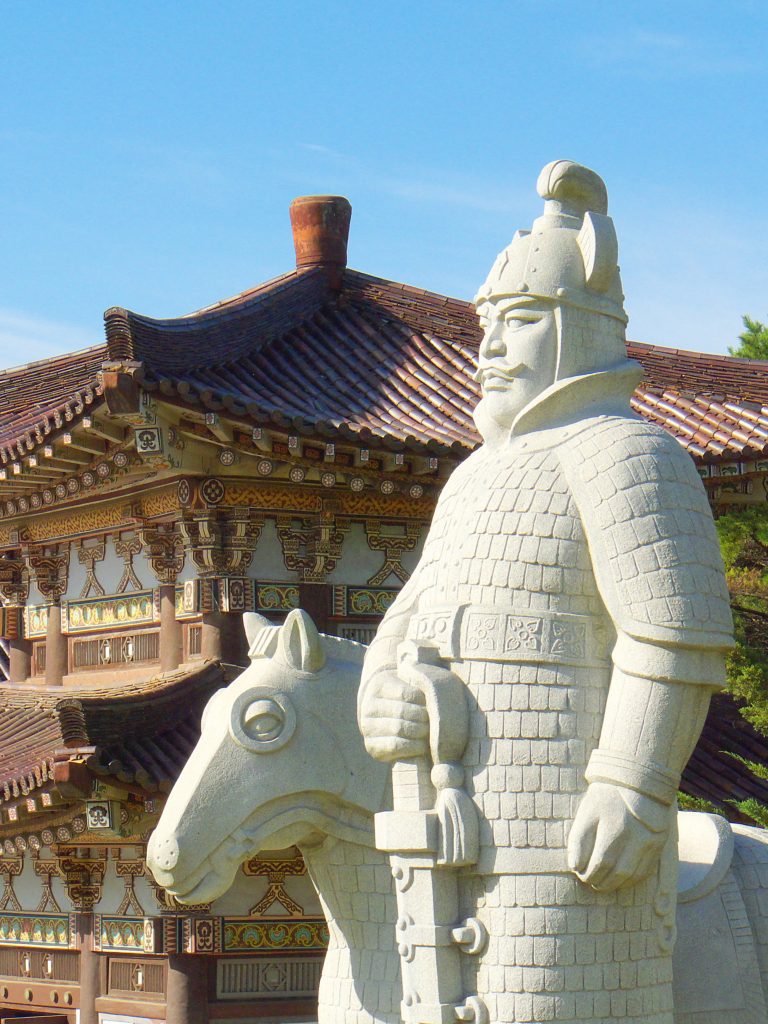
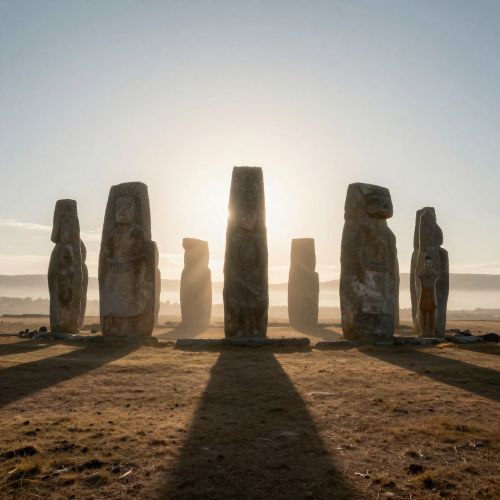
Jumong continues to exert a powerful influence on Korean identity and culture. His story is celebrated as part of Korea’s national heritage, taught in schools and referenced in historical discussions about the country’s origins. Statues and memorials honoring him appear in regions historically linked to Goguryeo, reinforcing his status as a cultural ancestor.
In contemporary popular culture, his legend has enjoyed renewed prominence, especially through the acclaimed 2006 television drama Jumong, which brought his story to audiences worldwide. This adaptation expanded global awareness of Korean mythology, presenting Jumong as a charismatic, conflicted, and deeply human leader. Outside entertainment, his story is used as a metaphor for persistence, courage, and strategic thinking, traits valued in modern Korean society. Whether interpreted as a mythological hero or an early statesman, Jumong remains a symbol of origins, unity, and the enduring spirit of the Korean people.
Related Images

Source
Dongmyeong of Goguryeo. (n.d.). Wikipedia. Retrieved December 4, 2025, from https://en.wikipedia.org/wiki/Dongmyeong_of_Goguryeo
Avid Archer. (n.d.). Jumong: Archer King of Goguryeo Kingdom. Retrieved December 4, 2025, from https://avid-archer.com/jumong-archer-king-of-goguryeo-kingdom/
Kim, B. (2012). Myth and History in Korea: The Founding Legends of the Three Kingdoms. Seoul: Jimoondang Publishing.
Lee, K. B. (1984). A New History of Korea. Cambridge, MA: Harvard University Press.
Peterson, M. N., & Margulies, P. (2009). Korean Mythology and Folklore. New York: Routledge.
Shultz, E. J., & Kang, H. W. (2016). Korean History: A Bibliographic Guide. Honolulu: University of Hawai‘i Press.
Yi, S. (2007). Samguk Yusa: Legends and History of the Three Kingdoms of Ancient Korea. Seoul: Yonsei University Press.
Frequently Asked Questions
Who was Jumong in Korean mythology?
Jumong was the legendary founder of the Goguryeo kingdom and is celebrated as a semi-divine hero with exceptional archery skills.
What does the name Jumong mean?
The name is commonly interpreted as “skilled archer” or “expert bowman,” reflecting his legendary talent.
Who were Jumong’s parents?
According to legend, he was born to Lady Yuhwa and the heavenly prince Haemosu, giving him a divine lineage.
How did Jumong establish Goguryeo?
He fled Buyeo due to political conflicts, gathered followers, and founded Goguryeo in 37 BCE through strategic leadership.
How is Jumong represented in modern culture?
His legacy appears in textbooks, monuments, and popular media, particularly the 2006 drama Jumong, which brought his story to global audiences.
