


Gucumatz : The K’iche’ Maya’s Feathered Serpent
At a glance
| Description | |
|---|---|
| Origin | Mayan Mythology |
| Classification | Gods |
| Family Members | N/A |
| Region | Guatemala |
| Associated With | Creation |
Mythlok Perspective
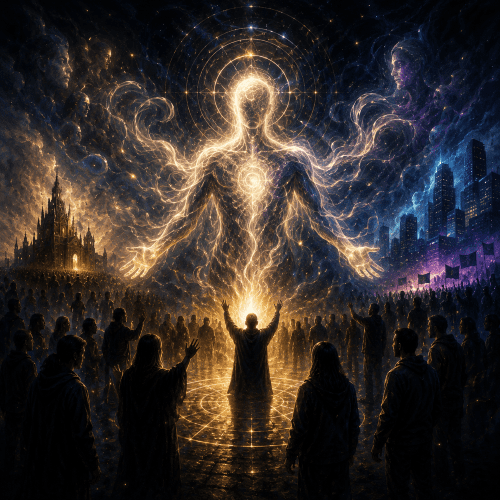
In Mythlok’s View, Gucumatz represents creation as an intellectual and collective act rather than a singular display of power. His presence in the Popol Vuh reflects a worldview where balance and thought precede existence itself. He closely parallels Quetzalcoatl & Kukulkan in Mesoamerica and Nāga traditions, where serpentine forms symbolize knowledge and transformation. Across cultures, the serpent evolves from a creature of fear into a bearer of wisdom and cosmic order.
Gucumatz
Introduction
Gucumatz, a central figure in <a class="wpil_keyword_link" title="Mayan Mythology" href="https://mythlok.com/creation/mayan/” data-wpil-keyword-link=”linked” data-wpil-monitor-id=”23675″>Mayan mythology, is revered as a feathered serpent deity symbolizing life, creation, and nature. Associated with fertility, agriculture, and water, he holds a significant place in Mayan spiritual practices and is featured prominently in the Popol Vuh, a sacred text recounting the creation of the world and humanity. His name, originating from the Quiché Maya language, combines “Guc” (feathered) and “Cumat” (serpent), reflecting his dual nature as both celestial bird and terrestrial serpent. Alongside the god Tepeu, Gucumatz was instrumental in shaping the cosmos, playing a vital role in Mayan cosmology and worldview.
Physical Traits
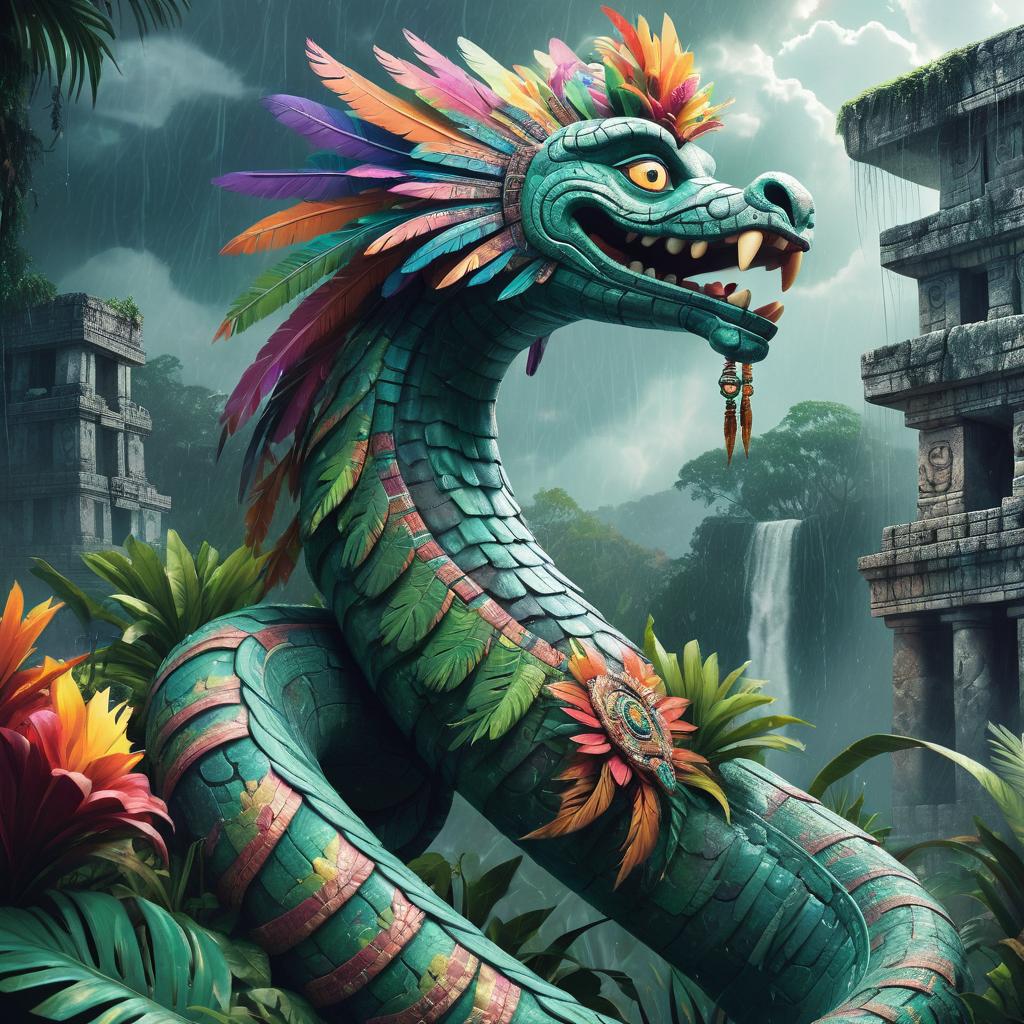
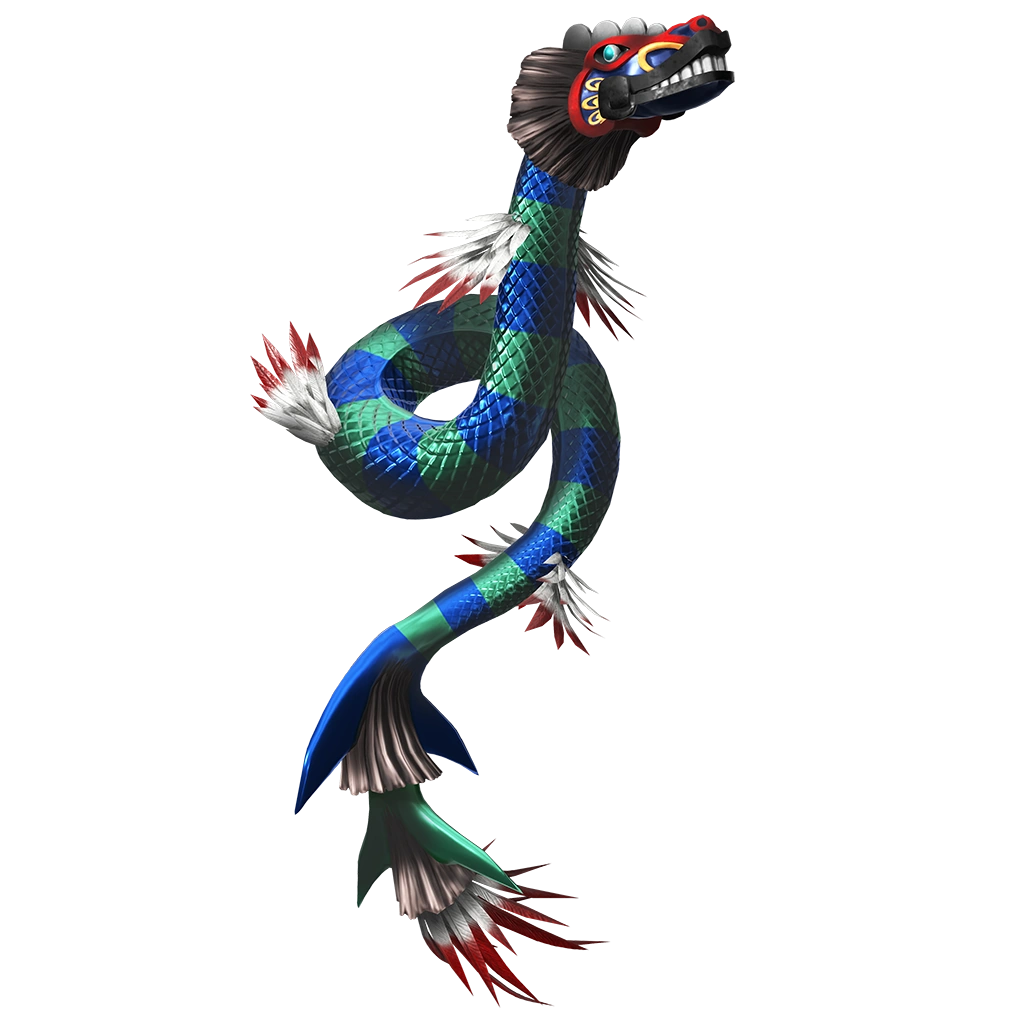
Gucumatz is depicted as a feathered serpent, combining the qualities of both bird and snake to symbolize the connection between earth and sky. His vibrant feathers, often in shades of green, blue, or yellow, represent life, fertility, and the natural world. The intricate patterns along his serpent form reflect the cosmic order and interconnectedness of all things. Quetzal plumes, frequently seen in his headdress, emphasize his divine connection to the heavens. As a deity of agriculture and storms, Gucumatz embodies harmony between the terrestrial and celestial realms, symbolizing wisdom, regeneration, and the balance of nature.
Family
In Mayan mythology, Gucumatz is closely connected to other deities, particularly Tepeu, with whom he collaborates in creating the world. Their joint effort in shaping the cosmos emphasizes the cooperative nature of Mayan gods. Gucumatz is also linked to Quetzalcoatl, the Aztec feathered serpent god, reflecting shared mythological themes across Mesoamerican cultures. This association highlights the overlapping narratives and attributes between these cultures. Additionally, Gucumatz’s role as a creator god, alongside figures like Tepeu and Iximché, further solidifies his importance in the divine hierarchy, representing the intricate relationships that govern both the natural and spiritual realms.
Other names
Gucumatz is recognized by multiple names across different Mayan cultures, each reflecting his diverse roles and attributes. In the K’iche’ language, he is known as Qʼuqʼumatz, meaning “Feathered Serpent,” which directly describes his form. In the Yucatán Peninsula, he is called Kukulkan, illustrating regional variations in his depiction. Additionally, in some contexts, he is associated with the deity Itzamná, linked to celestial elements such as the sky, sun, and moon. These names underscore the broad yet interconnected understanding of this deity within Mayan mythology, demonstrating his widespread influence and significance across various regions.
Powers and Abilities
Gucumatz possesses a range of powers and abilities that contribute to his veneration among the Maya. As a rain god, he is associated with fertility and agriculture, believed to control weather patterns essential for crop growth. His abilities extend to creation myths where he plays a crucial role in shaping humanity and the world. Gucumatz is also understood as a transformative figure, possessing the power to bring balance between life and death, light and dark. His influence over natural phenomena, such as creating storms or providing sustenance for crops, reinforces his importance as a provider and protector in the Mayan worldview.
Modern Day Influence
Gucumatz’s influence endures in modern culture, where he symbolizes Mayan heritage and identity. His image appears in contemporary art, literature, and cultural celebrations, reflecting a deep pride in ancient traditions. The deity’s motifs and stories have also inspired modern literature, films, and artistic expressions, emphasizing themes of creation and spirituality. Among current Maya communities, Gucumatz is honored through rituals and ceremonies, reinforcing his role as a figure of wisdom and transformation. Additionally, his legacy impacts environmental and ecological efforts, as his association with rain and wind highlights the crucial relationship between humanity and nature, inspiring modern conservation practices.
Related Images


Sources
Christenson, A. J. (2007). Popol Vuh (K’iche’ Maya Translation). Mesoweb. https://www.mesoweb.com/publications/Christenson/PopolVuh.pdf
Tedlock, D. (1996). Popol Vuh. Simon & Schuster.
Coe, M. D., & Houston, S. (2015). The Maya. Thames & Hudson.
Sharer, R. J., & Traxler, L. P. (2006). The Ancient Maya. Stanford University Press.
Christenson, A. J. (2003). Popol Vuh: The Sacred Book of the Maya. Latin American Indian Literatures Journal, 19(1), 1–15.
World History Encyclopedia. (2021). Popol Vuh https://www.worldhistory.org/Popol_Vuh/
Encyclopaedia Britannica. (2023). Popol Vuh https://www.britannica.com/topic/Popol-Vuh
Frequently Asked Questions
Who is Gucumatz?
Gucumatz is a creator deity in K’iche’ Maya belief, mentioned in the Popol Vuh as one of the divine beings involved in the creation of the world.
What does Gucumatz represent?
He represents wisdom, duality, and creation through thought, symbolized by the feathered serpent form.
Is Gucumatz the same as Quetzalcoatl?
They are related but not identical. Both are feathered serpent deities from different Mesoamerican cultures.
Where is Gucumatz mentioned?
He appears in the Popol Vuh, the sacred narrative of the K’iche’ Maya.
Did Gucumatz create the world alone?
No, he is part of a group of creator deities who collectively envisioned and formed the world.
