


Fuxi : The Chinese Culture Hero and Primordial Sovereign
At a glance
| Description | |
|---|---|
| Origin | Chinese Mythology |
| Classification | Hybrids |
| Family Members | Lei Gong (Father), Nuwa (Wife/Sister) |
| Region | China |
| Associated With | Creation of Humans |
Mythlok Perspective
In Mythlok’s Perspective, Fuxi stands apart from many mythological culture heroes because his importance lies not in conquest, but in transforming knowledge into civilization. Like the Mesopotamian Enki, he is associated with wisdom, social order, and gifts that improve human life, but Fuxi is more deeply connected to humanity’s understanding of nature and the cosmic patterns of existence. His evolution from a primordial hybrid figure into a legendary sage and culture-bringer demonstrates how Chinese mythology could transform the origins of knowledge, society, and cosmology into the story of a divine ancestor who taught humanity how to understand and organize its world.
Fuxi
Introduction
Fuxi, also known as Fu Xi or Fu Hsi, is one of the most important culture heroes in Chinese mythology. Traditionally counted among the Three Sovereigns, Fuxi is remembered as a primordial ruler and civilizing figure who taught humanity essential skills and established customs that brought order to early society. He is particularly associated with <a class="wpil_keyword_link" href="https://mythlok.com/archetypes/hunting-fishing/” title=”Hunting : Gods, Heroes and Legendary Figures of the Wild Chase” data-wpil-keyword-link=”linked” data-wpil-monitor-id=”129893″>hunting, fishing, animal husbandry, cooking, marriage, music, writing, and the creation of the Eight Trigrams (Bagua).
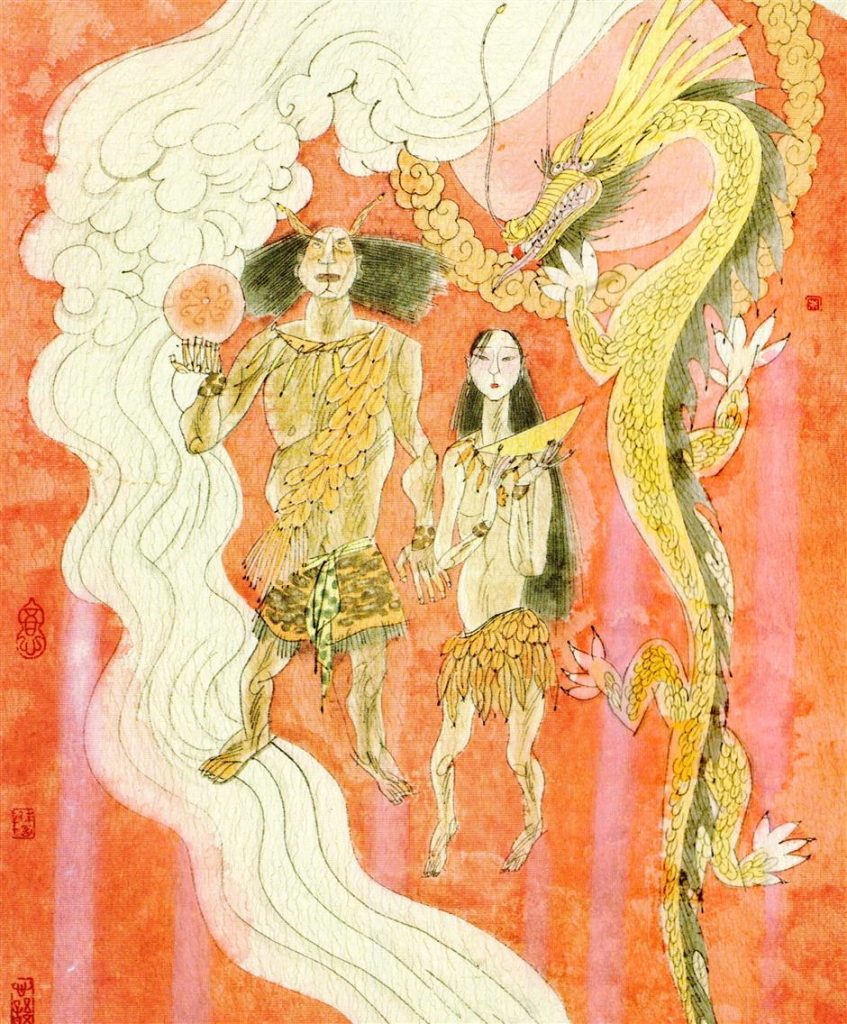
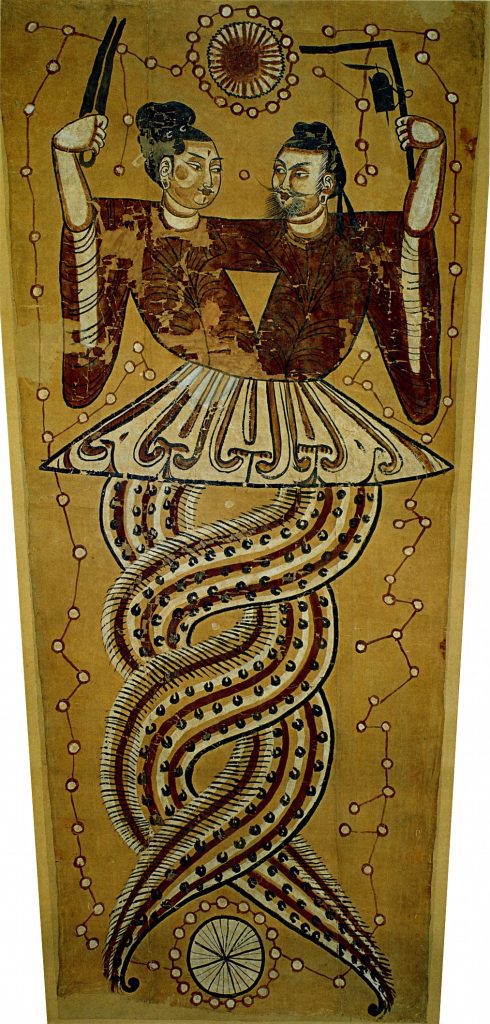
Fuxi’s mythology blends human civilization with the mysteries of the natural and cosmic worlds. Unlike an ordinary human ruler, he is traditionally portrayed as a human-serpent hybrid, with a human head and upper body and the lower body of a serpent. In many representations, he appears alongside his sister and consort, Nüwa, who shares a similar serpentine form. Their intertwined bodies became a powerful image of creation, cosmic harmony, and the connection between humanity and the natural world.
Although the stories surrounding Fuxi developed across different periods and texts, his enduring reputation is that of a wise culture-bringer who gave humanity knowledge, social institutions, and an understanding of the patterns governing the universe.
Physical Traits
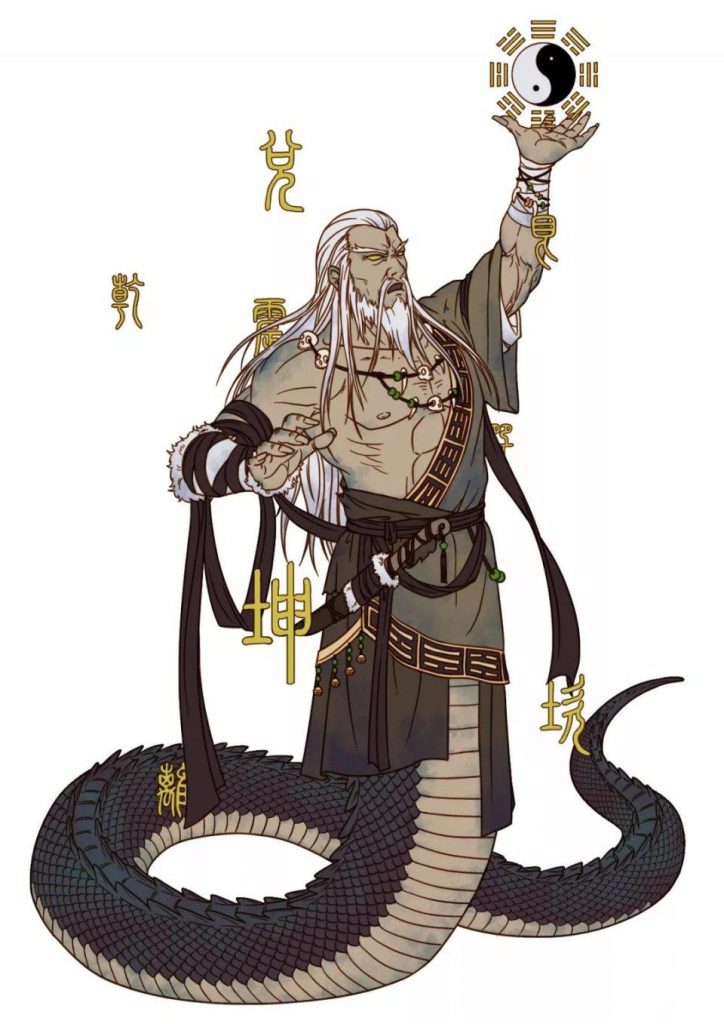
Fuxi’s most distinctive characteristic is his hybrid physical form. Traditional representations frequently show him with a human head and upper body joined to a long, coiled serpent’s body. He should therefore not be described simply as a human or as a dragon. His serpentine form is a defining element of his mythological iconography.
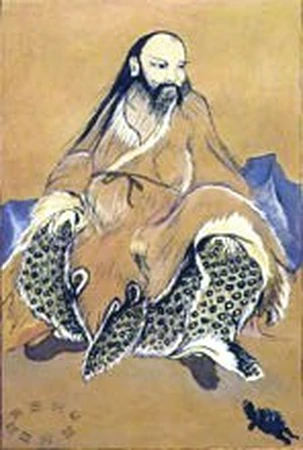
Fuxi is often depicted together with Nüwa, who is similarly represented with a human upper body and serpent-like lower body. In some artworks, their serpentine bodies intertwine, creating a striking visual representation of their close relationship and their complementary roles in creation and cosmic order. Other artistic traditions portray Fuxi in a more human form, particularly as a dignified sage, ruler, or culture hero. Such representations emphasize his wisdom and authority rather than his supernatural appearance.
The serpent-human form also places Fuxi between different realms. His human features connect him with civilization and humanity, while his serpentine body associates him with the natural and supernatural worlds. Rather than indicating that Fuxi was literally a dragon, this hybrid imagery reflects the ancient and symbolic character of his mythology.
Family
Fuxi’s family traditions are closely connected with the mythology of Nüwa. In many accounts, Fuxi and Nüwa are presented as siblings and consorts, although the details of their relationship vary between different traditions. Their mother is commonly identified as Huaxu. One later tradition tells that Huaxu encountered a mysterious giant footprint at Leize, after which she became pregnant with Fuxi. This story emphasizes Fuxi’s extraordinary and supernatural origins, although it should not be confused with traditions concerning the thunder deity Leigong.
Fuxi and Nüwa occupy complementary positions within Chinese mythology. Nüwa is particularly famous for creating humanity and repairing the heavens after a devastating cosmic catastrophe, while Fuxi is primarily remembered as a culture hero who introduced knowledge, technologies, social institutions, and cosmological principles.
Some traditions describe Fuxi and Nüwa as the ancestors of humanity following a great catastrophe, with their union allowing the human race to continue. Other accounts give Nüwa the principal role in creating human beings from clay. These variations reflect the evolving nature of Chinese mythology rather than a single fixed creation story.
Fuxi is also traditionally counted among the Three Sovereigns, a group of primordial rulers or culture heroes whose identities vary between sources. He is therefore less a historical ancestor than a mythological embodiment of the beginnings of organized human civilization.
Other Names
Fuxi is known by several names and titles across Chinese textual and historical traditions. His name appears in different forms because of changes in Chinese writing, pronunciation, and romanization. Fu Xi is the modern Mandarin romanization, while Fu Hsi is the older Wade-Giles form. He is also associated with the names Paoxi (Pao Xi), Baoxi, and Mixi in different traditions.
Fuxi is particularly associated with the title Taihao (Tai Hao), traditionally written in forms such as 太昊 or 太皞. The title is commonly translated along the lines of “Great Brightness” or “Great Luminosity.” It reflects his association with primordial order and cosmic significance. The name Paoxi is especially connected in traditional explanations with Fuxi’s civilizing achievements, including cooking, animal husbandry, and the use of animals for food and sacrifice. These different names and titles demonstrate how Fuxi’s identity developed as different Chinese traditions emphasized different aspects of his character.
Powers and Abilities
Fuxi’s greatest abilities are not portrayed as supernatural combat powers but as divine wisdom, observation, invention, and the ability to teach humanity. He is one of Chinese mythology’s great culture heroes, credited with providing people with knowledge necessary for organized life. Traditional accounts attribute the invention of fishing nets and hunting methods to Fuxi, allowing humans to obtain food more effectively. He is also associated with animal domestication and husbandry, helping humanity move toward a more organized and sustainable way of life.
Fuxi is traditionally credited with establishing marriage and social customs, providing rules that helped regulate relationships within early communities. He is also associated with music and musical instruments, further demonstrating his role as a bringer of civilization. Writing is another important part of his legendary legacy. Some traditional accounts credit Fuxi with introducing written symbols to replace earlier methods such as knotted cords. However, this should not be confused with Cangjie, who is separately remembered in Chinese tradition as the legendary inventor of Chinese characters.
Fuxi’s most profound contribution is his association with the Eight Trigrams, or Bagua. According to traditional accounts, Fuxi contemplated patterns within the natural world and used them to establish the fundamental trigrams. These consisted of combinations of broken and unbroken lines representing fundamental forces and processes of the universe. Later traditions connected Fuxi with the Hetu, or Yellow River Diagram, and with other cosmological revelations. These traditions helped establish him as a figure capable of perceiving the hidden order underlying nature.
The Bagua eventually became closely connected with the Yijing (I Ching), or Book of Changes, although the Yijing itself developed through a long historical process rather than being a book directly written by Fuxi. His legendary association with the trigrams nevertheless made him an important figure in Chinese cosmological and philosophical traditions.
Modern Day Influence
Fuxi remains an important figure in Chinese cultural memory. His reputation as an ancestral culture hero has ensured his continued presence in temples, monuments, paintings, sculptures, literature, festivals, and other forms of cultural expression.
His mythology is particularly significant because it represents the transition from a primordial world into an organized human civilization. Rather than simply ruling over humanity, Fuxi is remembered as someone who taught humanity how to live. Hunting, fishing, animal husbandry, marriage, music, writing, and cosmological knowledge are all presented as steps toward civilization.
The Bagua remains one of the most recognizable elements of Fuxi’s legacy. Its symbols continue to appear in traditional Chinese cosmology, divination, feng shui, and cultural imagery. The trigrams have also influenced martial arts traditions, most famously Baguazhang, whose movements and philosophy draw upon Bagua concepts. Fuxi’s image as a human-serpent being also continues to attract artistic attention. His hybrid form appears in studies and reproductions of ancient Chinese art, particularly representations derived from Han-period traditions in which Fuxi and Nüwa are shown with intertwined serpent bodies.
Ultimately, Fuxi’s lasting importance lies in his role as a mythological bridge between humanity, nature, and the cosmos. His stories transform the basic achievements of civilization into sacred acts: learning to fish becomes a divine gift, establishing marriage becomes the foundation of society, and observing the patterns of nature becomes a path toward understanding the universe. Through these traditions, Fuxi remains one of the most enduring symbols of wisdom, creation, and civilization in Chinese mythology.
Related Images




Sources
Wikipedia. (n.d.). Fuxi. In Wikipedia. Retrieved from https://en.wikipedia.org/wiki/Fuxi
Encyclopaedia Britannica. (n.d.). Fu Xi. Retrieved from https://www.britannica.com/topic/Fu-Xi
Hamilton, M. (2022, December 1). Fuxi. Mythopedia. Retrieved from https://mythopedia.com/topics/fuxi/
Birrell, A. (1993). Chinese Mythology: An Introduction. Johns Hopkins University Press.
Yang, L., & An, D. (2005). Handbook of Chinese Mythology. Oxford University Press.
Christie, A. (1985). Chinese Mythology. Peter Bedrick Books.
Myers, A. (2022). Fu Xi (伏羲): First sovereign of Chinese myth. Research Starters: History, (EBSCOhost)
Frequently Asked Questions
Who is Fuxi in Chinese mythology?
Fuxi is one of the Three Sovereigns and is credited with shaping human civilization. He taught early people essential skills like writing, hunting, fishing, and cooking.
Why is Fuxi often depicted with a serpent or dragon body?
His half-serpent form symbolizes divine origins, transformation, and a connection to natural forces. It highlights his role in bridging the mortal world and cosmic order.
What is Fuxi most famous for creating?
Fuxi is believed to have developed the Bagua (Eight Trigrams), forming the foundation of Chinese philosophy and divination. He also introduced marriage systems and social structure.
What is Fuxi’s relationship with Nüwa?
Fuxi and Nüwa are usually portrayed as sibling-spouses who restored humanity after a great catastrophe. Together, they are creators and protectors of humankind.
How is Fuxi honored today?
Temples and cultural festivals across China continue to venerate Fuxi for his civilizing contributions. He remains a key figure in Taoist and traditional Chinese philosophical teachings.
