

Borobudur Temple : Indonesia’s Majestic Buddhist World Wonder
At a glance
| Description | |
|---|---|
| Mythology | Indonesian Mythology |
| Country | Indonesia |
| Closest airport | Yogyakarta International Airport (YIA) |
| Type | Constructed |
| Accessibility | 10/10 |
Borobudur Temple
Introduction
Borobudur Temple rises from the fertile plains of Central Java as one of humanity’s most remarkable achievements in stone. Built in the 9th century during the Sailendra Dynasty, this monumental structure is the world’s largest Buddhist temple and a masterpiece of ancient Javanese engineering. Constructed from andesite blocks without using mortar, the temple functions as both a pilgrimage center and a symbolic map of the Buddhist cosmos. Its nine stacked terraces and towering central dome reflect a spiritual journey carved into stone, guiding visitors from the realm of desire to the state of enlightenment. Recognized as a UNESCO World Heritage Site, Borobudur Temple draws millions of visitors each year who come not only to admire its architectural beauty but also to experience the quiet power that radiates from its sacred geometry and artistry.
Connection with Mythology
The mythological significance of Borobudur Temple is woven deeply into its structure and symbolism. Designed as a giant mandala, the temple serves as a three-dimensional interpretation of Buddhist cosmology, mirroring the ascent from the earthly world to spiritual liberation. Its lower levels represent Kamadhatu, the realm governed by human desires; the middle galleries illustrate Rupadhatu, where form and discipline guide the seeker; and the summit represents Arupadhatu, a formless state beyond physical limitations.
Myths passed down through Javanese tradition enrich this cosmic blueprint. One prominent legend speaks of Gunadharma, the visionary architect who is said to have designed Borobudur under divine inspiration. According to folklore, he meditated on a nearby hill, visualizing the temple as a cosmic mountain that would harmonize earthly life with celestial order. Another enduring myth claims that spiritual treasures lie hidden beneath the monument, guarded by unseen forces that protect Borobudur from those who approach with greed. These stories, though unverifiable, reinforce the temple’s identity as a living embodiment of Indonesian myth, where Buddhism, indigenous beliefs, and Javanese spirituality interlace seamlessly.
Ways to Get There
Borobudur Temple is located in the Magelang Regency, about 40 kilometers northwest of Yogyakarta, one of Indonesia’s most vibrant cultural cities. Most travellers begin their journey in Yogyakarta, which offers well-connected transportation options. Yogyakarta International Airport receives flights from major Indonesian cities and select international routes, making it the most convenient entry point. From the airport or the city center, visitors can hire private cars, taxis, or rideshare services for a journey of about 1 to 1.5 hours.
Public transportation is also available. Buses from Yogyakarta’s Jombor Terminal run directly to Borobudur, offering a budget-friendly option for independent travellers. Those arriving in Yogyakarta by train from Jakarta, Bandung, or Surabaya can easily continue by bus or taxi to reach the temple. For visitors seeking a more immersive and scenic experience, cycling tours from villages around Magelang have become increasingly popular, allowing travellers to approach Borobudur Temple through rice fields, rivers, and traditional Javanese settlements.
What to Look For
Borobudur Temple offers layers of architectural marvels and spiritual depth, rewarding visitors who take time to explore its details. The temple features 2,672 relief panels, each intricately carved to depict Buddhist teachings, Jataka tales, and scenes from daily life more than a millennium ago. These reliefs serve not only as decorative art but also as an educational guide for pilgrims tracing the Buddha’s path toward enlightenment.
Equally compelling are the 504 Buddha statues arranged across the terraces. Many are placed inside perforated stupas, whose lattice designs create a mesmerizing interplay of shadow and light. At the summit, the grand stupa stands as the symbolic center of the universe, representing ultimate liberation. The temple’s alignment with the surrounding landscape also enhances its spiritual atmosphere. From the top, visitors can glimpse the silhouettes of Mount Merapi and Mount Merbabu, reinforcing the Javanese belief in mountains as sacred anchors between worlds.
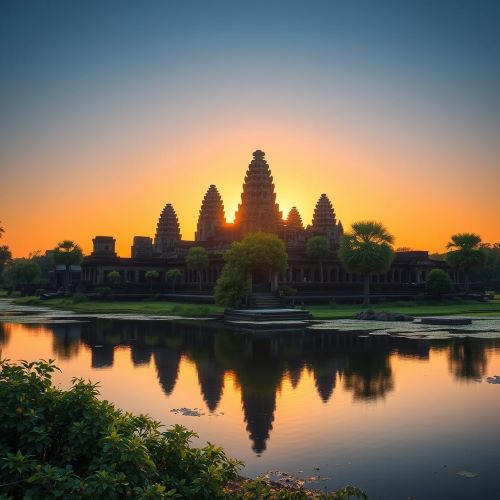
One of the most sought-after experiences at Borobudur Temple is witnessing sunrise. As dawn breaks, mist floats above the Kedu Plain, and the first rays of light reveal the stupas in golden hues. Many visitors describe this moment as profoundly moving—a quiet, timeless encounter with the temple and nature in perfect harmony.
Importance in cultural history
Borobudur Temple holds immense cultural significance in Indonesia and the broader world. Its rediscovery in 1814 by Sir Thomas Stamford Raffles ignited global interest in Southeast Asian archaeology and sparked decades of restoration. The most extensive conservation effort, led by UNESCO in the late 20th century, stabilized the structure and secured its future as a monument of universal value.
Culturally, Borobudur represents a pinnacle of classical Javanese civilization, where local craftsmanship merged with Indian Buddhist influences to create a unique architectural language. The temple’s intricate artistic program reveals much about ancient Javanese society, from its religious rituals to its moral philosophy. Today, Borobudur remains a vital spiritual center, especially during Vesak Day, when thousands of Buddhists gather to celebrate the Buddha’s birth, enlightenment, and passing. The annual procession from Mendut Temple to Borobudur transforms the entire region into a sacred landscape, reaffirming the temple’s continuing relevance in modern Indonesian life.
In addition to its religious importance, Borobudur Temple has shaped Indonesian cultural identity. It appears on banknotes, inspires contemporary art and architecture, and serves as a symbol of national pride. Its presence anchors Indonesia’s narrative as a crossroads of civilizations and a custodian of world heritage.
Best time to travel
The ideal time to visit Borobudur Temple is during the dry season, which runs from April to October. These months offer clear skies, making it easier to explore the temple comfortably and enjoy sweeping views from the upper terraces. Sunrise visits are especially rewarding during this period, as the interplay of morning light and mist creates an unforgettable atmosphere.
Early morning visits also help avoid heat and crowds, which build up throughout the day. Those planning to attend Vesak Day celebrations should aim for May or June, depending on the lunar calendar, when the temple becomes the epicenter of vibrant spiritual ceremonies. While the rainy season from November to March brings fewer visitors, heavy downpours can limit exploration and photography. For the best overall experience, the dry season remains the most favourable time to appreciate Borobudur Temple’s grandeur.




Source
Indonesia Travel. (n.d.). The Borobudur Temple: Indonesia’s main tourism attraction. https://www.indonesia.travel/gb/en/travel-ideas/heritage/candi-borobudur/
In Journey Destination. (2018, July 11). Cosmos mythology and Borobudur Temple. https://borobudur.injourneydestination.id/en/cosmos-mythology-borobudur-temple/
Travel Authentic Asia. (2024, October 31). Introduction to Borobudur Temple. https://www.travelauthenticasia.com/indonesia-destinations/borobudur-temple.aspx
Britannica. (n.d.). Borobudur | UNESCO World Heritage Site, Java, Indonesia. https://www.britannica.com/topic/Borobudur
UNESCO. (n.d.). Borobudur Temple Compounds. https://whc.unesco.org/en/list/592/
Wikipedia. (n.d.). Borobudur. https://en.wikipedia.org/wiki/Borobudur
Travel Triangle. (2023, May 18). Borobudur Temple: Largest Buddhist monument in the world. https://traveltriangle.com/blog/borobudur-temple/
Frequently Asked Questions
What makes Borobudur Temple unique?
Borobudur Temple is the world’s largest Buddhist temple and is built as a massive three-dimensional mandala representing the Buddhist cosmos.
How old is Borobudur Temple?
The temple was constructed in the 9th century during the Sailendra Dynasty, making it over 1,200 years old.
What is the meaning behind Borobudur’s design?
Its tiered structure symbolizes the journey toward enlightenment, progressing from the realms of desire to formless liberation.
Can visitors still climb Borobudur Temple?
Physical access policies change due to preservation needs, but visitors are usually allowed to ascend with strict regulations in place.
Why is Borobudur Temple important to Buddhism?
It serves as a major pilgrimage site, especially during Vesak Day, and visually narrates the Buddha’s teachings through its reliefs and statues.