

Bakeneko : The Supernatural Cat of Japanese Folklore
Listen
At a glance
| Description | |
|---|---|
| Origin | Japanese Mythology |
| Classification | Spirits |
| Family Members | N/A |
| Region | Japan |
| Associated With | Shapeshifting, Unpredictability |
Bakeneko
Introduction
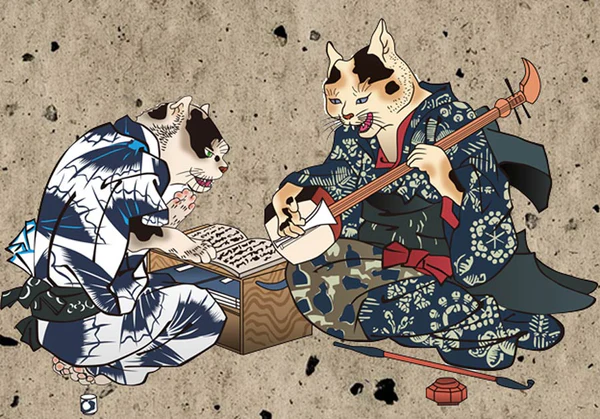
The Bakeneko is one of the most captivating yōkai in Japanese folklore, embodying the uncanny transformation of an ordinary household cat into a supernatural being. First gaining prominence during the Edo period, the Bakeneko became a central figure in ghost stories, kabuki plays, and illustrated scrolls that explored the mysterious behavior of cats. As Japanese society urbanized and cats became common domestic companions, their nocturnal habits, independence and seemingly knowing expressions fed into a cultural blend of affection and suspicion. The Bakeneko represents this tension perfectly—lovable yet unpredictable, a creature that could quietly shift from a family pet into a powerful yokai with motives far beyond human understanding. Its mythology reflects longstanding beliefs that animals, particularly cats, possess spiritual depth capable of evolving into something extraordinary.
Physical Traits
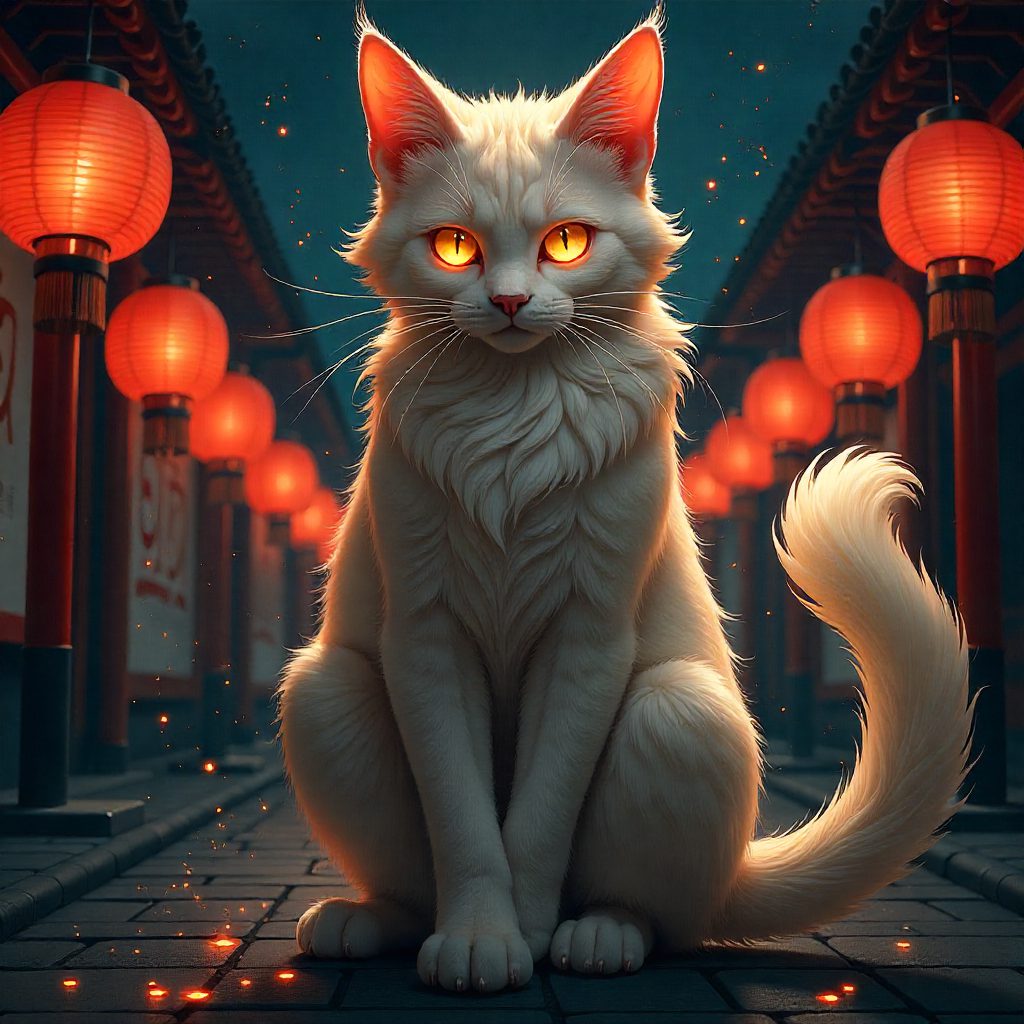
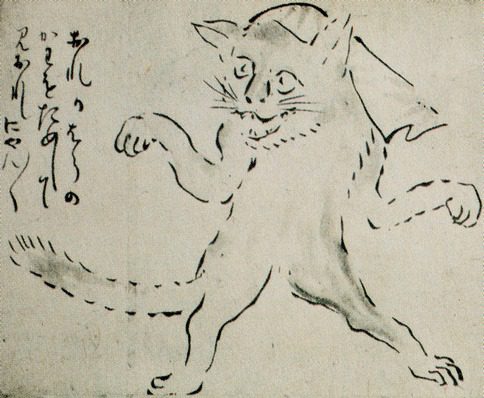
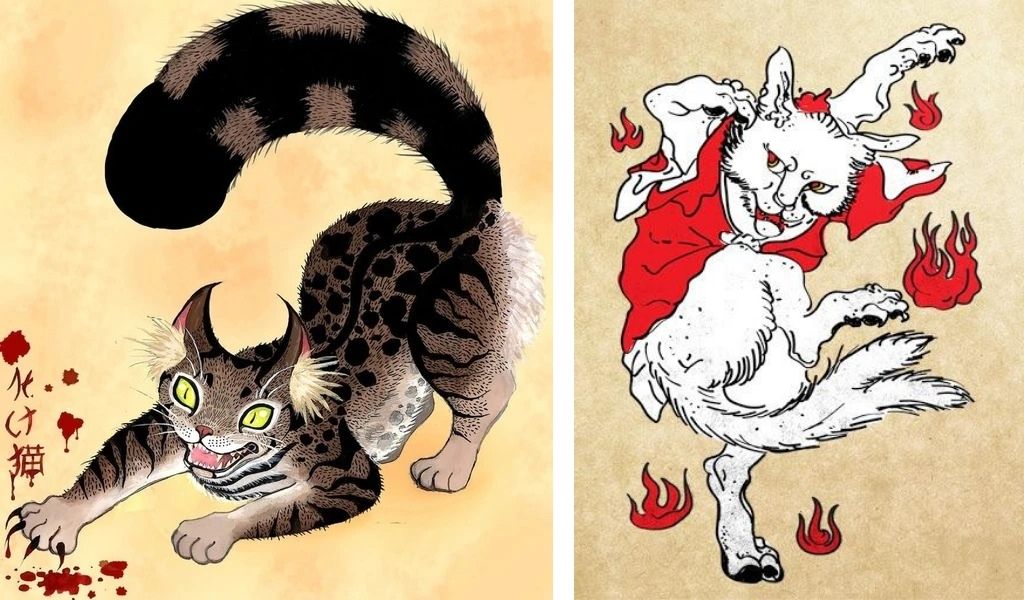
Folklore describes the Bakeneko as beginning life as a normal domestic cat, only revealing its supernatural nature after reaching a certain age, size, or temperament. While there is no single transformation rule across Japan, many stories claim that cats older than thirteen years or those that grow unusually large are more likely to become Bakeneko. Others suggest that a cat’s tail length plays a major role; exceptionally long tails were once believed to carry spiritual energy, and because of this, people were historically wary of cats with tails that seemed too expressive or intelligent. Unlike the Nekomata, which famously has a forked tail, the Bakeneko usually retains a single tail, although its movements might appear unnervingly humanlike. Additional signs of transformation appear gradually: the cat may start standing upright, vocalizing in ways that imitate humans, or moving with an eerie awareness that suggests it has crossed the threshold from animal to yokai. These traits emphasize the liminal nature of the Bakeneko—a being that moves effortlessly between the familiar and the supernatural.
Family
The Bakeneko is not linked to any divine genealogy but instead emerges from the everyday world of domestic animals. It belongs to the broader group of kaibyō, the supernatural cats of Japanese folklore, a category that includes both protective and malevolent spirits. In stories, a Bakeneko often originates as a cherished household pet that undergoes a spiritual evolution due to age, emotional trauma, mistreatment, or lingering resentment. This intimate connection to the human world gives the Bakeneko a unique narrative arc compared to other yokai; it grows from companionship rather than mythical origins. Its closest folkloric relative is the Nekomata, considered a more ancient and dangerous cat spirit, but the two share the same symbolic roots—cats as creatures of mystery who can absorb human emotions and respond in startling ways. This idea reinforced the belief that one’s treatment of animals had spiritual consequences, giving the Bakeneko a moral dimension that resonated deeply in Edo-period society.
Other names
While “Bakeneko” literally means “changed cat,” folklore preserves a range of alternative terms that reflect regional interpretations of this yokai. In some areas, it is referred to as kaibyō, meaning “mysterious cat,” a broader designation used for all supernatural felines. Other places use the term obake neko, translating simply to “ghost cat,” emphasizing its ability to shapeshift or haunt the living. Although often confused with the Nekomata, the Bakeneko is not always portrayed as hostile and does not inherently possess a split tail, making it a distinct figure within Japan’s cat mythology. The variety of names across Japan highlights how deeply embedded cat lore is in local storytelling traditions and how communities adapted the Bakeneko myth to suit their cultural narratives
Powers and Abilities
The Bakeneko is renowned for powers that range from mischievous to terrifying, giving it a reputation as one of the most unpredictable yokai. Chief among its abilities is shapeshifting, often into the human form of its owner or a household member. This transformation allows the Bakeneko to deceive, manipulate, or exact revenge for past mistreatment. Some legends claim Bakeneko can speak human language fluently, using conversation to spread rumors or cause social chaos. Others attribute necromantic abilities to them, such as controlling corpses or reenacting the voices of the dead. Fire manipulation is another common theme, especially the summoning of hitodama—floating ghostly flames that appear during supernatural events. More sinister tales describe Bakeneko swallowing their owners and assuming their identity, while gentler stories portray them as guardians who protect households from threats or repay kindness with loyalty. The most famous example is the Nabeshima Bakeneko Disturbance of Saga Prefecture, where a vengeful Bakeneko haunted a ruling clan, a tale still recounted as one of Japan’s classic supernatural legends.
Modern Day Influence
The Bakeneko continues to flourish in modern Japanese culture, evolving from folklore into iconic media symbolism. In Tokyo’s Kagurazaka district, the annual Bakeneko Parade transforms the streets into a celebration of cat yokai, with thousands of participants dressed in feline-inspired costumes. Literature, manga, and anime regularly reinterpret the Bakeneko, presenting it in roles ranging from eerie antagonist to comedic companion, allowing contemporary audiences to engage with its mythology in fresh ways. Films often rely on the Bakeneko’s unsettling duality to evoke suspense, while video games incorporate it as a shapeshifting spirit with unpredictable motives. Even outside entertainment, the Bakeneko influences modern Japanese aesthetics, appearing in art, merchandise, and urban folklore discussions. Though the friendly Maneki-neko is a different mythic symbol, its rise in popular culture further reflects Japan’s enduring fascination with cats as beings that straddle luck, mystery, and supernatural potential. Through these reinterpretations, the Bakeneko remains a compelling reminder of how folklore adapts to new eras while keeping its ancient spirit alive.
Related Images




Source
Japan Experience. (2024, November 12). Bakeneko or the legend of the cat-monster. https://www.japan-experience.com/prepare-trip/know/understand-japan/bakeneko-legend-of-the-monster-cat
Wikipedia contributors. (2006, June 15). Bakeneko. Wikipedia. https://en.wikipedia.org/wiki/Bakeneko
Japan Avenue. (2023, August 27). Bakeneko, the fearsome cat demon from Japanese mythology! https://japan-avenue.com/blogs/japan/bakeneko
The Japan Box. (n.d.). Bakeneko. https://thejapanbox.com/blogs/japanese-mythology/bakeneko
Bokksu. (2024, August 6). The enigmatic cat yokai: Unveiling the bakeneko’s mysteries in Japanese lore. https://www.bokksu.com/blogs/news/the-enigmatic-cat-yokai-unveiling-the-bakenekos-mysteries-in-japanese-lore
Yokai.com. (2023, January 8). Bakeneko. https://yokai.com/bakeneko/
Foster, M. D. (2009). Pandemonium and parade: Japanese monsters in the culture of yōkai. University of California Press.
Komatsu, K. (1999). An introduction to yōkai culture: Monsters, ghosts, and mysterious creatures in Japanese tradition. International House of Japan.
Reider, N. T. (2010). Japanese demon lore: Oni from ancient times to the present. Utah State University Press.
Yoda, H., & Alt, M. (2013). Yōkai attack! The Japanese monster survival guide. Tuttle Publishing.
Meyer, M. (2015). The night parade of one hundred demons: A field guide to Japanese yōkai. Dark Horse Comics.
Frequently Asked Questions
What is a Bakeneko in Japanese folklore?
A Bakeneko is a supernatural cat yokai believed to gain shapeshifting powers, speech, and magical abilities after reaching old age or growing unusually large.
How does a Bakeneko differ from a Nekomata?
A Bakeneko typically has a single tail, while a Nekomata has a distinct split tail and is considered more powerful and malevolent.
What powers does a Bakeneko possess?
It can shapeshift, speak human language, manipulate fire, summon ghostly flames, curse humans, and in some stories control corpses.
Why did people believe cats became Bakeneko?
Cats’ mysterious behavior—particularly their nocturnal habits, expressive tails, and independence—contributed to the belief that older or larger cats gained supernatural abilities.
Is the Bakeneko still part of Japanese culture today?
Yes, the Bakeneko appears in festivals, anime, manga, films, and modern art, remaining an enduring symbol of Japan’s fascination with supernatural cats.