

Eigigu : The Celestial Wife of Nauru’s Ancient Traditions
Listen
At a glance
| Description | |
|---|---|
| Origin | Nauru Mythology |
| Classification | Mortals |
| Family Members | Maramen (Husband) |
| Region | Nauru |
| Associated With | Moon |
Eigigu
Introduction
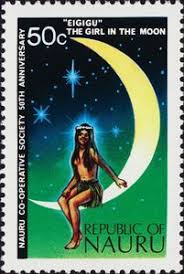
Eigigu occupies a unique place in Nauruan mythology, standing at the intersection of cosmic symbolism, feminine identity, and ancestral memory. Known primarily as the wife of the moon deity Maramen, Eigigu’s story reflects how the people of Nauru perceived the relationship between the natural world and spiritual forces. Her narrative forms part of the island’s pre-Christian belief system, where celestial bodies were not distant objects but active participants shaping human life. Although traditional Nauruan religion declined with the arrival of Christianity, the figure of Eigigu continues to hold cultural value. Her story survives in oral traditions, community retellings, and scholarly documentation, reminding modern Nauruans of their connection to ancient cosmological rhythms. Through her role as a celestial bride and symbolic mother figure, Eigigu remains a vital link between the island’s past and its evolving cultural identity.
Physical Traits
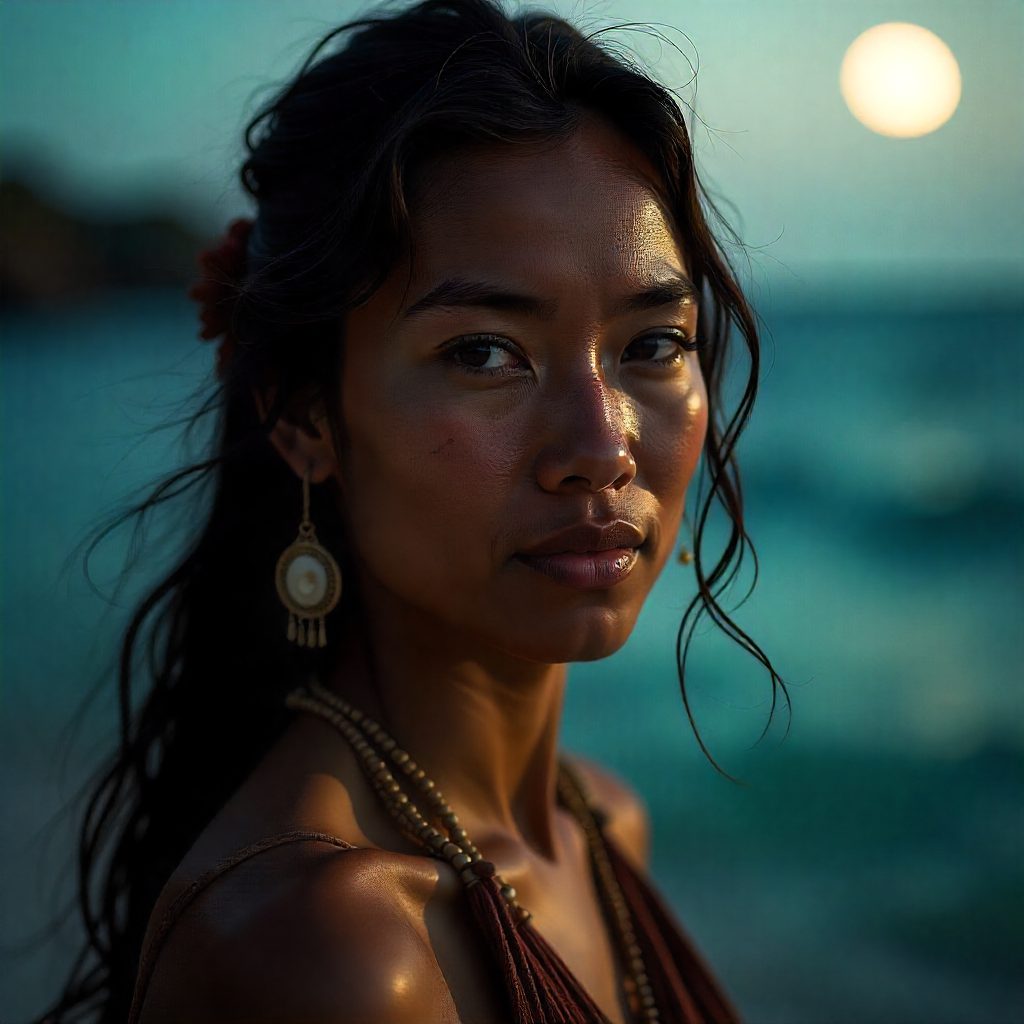
Historical sources on Eigigu emphasize symbolic representation more than specific physical features. She is generally portrayed as a young woman whose beauty is tied to the cycles of life, fertility, and natural transitions. In traditional stories, her association with the moon imbues her with a radiant, almost luminous quality, suggesting a figure who exists both within and beyond earthly boundaries. Her physical presence is intertwined with themes of womanhood, particularly in tales linking her to menstruation and the nurturing of daughters. Rather than portraying her as a supernatural being with exaggerated traits, Nauruan mythology positions her as a graceful, life-affirming figure whose beauty reflects natural balance and continuity.
Family
Eigigu’s role within her family structure is central to understanding her mythological significance. She is most widely known as the wife of Maramen, the moon deity whose movement across the sky influences tides and natural cycles. In some versions of the oral tradition, she is instead presented as the wife of a human figure named Gadia, showing how myths often shift across generations and storytellers. A striking feature of her story is the presence of her three daughters, each also named Eigigu. This repetition of names is not accidental; it reflects a cultural practice found in several Pacific island traditions where personal names carry ancestral weight and reinforce lineage. The daughters’ transition into womanhood—marked through stories involving menstruation and adornment—plays an important role in connecting familial bonds with cultural ritual. Her family, therefore, functions not just as narrative characters but as symbolic carriers of identity, continuity, and generational memory.
Other names
Unlike many mythological figures across Oceania, Eigigu does not possess a long list of alternative names or titles. Instead, her name stands consistent across most surviving oral accounts. What varies, however, is the repetition of her name across her daughters, creating an onomastic pattern deeply rooted in cultural symbolism. This pattern echoes the cyclical nature of the moon, reflecting renewal, repetition, and the passing of identity from one generation to the next. In some interpretations, Eigigu’s name itself becomes an emblem of continuity, linking her personal story to the broader rhythm of cosmic cycles that govern Nauruan cosmology.
Powers and Abilities
Eigigu’s abilities reflect her position as a figure who bridges the human and celestial realms. While she is not portrayed as a deity with overwhelming supernatural power, her union with the moon places her within the cosmic order. Her influence is connected to the regulation of life cycles, fertility, and symbolic transformations in nature. One of the most well-known stories attributes to her the ability to heal, particularly in the account where she restores sight to an elderly woman through a moon-guided spell. Her powers are subtle rather than forceful, emphasizing guidance, nurturing, and wisdom instead of overt displays of divinity. This aligns with many Oceanic mythological traditions, where spiritual influence is often conveyed through natural processes and relational roles rather than dramatic supernatural feats.
Modern Day Influence
Although Nauru’s traditional religion has largely faded from everyday practice, Eigigu remains an important cultural symbol within the island’s collective memory. Her story appears in cultural preservation efforts, academic research, and educational materials that document the indigenous worldview of Nauru before colonial disruption. As Nauru navigates challenges related to identity, environment, and globalization, figures like Eigigu help reinforce pride in ancestral heritage. She is increasingly referenced in discussions about gender roles, indigenous cosmology, and the importance of protecting oral traditions in the Pacific. In modern interpretations, Eigigu often represents resilience, feminine strength, and the enduring connection between the Nauruan people and the celestial forces that once shaped their mythology. Her narrative continues to inspire artists, cultural scholars, and community leaders who seek to keep the island’s mythological heritage alive for future generations.
Related Images


Source
Government of Nauru. (2011). The Story of Eigigu. Retrieved from https://www.nauru.gov.nr/about-nauru/nauruans’-stories/the-story-of-eigigu.aspx
Wikipedia contributors. (2003, December 6). Nauruan indigenous religion. Wikipedia. https://en.wikipedia.org/wiki/Nauruan_indigenous_religion
Kienast, B. (1965). Mesopotamian Gods and Demons in the Old Babylonian Period. Retrieved from https://oracc.museum.upenn.edu/amgg/listofdeities/igigi/index.html
Gilwhalley, A. (2024). Influence of Japanese Edo Period Art (Ukiyo-e) on Modern Media. Uniselinus Education. https://www.uniselinus.education/sites/default/files/2024-04/andrew%20gilwhalley.pdf
Government of the Republic of Nauru. (n.d.). The story of Eigigu. Retrieved from https://www.nauru.gov.nr/about-nauru/nauruans’-stories/the-story-of-eigigu.aspx
Government of the Republic of Nauru. (n.d.). Nauruan stories. Retrieved from http://naurugov.nr/about-nauru/nauruans’-stories.aspx
Grimble, A. (1972). Myths and legends from the Pacific Islands. London: Routledge.
Krämer, A. (1938). Die Samoa-Inseln: Volkstümliches aus Samoa. Stuttgart: Strecker & Schröder.
Lewis, D. (1994). We, the Navigators: The Ancient Art of Polynesian Navigation. Honolulu: University of Hawai‘i Press.
Rutherford, N. (1996). Pacific myths and legends. Auckland: Heinemann.
Frequently Asked Questions
Who is Eigigu in Nauruan mythology?
Eigigu is a central figure in Nauruan mythology, known as the wife of the moon deity Maramen and a symbol of femininity, continuity, and cosmic harmony.
What is the relationship between Eigigu and the moon?
Eigigu is traditionally described as the moon’s wife, linking her story to lunar cycles, celestial symbolism, and natural rhythms important in Nauruan cosmology.
Does Eigigu have supernatural powers?
Her powers are subtle and symbolic, including healing abilities and influence over natural cycles through her connection with the moon.
Why are Eigigu’s daughters also named Eigigu?
The repetition of her name across generations reflects a cultural motif of continuity, lineage, and the cyclical nature of life in Pacific oral traditions.
Is Eigigu still important in modern Nauruan culture?
Yes. Although the indigenous religion has declined, Eigigu’s story remains an important part of Nauru’s cultural identity, preserved through oral histories and educational initiatives.
