
Jormungandr : The Ultimate Serpent
Listen
At a glance
| Description | |
|---|---|
| Origin | Norse Mythology |
| Classification | Animals |
| Family Members | Loki (Father), Angrboda (Mother), Fenrir, Hel (Siblings) |
| Region | Sweden, Norway, Iceland, Greenland, Denmark, Finland |
| Associated With | End of Time |
Jormungandr
Introduction
Jormungandr, also referred to as the Midgard Serpent or World Serpent, is a captivating entity in Norse mythology. This colossal sea serpent, believed to be of such magnitude that it encircles the entire world, symbolizes the primal forces of nature and the inevitable Ragnarok, the prophesied end of the world. Coiled beneath the ocean’s depths, Jormungandr embodies the untamed chaos of existence, looming as a harbinger of cataclysmic events.
Physical Traits
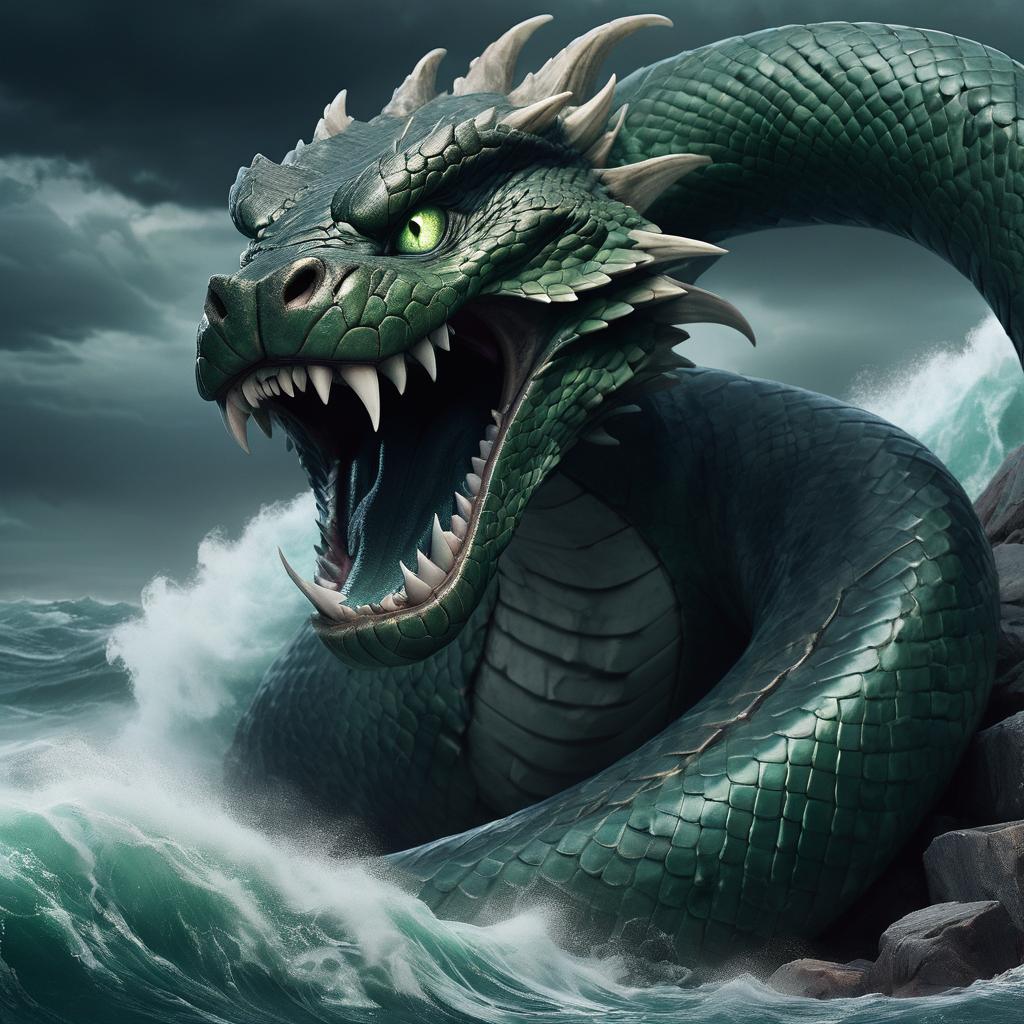
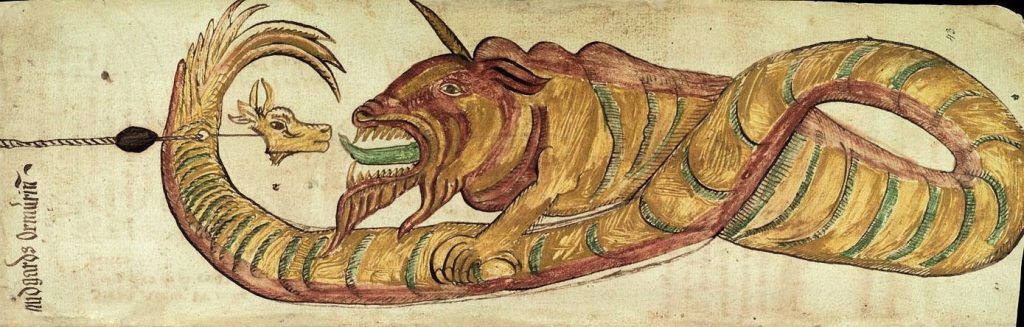
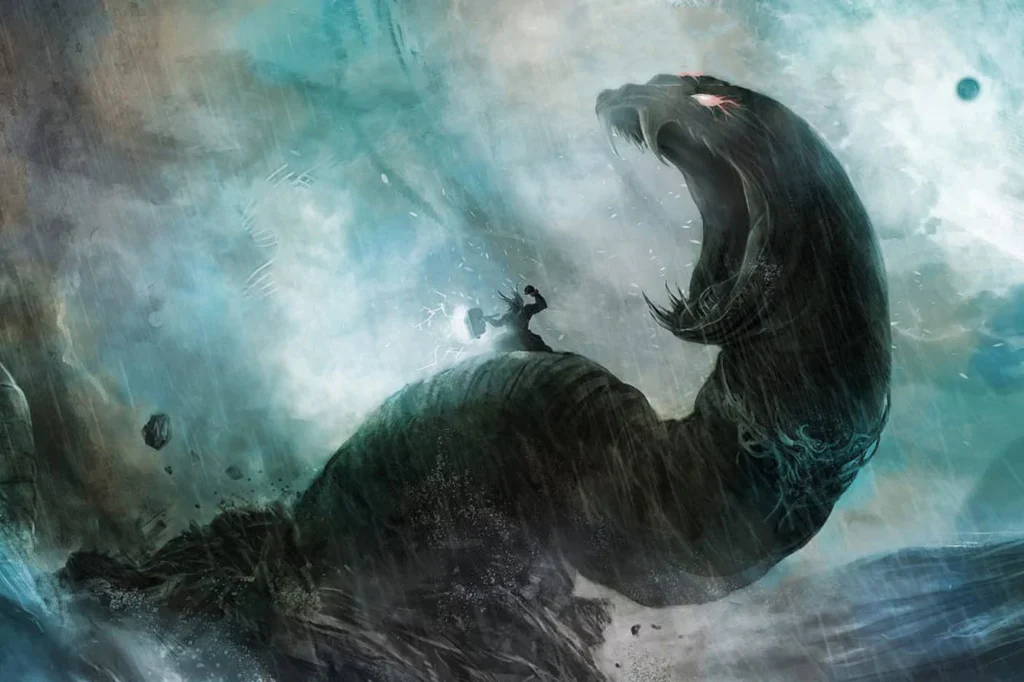
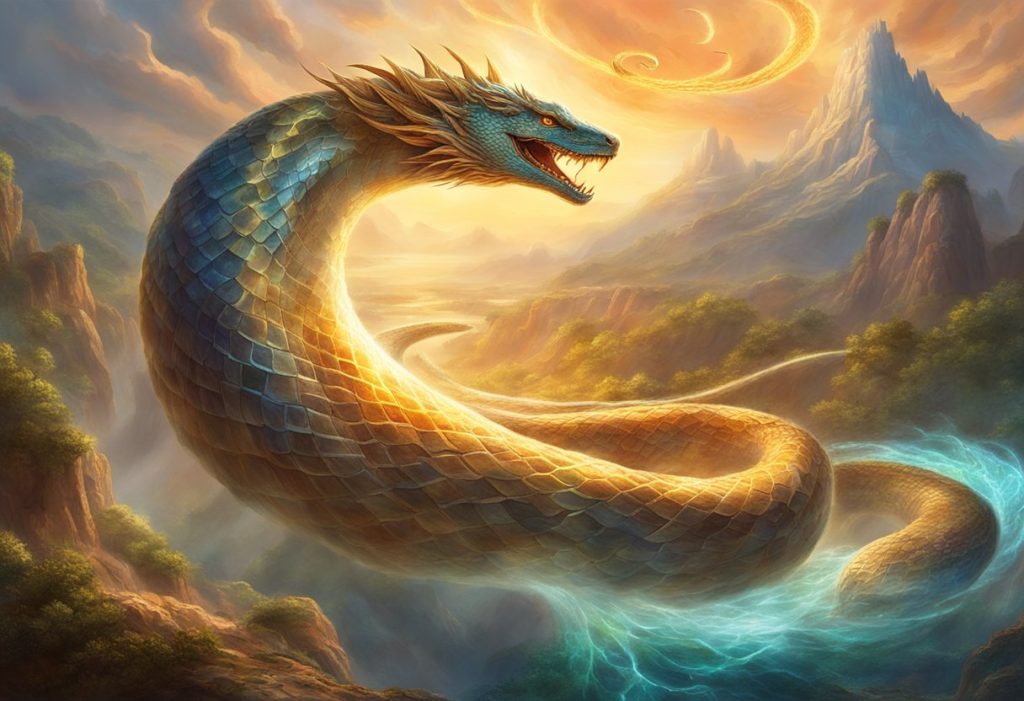
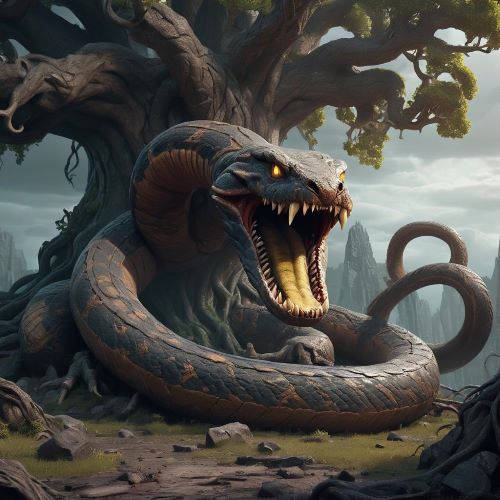
Jormungandr, depicted as an immense serpent with scales resembling darkened jewels, coils endlessly in the ocean’s depths, awaiting cosmic prophecy. Legend speaks of its venomous breath staining waters and its tail’s ability to incite tempests and tidal waves, asserting dominion over the chaotic sea forces. Described as a monstrous serpent of unimaginable size, it encircles the world, forming an ouroboros – a symbol of eternity. Its glistening, greenish-black scales reflect its oceanic habitat, while its strength, noted in the Prose Edda, presents a formidable opponent even to the gods of Asgard.
Family
Jormungandr, born from the union of Loki, the trickster god, and the giantess Angrboda, shares his lineage with two siblings: the wolf Fenrir and the goddess Hel. This familial connection underscores Jormungandr’s dual nature as a harbinger of both destruction and renewal, embodying the cyclical rhythms of Norse mythology. As the middle child of Loki and Angrboda, alongside Fenrir and Hel, Jormungandr is destined to play a pivotal role in Ragnarok, the apocalyptic event of Norse mythology. This lineage ties Jormungandr to potent figures in Norse lore, marking him as a creature born from chaos with a crucial role in the world’s fate.
Other names
Besides Jormungandr and the Midgard Serpent, this creature is also recognized as the World Serpent. In Old Norse, ‘Jormungandr’ translates to ‘huge monster,’ aptly capturing its immense size and power. Various epithets and titles in Norse literature, such as “The Midgard Serpent” and “The Ocean Encircler,” reveal different facets of Jormungandr’s character and significance, enriching our understanding of its enduring legacy. The name “Jormungandr” itself holds profound meaning, translating to “the vast encircling one” in Old Norse, reflecting its monstrous size and its role as the serpent encircling the world. Additionally, referred to as the “World Serpent,” it solidifies its position as a primordial force shaping the world’s destiny.
Powers and Abilities
Jormungandr, with its immense size and strength, holds the power to trigger cataclysmic events, marking the onset of Ragnarok, the world’s end, by releasing its tail. Its venom is lethal, striking fear even into the hearts of gods. As a primordial entity, Jormungandr transcends mortal understanding, symbolizing the eternal struggle between order and chaos. Legends depict its venom as capable of corroding the mightiest beings and its ability to unleash devastation with a single thrash. Despite its formidable nature, Jormungandr isn’t solely a force of destruction but rather an integral part of the cosmic drama, orchestrating creation and dissolution. Endowed with immense strength, Jormungandr encircles the world and commands the forces of the sea, wielding potent venom that can subdue even the mightiest gods.
Its connection to the ocean grants mastery over waves and sea creatures, embodying the untamed chaos beneath the world’s surface. Beyond physical prowess, Jormungandr, like its siblings, symbolizes disruptive forces challenging established order, heralding Ragnarok’s upheaval and eventual world destruction. Some interpretations view it not merely as a harbinger of doom but also as an agent of transformation, representing the cyclic nature of existence where endings pave the path for new beginnings.
Modern Day Influence
Rooted in ancient mythology, the legend of Jormungandr continues to inspire artists, writers, and thinkers worldwide. Its serpentine form and apocalyptic themes permeate literature, film, video games, and graphic novels. Additionally, its resonance with environmental and existential concerns sparks reflection on humanity’s relationship with nature and the threat of global catastrophe. Jormungandr transcends its mythic origins, becoming a timeless symbol of existential dread and the enduring power of myth to illuminate the human condition.
Today, Jormungandr captivates audiences across various media, from fantasy novels to movies and video games. Its image evokes awe, reminding us of nature’s hidden power and mystery. The tale underscores the delicate balance between order and chaos, highlighting the universe’s potential for both destruction and renewal. In modern popular culture, particularly in fantasy literature and video games, Jormungandr symbolizes insurmountable challenges and impending doom. Its image also adorns artwork and jewelry, serving as a potent emblem of Norse mythology.
Related Images

Sources
Sturluson, S. (1987). The Prose Edda (J. L. Byock, Trans.). University of California Press. (Original work published ca. 13th century)
Larrington, C. (Trans.). (1996). The Poetic Edda. Oxford University Press.
Michelsen, P. (2021, August 4). Jörmungandr – The Midgard Serpent of Norse Mythology. World History Encyclopedia. https://www.worldhistory.org/Jormungandr/
Crawford, J. (n.d.). Jörmungandr (The Midgard Serpent). Norse Mythology for Smart People. https://norse-mythology.org/gods-and-creatures/giants/jormungand/
The Collector. (2022, September 3). Jörmungandr: The Midgard Serpent of Norse Mythology. TheCollector.com. https://www.thecollector.com/jormungandr-midgard-serpent/
Centre of Excellence. (2023, February 10). Jörmungandr in Norse Mythology: Myths, Powers, and Symbols. https://www.centreofexcellence.com/jormungandr-in-norse-mythology/
Wikipedia contributors. (2025, October 20). Jörmungandr. In Wikipedia, The Free Encyclopedia. https://en.wikipedia.org/wiki/J%C3%B6rmungandr
Ancient Origins. (2023, May 9). Jörmungandr: The Misunderstood Midgard Serpent of Norse Mythology. Ancient-Origins.net. https://www.ancient-origins.net/myths-legends-europe/jormungandr-0017235
Norse Mythology for Smart People. (n.d.). Sources – The Poetic and Prose Edda. https://norse-mythology.org/sources/
Frequently Asked Questions
Who is Jörmungandr in Norse mythology?
Jörmungandr, also known as the Midgard Serpent or World Serpent, is a massive sea serpent from Norse mythology. Born to Loki and the giantess Angrboda, he is so large that he encircles the entire world, biting his own tail. When Jörmungandr releases his grip, it signals the beginning of Ragnarök — the end of the world.
What does Jörmungandr symbolize?
Jörmungandr symbolizes the eternal cycle of creation and destruction. His circular form, biting his own tail, represents balance and the interconnectedness of life and death. In Norse cosmology, he embodies chaos, the forces of nature, and the inevitability of change — reminding humanity that even gods are subject to fate.
How does Jörmungandr die in Norse mythology?
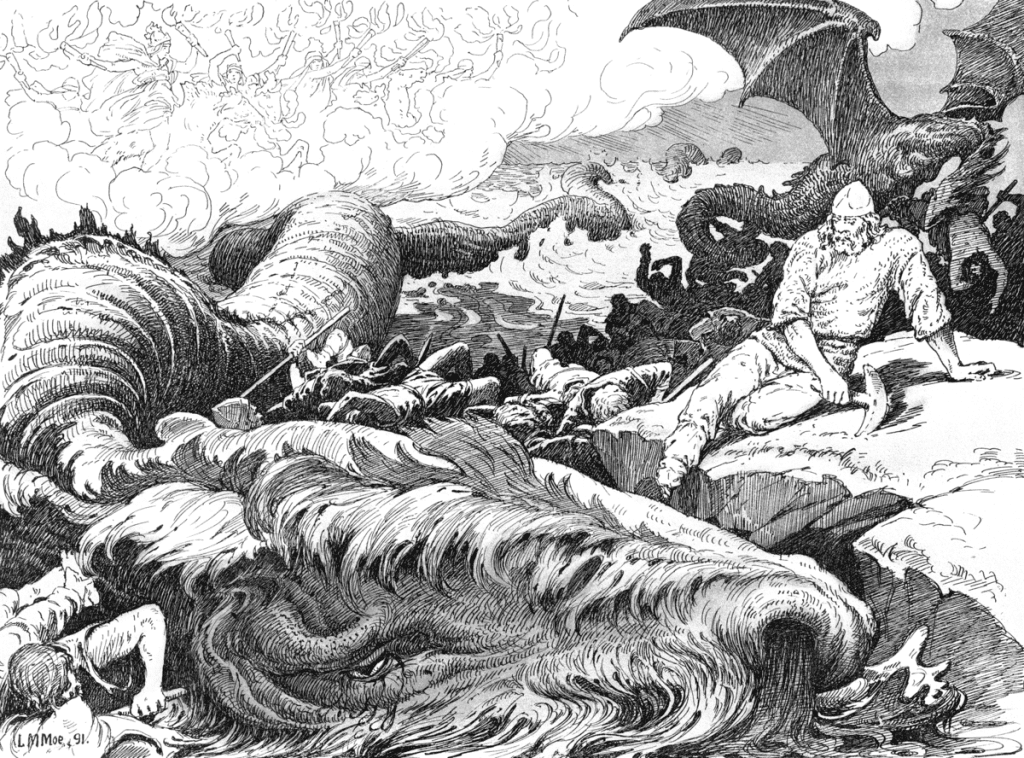
According to Norse legend, Jörmungandr meets his end during Ragnarök. He battles the thunder god Thor, and though Thor kills the serpent with his hammer Mjölnir, he is poisoned by Jörmungandr’s venom and dies shortly after. Their mutual destruction marks one of the key turning points of the apocalyptic prophecy.
What are Jörmungandr’s powers and abilities?
Jörmungandr possesses immense strength, control over the ocean, and venom potent enough to kill gods. His movements can cause tsunamis and storms, and his presence is tied to the world’s balance. As a primordial being, Jörmungandr embodies natural chaos and cosmic power that even the Aesir gods fear.
How is Jörmungandr represented in modern culture?
Jörmungandr continues to appear in modern media, including films, books, video games, and artwork. He is prominently featured in God of War, Thor: Ragnarok, and various fantasy novels. His image often symbolizes the tension between order and chaos, making him one of mythology’s most enduring and visually striking creatures.

Pingback: World Serpent Norse Mythology: Exploring the Mythical Sea Creature