Chaga Mythology
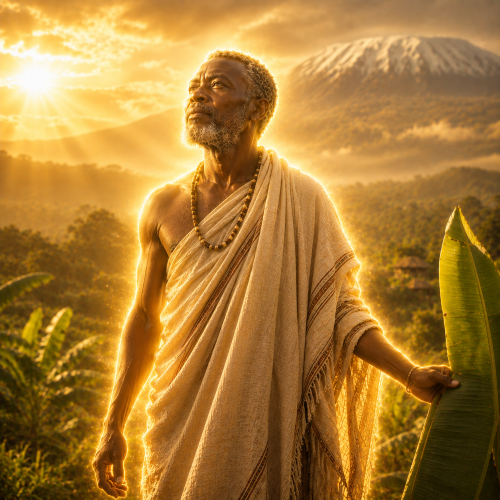
Chaga mythology reflects the traditional beliefs, spiritual practices, and oral traditions of the Chaga people, who inhabit the fertile slopes of Mount Kilimanjaro in northern Tanzania. Shaped by their history, environment, and social customs, these traditions explore the relationship between humanity, the spiritual world, and the forces that influence everyday life. At the centre of traditional Chaga religion is Ruwa, a powerful deity associated with liberation, protection, and sustenance. The religious heritage of the Chaga also includes ancestral beliefs, spiritual practices, and oral narratives that have helped preserve cultural knowledge across generations.
Ruwa occupies a prominent position in Chaga religious traditions. His name is associated with the sun, although historical accounts do not always identify the deity directly with the physical sun. Rather than describing Ruwa exclusively as the creator of the universe, traditional accounts emphasise his importance as a source of sustenance and protection. His role reflects the belief that human well-being depends on powers beyond individual control. The prominence of Ruwa demonstrates the importance of divine authority in traditional Chaga understandings of existence, although the precise details of these beliefs vary across historical accounts.
The spiritual world of the Chaga extends beyond Ruwa to include beliefs concerning ancestral spirits and other supernatural beings. Ancestors have an important place in traditional religious practices, particularly in relation to family relationships, kinship, and the connection between the living and the dead. Rituals and offerings have historically helped maintain these relationships, expressing respect for those who came before and acknowledging their continuing significance within family and community life. These practices also reflect the importance of ancestry in Chaga social organisation and cultural identity.
Traditional Chaga religious beliefs developed within the distinctive environment of Mount Kilimanjaro. The mountain’s fertile volcanic slopes, varied climate, and abundant water sources have supported agriculture and settlement for generations. Although the natural environment provides an important context for understanding Chaga culture, specific religious associations with weather, soil fertility, or agricultural success should be distinguished from broader interpretations of the community’s relationship with nature. Their traditional beliefs form part of a wider cultural system shaped by the landscape, social relationships, and inherited knowledge.
Oral traditions are another important aspect of Chaga cultural heritage. Stories, legends, and accounts of customary practices have helped transmit knowledge between generations, preserving memories of the past and explaining aspects of social life. Like oral traditions elsewhere in East Africa, these narratives may communicate ideas about responsibility, family, community relationships, and human vulnerability. However, individual stories and their interpretations can vary, reflecting the diversity of traditions preserved within different communities.
The religious history of the Chaga has also been shaped by significant changes over time. Christianity became influential in the region, transforming religious life while interacting in complex ways with established customs and ancestral practices. Contemporary Chaga communities do not share a single uniform religious identity, and traditional beliefs coexist with different forms of modern religious observance. In some families and communities, ancestral rituals and inherited traditions continue to hold cultural significance, demonstrating how religious practices can adapt to changing circumstances without necessarily losing their historical importance.
Today, Chaga mythology offers valuable insights into the cultural history of one of Tanzania’s prominent communities. Ruwa remains an important figure in accounts of traditional Chaga religion, while ancestral practices and oral traditions reveal how spiritual beliefs have been connected to family, community, and cultural memory. Studying these traditions also highlights the importance of distinguishing historical evidence from later interpretations, particularly when examining beliefs that have largely been transmitted through oral accounts and ethnographic records. Through its surviving stories and religious heritage, Chaga mythology provides a window into the ways the Chaga people have understood their world and preserved aspects of their cultural identity across generations.