


Ahuizotl : The Deadly Water Beast of Aztec Legend
At a glance
| Description | |
|---|---|
| Origin | Aztec Mythology |
| Classification | Hybrids |
| Family Members | N/A |
| Region | South America |
| Associated With | Waterbodies, Lakes, Tlaloc |
Mythlok Perspective
From the Mythlok perspective, the Ahuizotl is best understood not as a simple monster, but as a mythological reminder that nature is never truly under human control. This interpretation becomes even more compelling when compared to figures like the Celtic Kelpie or the Japanese Kappa. While all three warn against the dangers of water, the Ahuizotl feels distinctly Aztec in its purpose—it does not merely punish curiosity but reinforces the belief that the gods themselves decide who crosses the boundary between the mortal world and the divine.
Ahuizotl
Introduction
The Ahuizotl is one of the most feared creatures in Aztec mythology, a supernatural predator said to dwell in the lakes, rivers, and canals surrounding Tenochtitlan, the capital of the Aztec Empire. More than a simple water monster, the Ahuizotl served as a powerful symbol of the dangers hidden beneath seemingly calm waters and the mysterious will of the gods.
According to Aztec tradition, the Ahuizotl preyed upon anyone who ventured too close to the water’s edge. Unlike ordinary predators, it was believed to act on behalf of Tlaloc, the god of rain and freshwater, and Chalchiuhtlicue, the goddess of lakes, rivers, and streams. Victims taken by the creature were often regarded as individuals specially chosen by these deities rather than simply unfortunate casualties.
The name of the Aztec emperor Ahuitzotl (“Water Thorn Animal”) is believed to derive from the same Nahuatl root as the creature, although historians do not agree that the emperor deliberately adopted the mythical beast as a personal mascot. His reign (1486–1502 CE) marked one of the greatest periods of territorial expansion in Aztec history.
Within Aztec beliefs about the afterlife, people who drowned or died from water-related causes were destined for Tlalocan, the lush paradise ruled by Tlaloc. This association made deaths attributed to the Ahuizotl both terrifying and strangely sacred.
Physical Traits
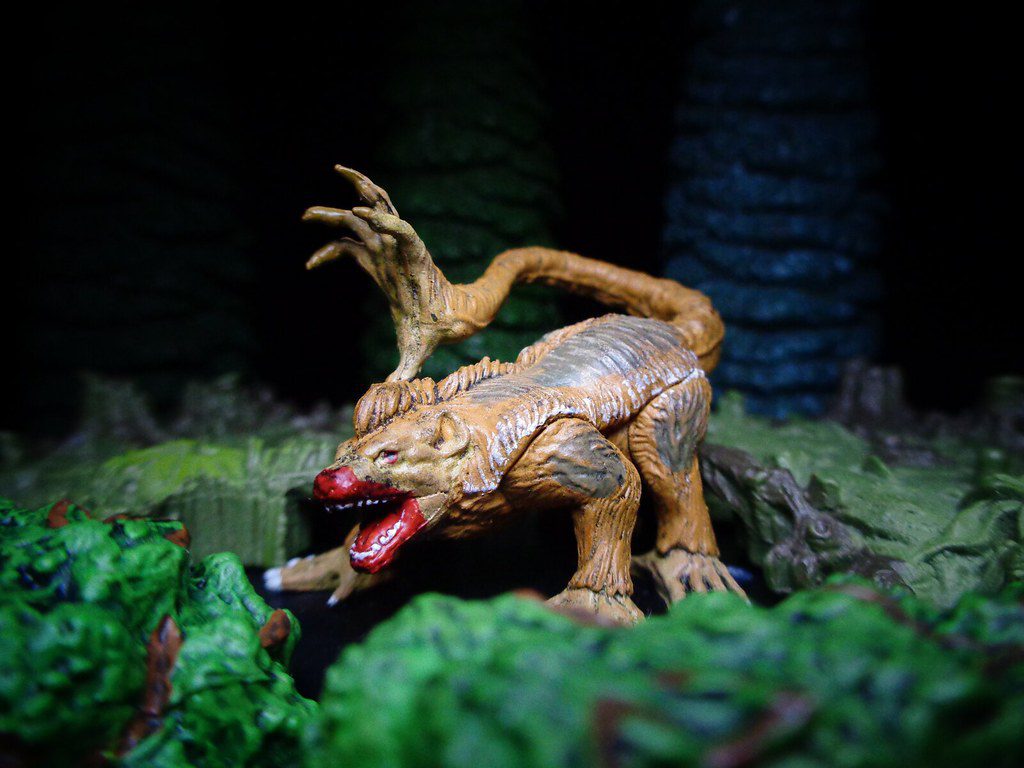
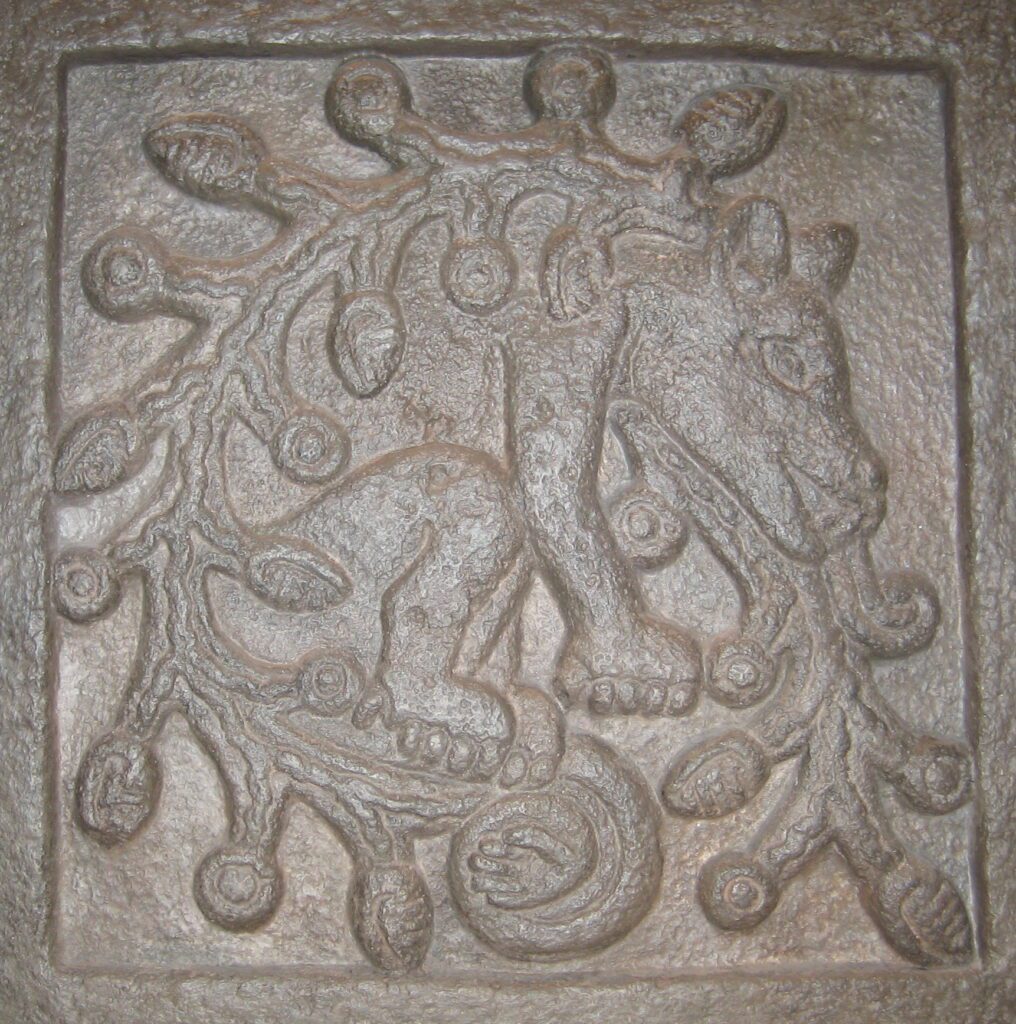
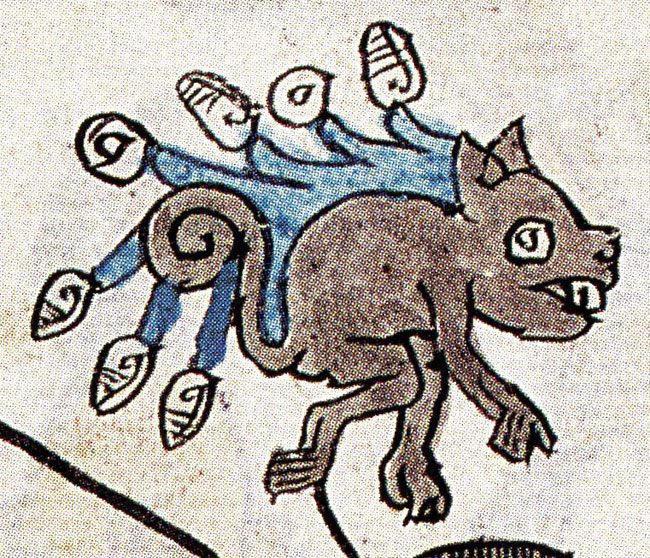
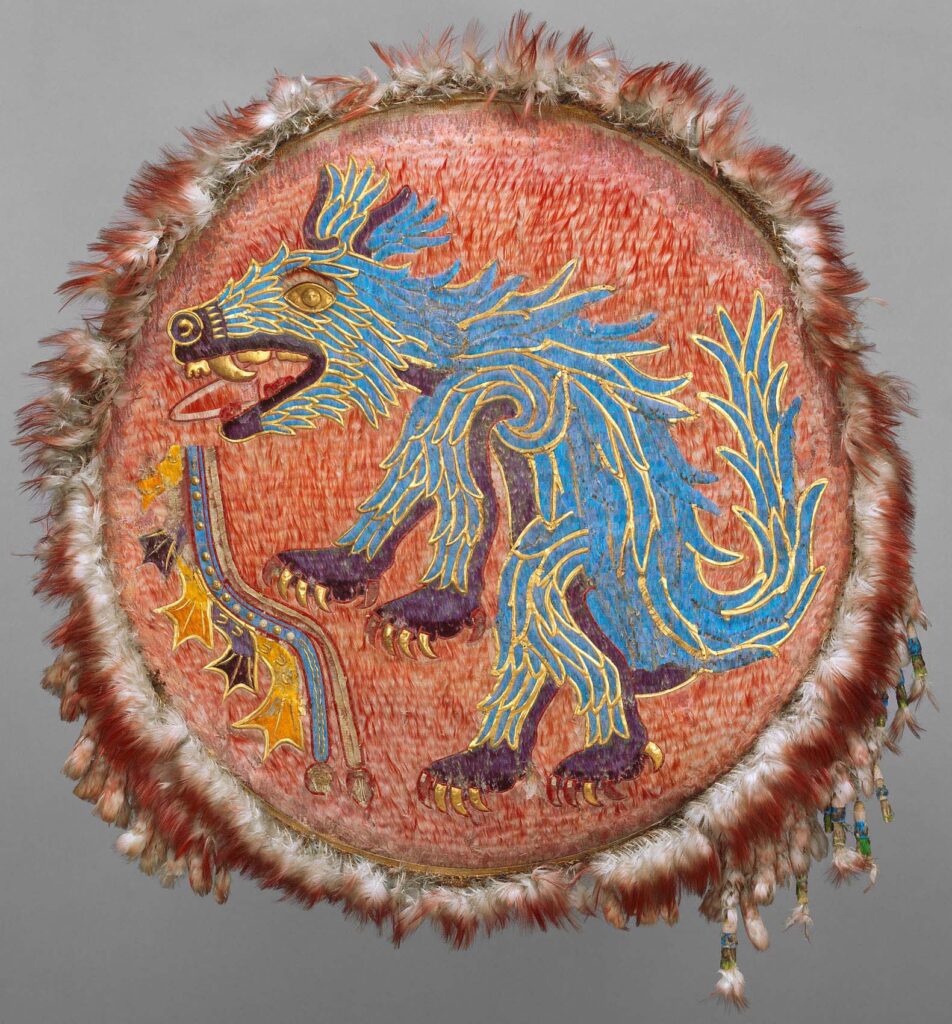
Aztec sources describe the Ahuizotl as a small, dog-like aquatic creature with dark, waterproof fur and nimble limbs adapted for swimming. Its most distinctive feature is its long tail ending in a human-like hand, complete with fingers capable of grasping prey.
The creature is also depicted with pointed ears, sharp teeth, and an appearance that combines features of dogs, monkeys, otters, and other semi-aquatic mammals. Rather than representing a specific animal, these characteristics likely emphasize its supernatural nature.
According to legend, the bodies of its victims were sometimes found missing their eyes, teeth, and fingernails. These body parts were believed to have been claimed by the Ahuizotl as offerings for the gods, reinforcing its role as a divine servant rather than an ordinary beast.
Other Names
The name Ahuizotl comes from Classical Nahuatl and is commonly translated as “spiny aquatic creature,” “water thorn animal,” or “water dog.” The exact etymology remains debated among linguists, but all interpretations connect the creature with water and its dangerous, grasping nature.
Powers and Abilities
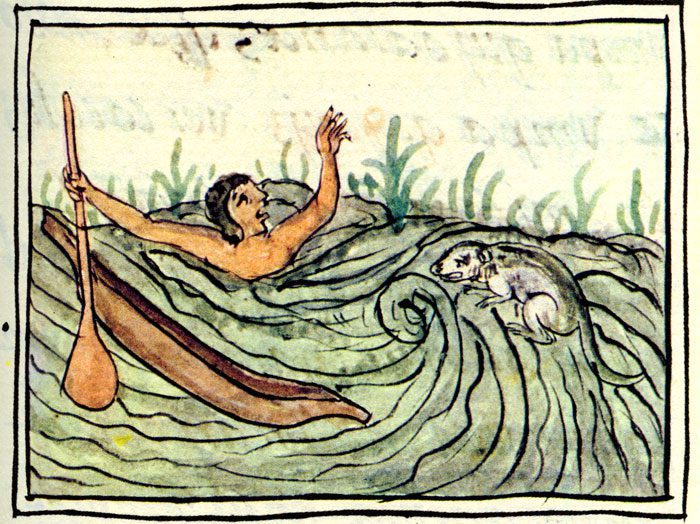
The Ahuizotl possessed extraordinary intelligence and supernatural hunting abilities. It was said to lurk silently beneath the surface, waiting for animals or humans to approach the shoreline before striking with the hand at the end of its tail.
One of its most frightening abilities was its talent for deception. Legends claim it could imitate the cries of a baby or the distressed calls of animals, drawing compassionate or curious people toward the water. When its victim came close enough, the creature would seize them and drag them beneath the surface.
Unlike ordinary predators, the Ahuizotl was not believed to kill merely for food. Many traditions describe it as an enforcer of the water gods’ will, selecting particular individuals for Tlalocan. Because of this sacred role, touching or burying a body believed to have been taken by the Ahuizotl often required special ritual observances.
Although some later stories describe fishermen making offerings to calm dangerous waters, there is little evidence that the Ahuizotl itself was widely worshipped or regularly appeased through ritual. It functioned primarily as a supernatural warning against the unpredictable power of lakes and rivers.
Modern Day Influence
The Ahuizotl continues to fascinate historians, folklorists, and cryptozoology enthusiasts. Over the years, researchers have suggested that the legend may have been inspired by encounters with giant otters, river mammals, or other aquatic animals whose behavior became exaggerated through oral tradition.
However, none of these animals possess the creature’s defining characteristics—particularly its human-like hand-tailed appendage or its supernatural intelligence. Most scholars therefore view the Ahuizotl as a symbolic mythological creature rather than a distorted memory of a real species.
Today, the Ahuizotl appears in novels, fantasy games, tabletop role-playing settings, and digital media, where it remains one of the most recognizable monsters from Aztec mythology. Its enduring popularity reflects the universal human fear of unseen dangers lurking beneath the water while preserving an important piece of Mesoamerican cultural heritage.
Related Images



Sources
Getty Research Institute. (n.d.). Book 11, Folio 70v: Ahuizotl. Digital Florentine Codex. https://florentinecodex.getty.edu/en/book/11/folio/70v
Field Museum. (2020, October 28). Taming monsters: Ahuizotl. https://www.fieldmuseum.org/blog/taming-monsters-ahuizotl
Mexicolore. (n.d.). Ahuizotl: The water monster of the Aztecs. https://www.mexicolore.co.uk/aztecs/ask-us/ahuizotl
Aguilar-Moreno, M. (2006). Handbook to life in the Aztec world. Oxford University Press.
Sahagún, B. de. (1950–1982). Florentine Codex: General history of the things of New Spain (A. J. O. Anderson & C. E. Dibble, Trans., 13 vols.). University of Utah Press. (Original work published ca. 1577)
Taube, K. A. (1993). Aztec and Maya myths. University of Texas Press.
Nuttall, Z. (1895). A note on ancient Mexican folklore. The Journal of American Folklore, 8(31), 252–254. https://doi.org/10.2307/533264
Frequently Asked Questions
What does ahuizotl do?
The ahuizotl, an Aztec water spirit, walks a tightrope between benevolence and malice. While some consider it a guardian of freshwater and a friend to the rain gods, others fear it as a lure, snatching the unwary into the depths.
Why was Ahuitzotl famous?
The name Ahuitzotl can refer to two famous figures. As a creature in Aztec myth, it was a terrifying water demon with a hand on its tail, luring people to a watery demise.
How does the ahuizotl lure people?
The ahuizotl, a cunning predator, employed devious tactics to lure prey. It could mimic the cries of a lost child, tugging at the heartstrings of those nearby. Alternatively, it might stir the water into a frenzy, attracting curious fishermen to the water’s edge, where the ahuizotl’s grasping tail awaited.
What does ahuizotl do to its victims?
The ahuizotl’s fate for its victims was a cruel one. Legends say it used its grasping tail to drag the unfortunate from the water’s edge, condemning them to a watery grave.

Pingback: Ontdek de fascinerende wereld van Azteekse mythologische wezens - Klik hier nu!