
Yolngu Mythology
Yolngu mythology forms the spiritual foundation of the Yolngu peoples of Northeast Arnhem Land, one of Australia’s oldest continuous cultural groups. Their worldview is guided by Rom, the Yolngu law, and the Dreaming — known as Wangarr — which encompasses creation stories, kinship rules, social responsibilities, and the deep relationship between people and Country. Yolngu mythology is not just a record of ancient times; it remains an active framework for cultural identity and daily life.
At the centre of Yolngu cosmology are the Wangarr beings, ancestral forces who shaped the land, created languages, established clans, and set the laws that govern social and ceremonial life. These beings travelled across Arnhem Land, forming coastlines, islands, river systems, and sacred sites. Their journeys left behind songlines — interconnected routes represented in stories, songs, and dances that continue to guide Yolngu culture.
The Yolngu world is divided into two major moieties: Dhuwa and Yirritja. Every clan, animal, plant, and natural element belongs to one of these moieties, creating a balanced system that governs marriage, ceremony, and spiritual identity. Mythology reinforces this dual structure, showing how ancestral beings established harmony and order between the two moieties.
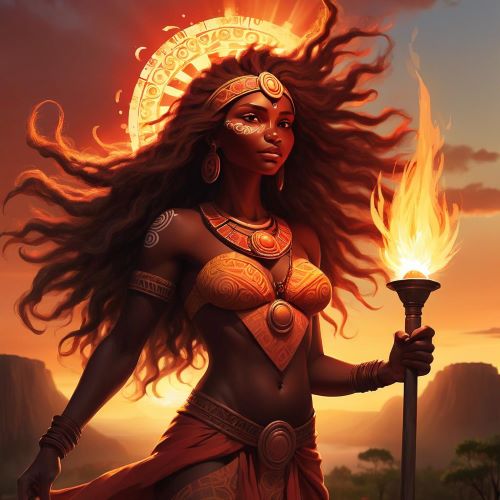
Yolngu mythology is deeply tied to the sea. Being a coastal people, the Yolngu have creation stories involving saltwater ancestors, marine creatures, ocean currents, and islands. The Djang’kawu sisters, important Dhuwa ancestral beings, are said to have arrived by canoe and created clans, ceremonies, and sacred objects. Their journey across the land is one of the most significant narratives in Yolngu culture.
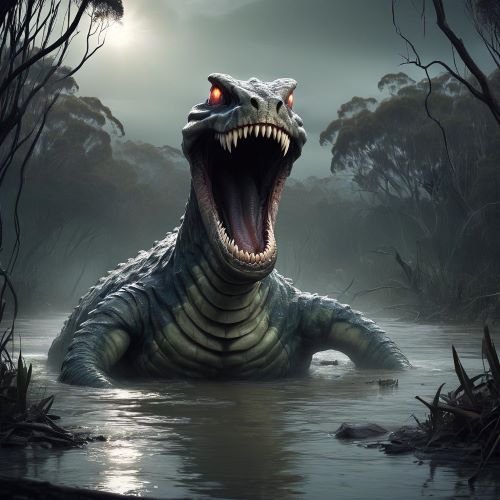
Another central figure is Baru, the Yirritja crocodile ancestor, whose story is connected to fire, law, and transformation. Waterholes, mangrove forests, beaches, and estuaries throughout Arnhem Land are linked to ancestral actions, making the physical landscape a living spiritual map.
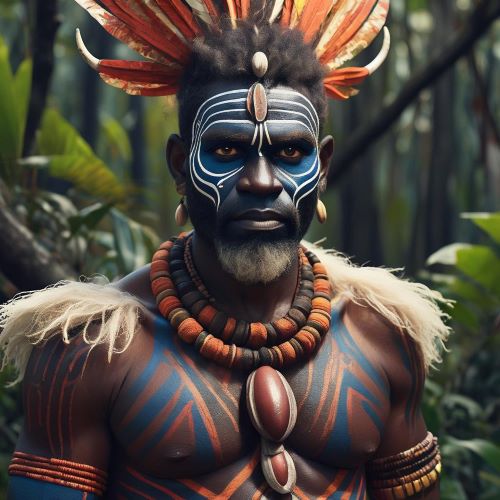
Ceremony remains essential for maintaining Yolngu mythology. Clan-based rituals involving song, dance, and body painting ensure that sacred knowledge is passed down correctly. Designs used in art and ceremonial practice are directly connected to Wangarr beings and are strictly governed by cultural law.
Despite outside pressures, Yolngu mythology remains strong. Yolngu communities continue to preserve language, song cycles, and ceremonial traditions through both cultural practice and contemporary art forms. Yolngu artists, musicians, and knowledge-keepers play a vital role in sharing their heritage with the world while protecting sacred knowledge.
Yolngu mythology stands as a profound, living expression of ancestral law, cultural identity, and the enduring spirituality of Arnhem Land.