

Asian Mythology
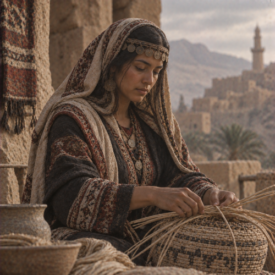
Asian mythology encompasses some of the most diverse traditions of myth, legend, religion, and cosmology in the world. Across a vast continent stretching from the Himalayas and Central Asia to Japan, Southeast Asia, and Arabia, different cultures have developed distinctive traditions concerning creation, the cosmos, supernatural beings, and the relationship between humans and the natural world. Shaped by thousands of years of oral traditions, religious practices, literature, and cultural exchange, these mythologies have influenced social values, artistic expression, philosophy, and ritual life. Many of these traditions continue to evolve and remain influential in the modern world.
A recurring feature across many Asian traditions is an interest in relationships between opposing or complementary forces such as creation and destruction, heaven and earth, order and chaos, and light and darkness. In Indian mythology, some Hindu traditions associate the Trimurti of Brahma, Vishnu, and Shiva respectively with creation, preservation, and dissolution. Chinese mythology exists alongside philosophical and religious traditions that explore concepts such as Yin and Yang, while figures such as the Jade Emperor and the Queen Mother of the West occupy important places in Chinese religious and mythological traditions. Japanese mythology, recorded in important early texts such as the Kojiki and Nihon Shoki, recounts the deeds of deities including the sun goddess Amaterasu. These traditions also describe the heavenly descent of Amaterasu’s grandson Ninigi-no-Mikoto and connect his lineage with the legendary origins of the Japanese imperial line. Across Southeast Asia, including Thailand, Cambodia, Indonesia, and neighboring regions, indigenous traditions have interacted with Hindu and Buddhist beliefs, producing diverse religious and mythological landscapes featuring nāgas, guardian beings, ancestral figures, and supernatural powers.
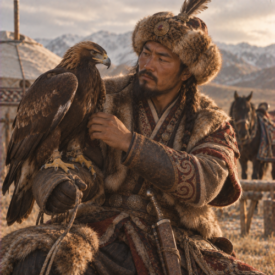
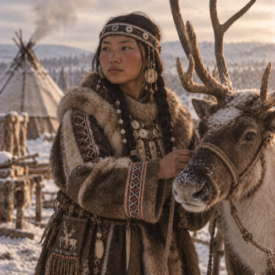
The traditions of Central, North, and East Asia add further diversity to the mythological landscape. Many early Turkic and Mongolic traditions revered Tengri, a powerful celestial or sky-associated deity, alongside other sacred forces, ancestors, and spirits. Ritual specialists in several of these societies were understood as mediators between human communities and the supernatural world. Korean mythology preserves traditions concerning heavenly rulers, founding ancestors, mountain spirits, dragons, and other supernatural beings. Vietnamese legends tell of the union between Lạc Long Quân, a dragon-associated lord, and Âu Cơ, a fairy or immortal-associated figure. Their legendary children are traditionally regarded as ancestors of the Vietnamese people. In Tibetan mythology, Buddhist traditions exist alongside Bön and older local beliefs, with Buddhist cosmology incorporating and reinterpreting numerous indigenous deities and spirits. From Siberia and Central Asia to Sri Lanka, Arabia, and Japan, Asian mythological traditions explore humanity’s relationship with nature, the cosmos, ancestors, supernatural beings, and forces beyond the visible world.
Asian mythology also continues to influence literature, cinema, visual art, and popular culture. Epics such as the Ramayana and classic works such as Journey to the West have inspired generations of adaptations and reinterpretations. Mythological figures and themes from across Asia now appear in films, television, animation, literature, comics, and video games around the world. At the same time, communities across Asia continue to preserve traditional stories, festivals, rituals, and oral traditions while adapting them to contemporary cultural life. Themes of cosmic order, moral responsibility, compassion, relationships with nature, duty, transformation, and the interaction between the human and supernatural worlds recur throughout many of these traditions. Asian mythology is therefore not simply a collection of ancient stories, but an evolving body of cultural traditions that continues to shape how people understand divinity, nature, society, and the meaning of existence.