

Sobyeol-wang : The Little Star King of Korean Creation Lore
Listen
At a glance
| Description | |
|---|---|
| Origin | Korean Mythology |
| Classification | Gods |
| Family Members | Cheonji-wang (Father), Daebeyol-wang (Brother) |
| Region | South Korea |
| Associated With | Living world, Injustice |
Sobyeol-wang
Introduction
Sobyeol-wang is a pivotal figure in Korean mythology, best known from the Cheonji-wang bon-puri, the foundational creation narrative of Jeju Island’s shamanic tradition. As one of the divine twin sons of the heavenly king Cheonji-wang, Sobyeol-wang represents the flawed ruler of the human world, standing in deliberate contrast to his elder brother Daebyeol-wang, who governs the realm of the dead and cosmic justice. Together, the brothers embody a moral dualism that lies at the heart of Korean shamanic cosmology, where order and chaos, justice and corruption, coexist as necessary forces.
Unlike benevolent creator figures, Sobyeol-wang’s rise to power is marked by deception rather than virtue. Through trickery during a divine contest, he secures dominion over the living world despite lacking moral authority. His reign explains the presence of injustice, suffering, and ethical imbalance in human society. Rather than portraying evil as accidental, Sobyeol-wang’s myth frames it as the result of flawed leadership, making his story deeply resonant in discussions of power, governance, and moral responsibility.
Rooted in oral tradition and preserved through ritual chanting rather than written scripture, Sobyeol-wang’s narrative reflects Jeju’s indigenous worldview, distinct from mainland Korean court mythology. His continued presence in shamanic recitations ensures that his story remains a living explanation for the imperfections of human existence rather than a distant mythological relic.
Physical Traits
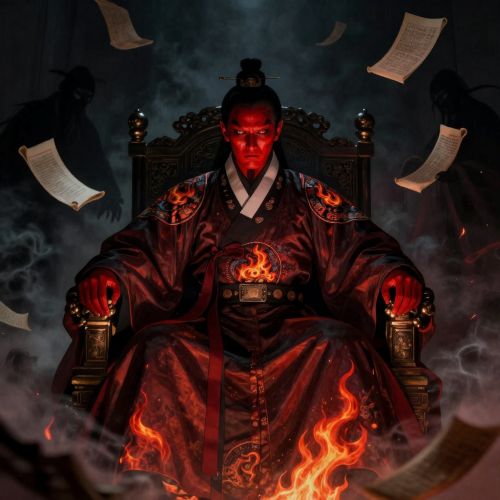
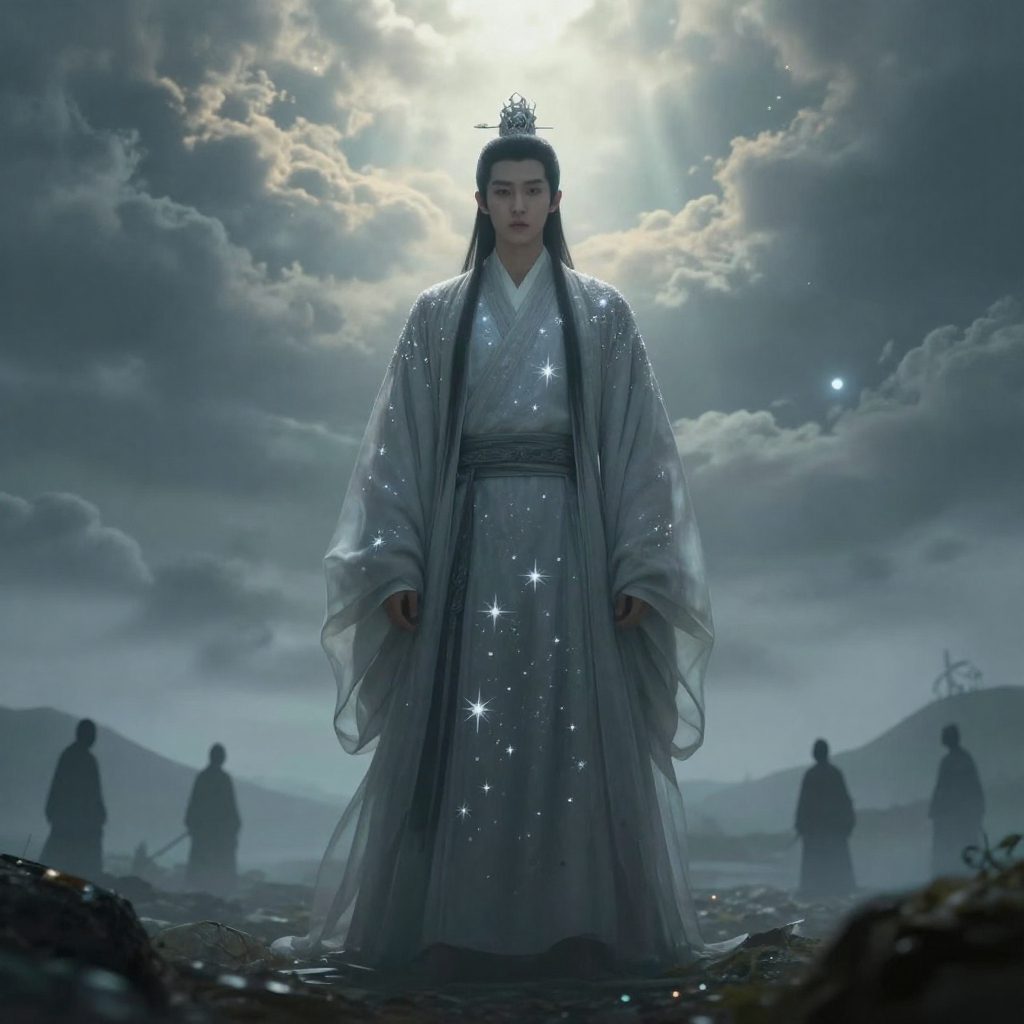
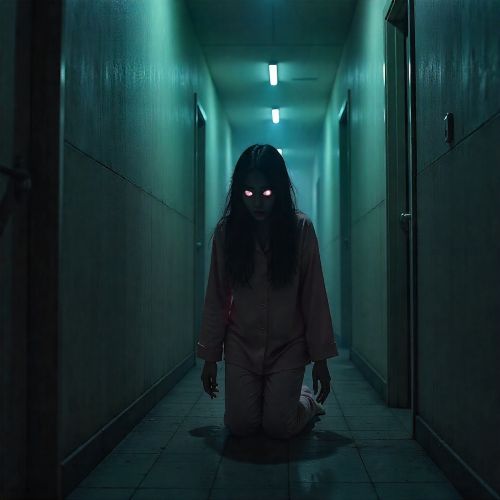
Sobyeol-wang’s physical appearance is only lightly sketched in surviving oral traditions, a deliberate feature of Jeju shamanic storytelling where ethical identity outweighs visual detail. He is typically imagined as youthful, agile, and outwardly similar to his twin brother, emphasizing that moral divergence, not physical difference, defines their opposing roles. In ritual performances, shamans often portray him with subdued celestial symbolism, suggesting diminished radiance rather than monstrous deformity.
Some traditions associate Sobyeol-wang with darker or less luminous imagery, contrasting him with the brighter, more dignified presence of Daebyeol-wang. This visual restraint reinforces his symbolic function as a ruler whose authority lacks spiritual legitimacy. Rather than embodying terror, Sobyeol-wang represents familiarity—an unsettling reminder that corruption often appears ordinary and persuasive rather than overtly evil.
The scarcity of fixed physical descriptions allows Sobyeol-wang to function as an adaptable archetype. Across generations, he has been imagined not as a demon but as a flawed sovereign, reflecting the idea that suffering arises not from chaos alone, but from leaders who rule without justice.
Family
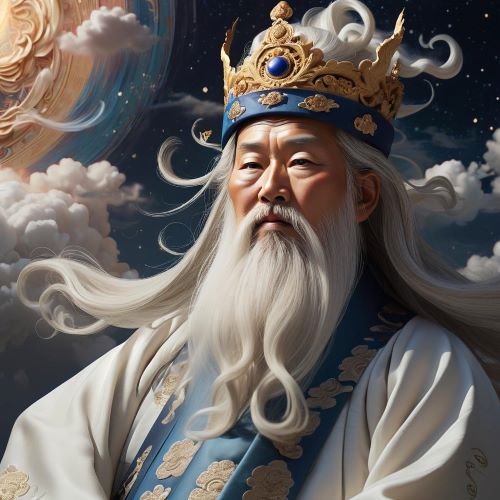
Sobyeol-wang is the younger twin son of Cheonji-wang, the primordial heavenly ruler who initiates the structuring of the cosmos. His mother is a mortal woman, linking Sobyeol-wang directly to humanity and reinforcing his destined connection to the earthly realm. His twin brother, Daebyeol-wang, embodies moral authority, restraint, and cosmic law, creating a narrative tension that drives the myth forward.
Their rivalry culminates in a series of divine trials designed to determine who will rule the worlds of the living and the dead. Although Daebyeol-wang demonstrates wisdom and fairness, Sobyeol-wang wins through deceit, most famously by cheating during the flower contest. This moment becomes the moral axis of the myth, establishing Sobyeol-wang as an illegitimate yet legally installed ruler of humanity.
Despite his victory, Sobyeol-wang’s rule remains incomplete. Daebyeol-wang intervenes from the underworld to limit the damage of his brother’s misrule, instituting laws that silence animals and spirits to prevent further chaos. Their relationship thus reflects a cosmology where injustice may dominate the surface world, but cosmic balance is never fully abandoned.
Other names
Sobyeol-wang is also recorded as Sobyeolwang, Soyebyeol-wang, or Sobyeol-hwang, depending on dialect, transcription, and ritual context. His name literally translates to “Little Star King,” a title that contrasts deliberately with Daebyeol-wang’s designation as the “Great Star King.” This linguistic pairing reinforces their symbolic opposition within the celestial hierarchy.
In some scholarly interpretations, Sobyeol-wang is loosely compared to trickster figures such as Seokga, though he remains distinct within Jeju tradition. These name variations reflect the fluid nature of Korean oral mythology, where meaning is preserved through performance rather than standardized text. Regardless of spelling, Sobyeol-wang’s identity as the unjust ruler of the living world remains consistent across traditions.
Powers and Abilities
Sobyeol-wang’s powers are defined less by supernatural spectacle and more by authority over human affairs. As ruler of the living world, he governs social order, prosperity, and misfortune, though often ineffectively or unjustly. His most defining ability is manipulation, demonstrated through his deceptive victory in the divine trials that grant him kingship.
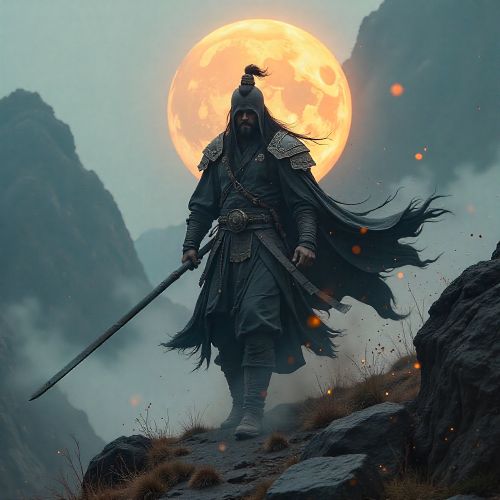
He participates in the cosmic act of restoring balance by destroying excess suns and moons, using iron-forged arrows to reintroduce night and day. This act shows that Sobyeol-wang is not powerless or incompetent, but morally compromised. His reign introduces theft, disease, and suffering, not through malice alone, but through negligent leadership.
Paradoxically, Sobyeol-wang’s existence is necessary within Korean cosmology. Without his flawed rule, concepts of justice, law, and moral struggle would have no meaning. His powers thus function as narrative tools that explain why human society requires ethical vigilance rather than blind obedience to authority.
Modern Day Influence
Sobyeol-wang continues to appear in Jeju shamanic rituals, particularly during bon-puri recitations that explain the origins of suffering and injustice. While not worshipped as a benevolent deity, he is invoked as a necessary explanatory figure whose story contextualizes human hardship within a cosmic framework.
In modern scholarship, Sobyeol-wang is frequently cited in discussions of moral dualism, political symbolism, and indigenous Korean cosmology. His myth is increasingly interpreted as a critique of illegitimate power, making it relevant in contemporary discussions of leadership and social ethics. Though rarely depicted in mainstream popular culture, he appears in academic literature, museum narratives, and reinterpretations of Korean folklore.
Sobyeol-wang’s endurance lies in his realism. He does not promise salvation but offers understanding, reminding modern audiences that injustice is not accidental, and that moral responsibility remains a human obligation even within divinely ordered systems.
Related Images
Source
Encyclopedia of Korean Folklore and Traditional Culture. (n.d.). Omnika.org. https://omnika.org/component/html5flippingbook/?task=convert.getpdf&id=85&filename=85-Encyclopedia_Of_Korean_Folk_Lit.pdf
Korean creation narratives. (2020, June 18). Wikipedia. https://en.wikipedia.org/wiki/Korean_creation_narratives
Korean folklore. (2005, March 23). Wikipedia. https://en.wikipedia.org/wiki/Korean_folklore
Korean mythology. (2003, September 26). Wikipedia. https://en.wikipedia.org/wiki/Korean_mythology
Korean mythology, gods, and goddesses explained by a local. (2024, August 5). Linguasia.com. https://linguasia.com/korean-mythology-gods-goddesses
Namu Wiki. (2024, December 28). Korean mythology. https://en.namu.wiki/w/%ED%95%9C%EA%B5%AD%20%EC%8B%A0%ED%99%94
Namu Wiki. (2024, November 3). Daebyeolwang and Sobyeolwang. https://en.namu.wiki/w/%EB%8C%80%EB%B3%84%EC%99%95%EA%B3%BC%20%EC%86%8C%EB%B3%84%EC%99%95
Frequently Asked Questions
Who is Sobyeol-wang in Korean mythology?
Sobyeol-wang is the younger twin son of Cheonji-wang who rules the human world through deceit in Jeju Island’s creation myths.
What is Sobyeol-wang known for?
He is known for unjustly winning dominion over humanity and symbolizing corruption, suffering, and flawed leadership.
How is Sobyeol-wang different from Daebyeol-wang?
Sobyeol-wang governs the living world imperfectly, while Daebyeol-wang rules the underworld with justice and moral authority.
Is Sobyeol-wang an evil god?
He is not purely evil but represents moral failure and misuse of power rather than outright malevolence.
Why is Sobyeol-wang important today?
His myth offers insight into Korean views on justice, leadership, and the origins of human suffering.