
Noiljadae : The Dark Goddess of the Toilet
Listen
At a glance
| Description | |
|---|---|
| Origin | Korean Mythology |
| Classification | Spirits |
| Family Members | N/A |
| Region | South Korea |
| Associated With | Household, Toilet |
Noiljadae
Introduction
Korean mythology contains a deeply layered tradition of household deities, ancestral guardians, and moral narratives passed down through shamanic storytelling. Among these figures, Noiljadae stands out as one of the most complex characters in the Jeju Munjeon bon-puri, a ritual narrative recited during house-building and domestic purification ceremonies. Originally associated with the realm of Gasin, the domestic gods who protect various parts of the home, Noiljadae’s story functions as both a mythic warning and a cosmological explanation for the existence of certain household taboos.
Her tale is inseparable from the tragic household of Namseonbi, his virtuous wife Yeosan Buin, and their seven sons. When Noiljadae enters their lives, she becomes the agent of discord, envy, and deception—actions that eventually transform her from a human antagonist into Cheuksin, the feared goddess of the latrine. The journey from woman to household deity, from guardian threshold to polluted space, reveals a worldview in which domestic harmony is sacred and moral failures carry spiritual consequences.
Through this compelling narrative, Noiljadae offers insight into Jeju shamanism, gendered roles in household cosmology, and the blurred lines between benevolent and malevolent spirits in Korean folk belief.
Physical Traits
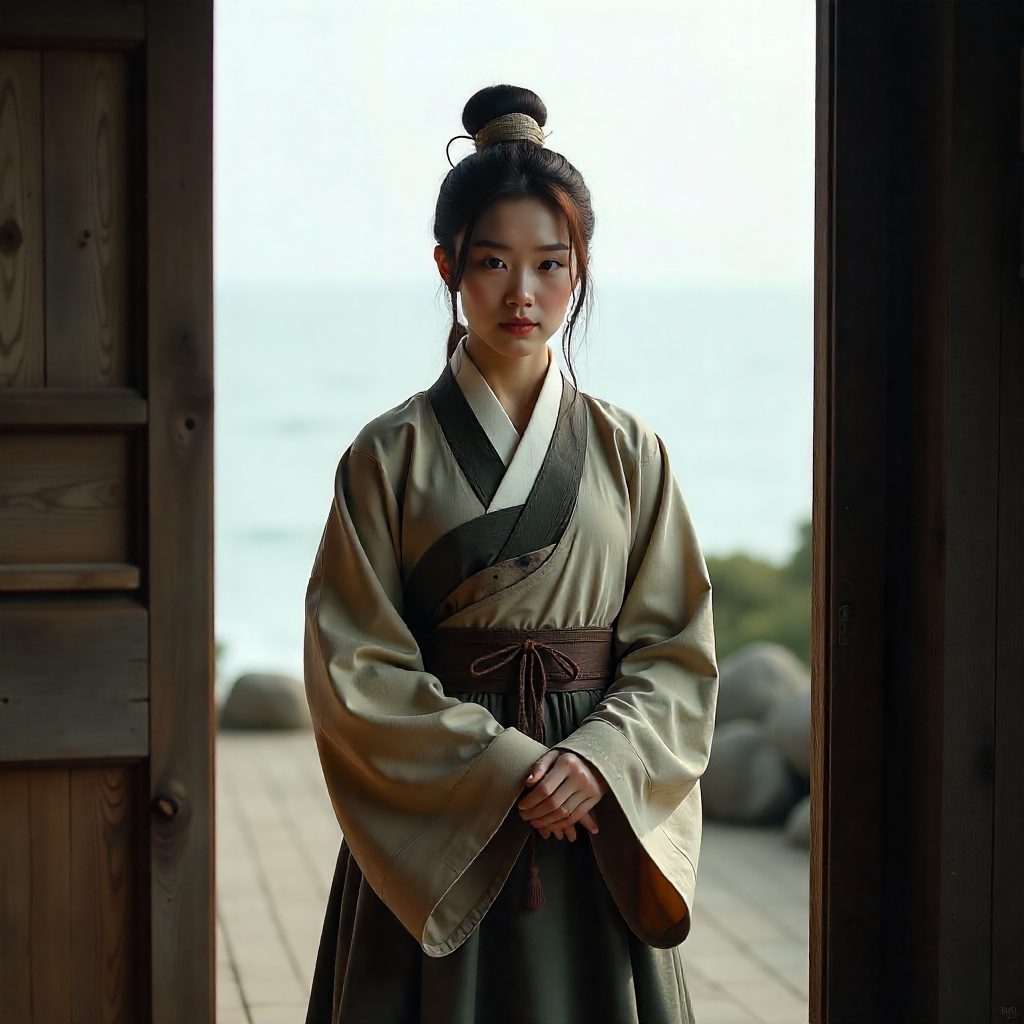
Noiljadae is not described with supernatural form or monstrous attributes. Instead, shamanic storytellers present her as an ordinary woman from a jumak (inn), whose outward normalcy conceals jealousy and malice. Her physical depiction is subtle but symbolically rich. When she impersonates Yeosan Buin, small details expose the deceit—she refuses to share an umbrella with the children during a storm, and her voice falters when the youngest son, Nokdisaengin, questions her identity.
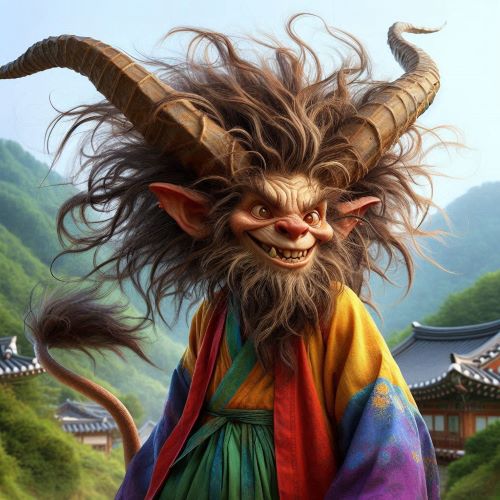
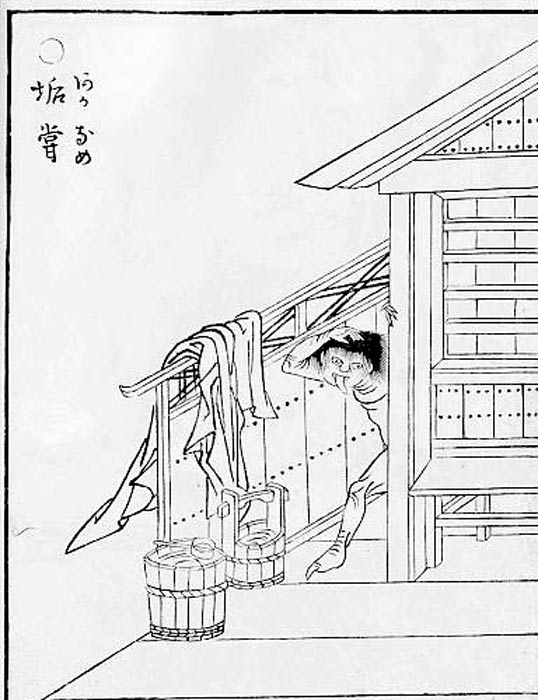
These understated markers are crucial, for Korean myths often rely on behavioral cues over physical distortion to reveal a villain’s nature. After her death, however, her appearance changes in collective imagination. As Cheuksin, she becomes a disheveled, restless deity associated with filth, shadow, and fear. Her presence embodies impurity and the dangers of neglected domestic spaces, reflecting the broader Korean belief that moral corruption manifests physically in the spiritual realm.
Family
Noiljadae enters the household of Namseonbi by exploiting his misfortune. After he loses his wealth gambling at her family’s inn, she marries him and becomes stepmother to his seven sons. Within this blended family, she positions herself as a replacement for Yeosan Buin, whose kindness and diligence had upheld the household’s prosperity.
Driven by envy, Noiljadae poisons Yeosan Buin, leading the seven sons on a perilous quest to retrieve healing flowers from Seocheon, the western paradise of the dead. While six sons are fooled by Noiljadae’s impersonation, the youngest—Nokdisaengin—discerns the truth, revealing her crimes and restoring his mother.
The dissolution of Noiljadae’s relationship with the family reflects Korean cultural values regarding filial piety, the sanctity of maternal roles, and the fragility of household harmony. Her eventual downfall demonstrates that domestic betrayal threatens not only human relationships but also the spiritual order that upholds the home.
Other names
Although remembered primarily as Noiljadae during her mortal life, she acquires a far more enduring title after her death. Upon taking her own life in shame—hanging herself in the bathroom—her spirit becomes Cheuksin, the powerful but feared goddess of the latrine.
Cheuksin’s presence stands in direct opposition to Jowangsin, the benevolent kitchen goddess identified with Yeosan Buin. Their cosmic rivalry explains long-standing architectural taboos in Korea, especially the avoidance of aligning bathroom and kitchen doors, a belief still recognized in regional geomancy and folk customs.
Variations in local recitations of the Munjeon bon-puri may identify Noiljadae with threshold guardians or household spirits, but her primary transformation into Cheuksin remains the definitive identity through which later traditions remember her.
Powers and Abilities
During her lifetime, Noiljadae’s abilities are rooted not in magic but in cunning and manipulation. She deceives Namseonbi, poisons Yeosan Buin, and psychologically torments the family. These actions, though human, carry the moral weight necessary for her transformation into a deity after death.
As Cheuksin, her powers become spiritual and far-reaching. She governs a space associated with impurity and danger, controlling misfortune, illness, and spiritual pollution. Households must respect her domain, for neglect can invite sickness or domestic instability. Shamans invoke and appease Cheuksin during gut rituals, reflecting a belief that even malevolent deities maintain essential roles in the cosmological balance.
Her confinement to the bathroom illustrates Korean shamanic justice: spirits are bound to the consequences of their earthly actions, and their authority is shaped by the moral lessons they embody.
Modern Day Influence
While Noiljadae is not widely recognized in mainstream Korean culture today, the residues of her mythology remain deeply embedded in folklore, architecture, and ritual. Jeju shamans continue to perform the Munjeon bon-puri, preserving her narrative and its moral instruction. The bathroom-kitchen taboo persists in certain regions and household planning practices, revealing how myth shapes lived spaces.
In academic circles, Noiljadae and Cheuksin are subjects of ongoing study, offering insight into the Gasin system, gender symbolism, and the role of domestic spirits in Korean spiritual history. Elements of her story echo in modern Korean dramas, horror films, and literature, where the archetype of the deceptive stepmother or vengeful domestic spirit appears frequently.
Ultimately, Noiljadae’s enduring influence lies in the way her myth continues to illuminate household ethics, ritual purity, and the intricate balance between benevolent and malevolent forces in Korean cosmology.
Related Images
Source
Hwang, S. (2019). Shamanism in Korean mythology: Rituals and deities. Seoul National University Press.
Kim, H. (2022). Jeju Island folktales: Munjeon bon-puri and household spirits. Jeju Cultural Foundation.
Lee, J. (2017). Gods and ghosts of Korea. Tuttle Publishing.
National Folk Museum of Korea. (2024). Munjeon bon-puri: A shamanic epic. http://www.nfm.go.kr/eng
Peterson, M. A. (2009). Korean shamanism: The cultural paradox. Ashgate Publishing.
Wikipedia contributors. (2024). Munjeon bon-puri. https://en.wikipedia.org/wiki/Munjeon_bon-puri
Yun, D. (2021). Female figures in Korean myth: From stepmothers to goddesses. Korean Studies Journal, 45(2), 112-130.
Everything Explained. (2025). Munjeon bon-puri explained. Retrieved December 10, 2025, from https://everything.explained.today/Munjeon_bon-puri/
Toyryla, L. (2025, September 17). Korean myths – The most interesting legends and folktales. 90 Day Korean. Retrieved December 10, 2025, from https://www.90daykorean.com/korean-myths/
Choi, G. J. (2014). Shamanism in Jeju Island: Rituals and narratives. Seoul: Jimoondang Publishing.
Kim, T. H. (2011). The household gods of Korea: Gasin and domestic spirituality. Journal of Korean Folklore Studies, 28(2), 45–67.
Kendall, L. (1985). Shamans, house spirits, and the Korean domestic sphere. Asian Folklore Studies, 44(1), 21–50.
Frequently Asked Questions
Who is Noiljadae in Korean mythology?
Noiljadae is a central antagonist in the Jeju Munjeon bon-puri, later transforming into Cheuksin, the goddess of the latrine.
Why did Noiljadae become Cheuksin?
After her crimes against Namseonbi’s family were exposed, she died in the bathroom, binding her spirit to that space in shamanic belief.
What role does Cheuksin play in Korean households?
Cheuksin governs impurity and misfortune, requiring respect through rituals and architectural taboos.
Are Noiljadae and Yeosan Buin related?
They are connected through Namseonbi’s household—Yeosan Buin is the true mother, while Noiljadae becomes the deceptive stepmother.
Does Noiljadae still influence modern Korean culture?
Indirectly yes; her myth informs shamanic rituals, household taboos, academic studies, and narrative tropes in Korean media.